
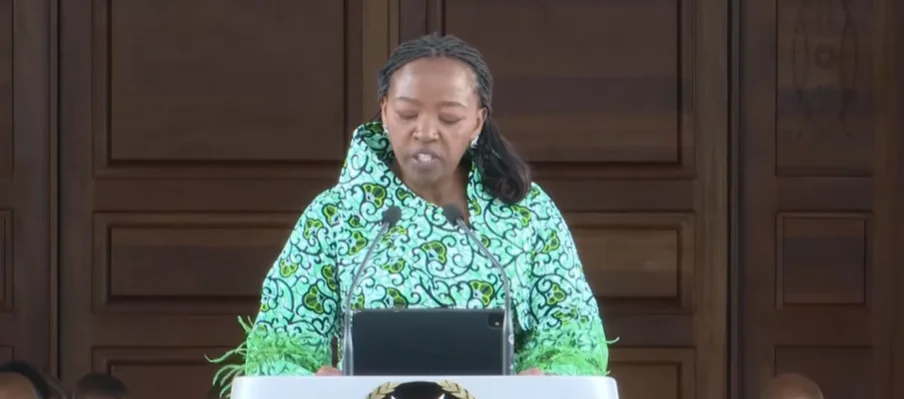
First Lady Rachel Ruto has called for stronger investment in women’s economic empowerment and environmental conservation as she launched a campaign aimed at strengthening the resilience of women and girls against climate change and conflict.
Speaking at State House, Nairobi, on Tuesday, November 24, 2026, during Joyful Women Organisation’s 17th anniversary celebrations, Rachel said the campaign would bring together national programmes and development partners to address challenges facing women and girls while expanding opportunities for them to thrive.
The campaign, under the Organisation of African First Ladies for Development (OAFLAD), covers the 2025–2027 period and seeks to strengthen support for women and girls affected by climate-related challenges and conflict.
“Women are not merely beneficiaries of climate action; they are among its most important drivers,” Rachel said.
She pointed to women’s role in environmental conservation, noting that they had planted and nurtured more than 50 million trees, with 70 per cent being fruit trees, through tree planting, agroforestry and sustainable farming practices.
Rachel said women would also play a key role in helping Kenya achieve its target of planting 15 billion trees by 2032, adding that their participation was critical to efforts to protect the environment and build resilience against climate change.
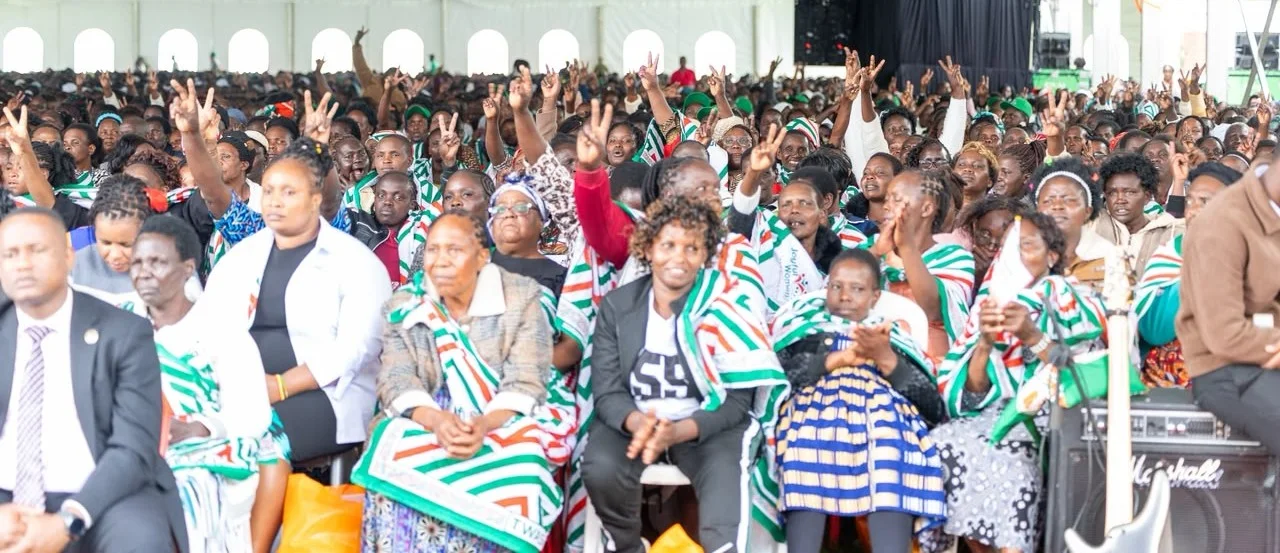
During the event, she also highlighted the growth of Joyful Women, saying the organisation had moved beyond table banking after realising that financial support alone could not guarantee the long-term success of women-led businesses.
“Women also need knowledge, skills, confidence, access to markets, and a conducive environment to build lasting opportunities,” she said.
Rachel disclosed that the organisation had revolved more than Sh4 billion through table banking, with a loan book of Sh400 million, reaching more than three million people and supporting over 300,000 businesses.
She added that Joyful Women had trained 5,530 women this year in areas including digital marketing, financial literacy, agribusiness, poultry farming and artificial intelligence to equip them with skills to grow their businesses and improve their livelihoods.
The First Lady further credited government initiatives such as the Social Health Authority, Hustler Fund, NYOTA Fund and affordable housing programme for helping expand opportunities for women and their families.
She said the construction of nearly 600 modern markets had also improved trading conditions for women, while the inclusion of childcare facilities in some of the markets had made it easier for mothers to run their businesses.
“Building resilience must look like creating an environment in which women can participate, prosper, and contribute to national development,” she said.
Rachel also urged women to bring their children into table banking groups to help pass on values such as faith, courage, discipline and hard work to the next generation.
“My dear sisters, resilience begins with one woman, one table, one idea, and the decision to try,” she said.
The Organisation of African First Ladies for Development (OAFLAD) was established in 2002 as the Organisation of African First Ladies against HIV/AIDS before expanding its mandate to cover broader development issues.
The organisation champions healthcare, education, gender equality and the empowerment of women and young people through advocacy, partnerships and resource mobilisation.