
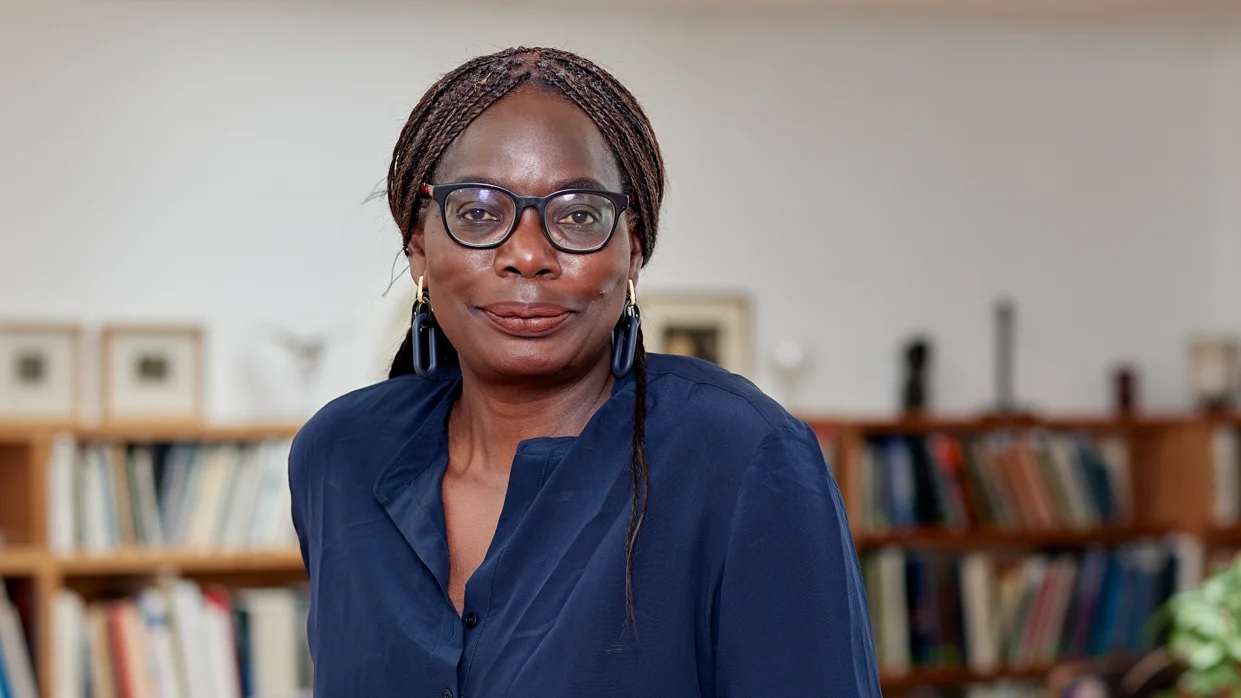
Sierra Leone has withdrawn its candidate, Professor Charles Chernor Jalloh, from the race for a judgeship at the International Court of Justice (ICJ), throwing its support behind Kenya's Professor Phoebe Okowa.
The announcement was made on Tuesday, November 3, 2026, by Sierra Leone's Permanent Representative to the United Nations, Ambassador Michael Imran Kanu, following the second round of voting in the election of five judges to the world's principal judicial body.
Addressing the United Nations General Assembly, Kanu announced that his government had decided to end Jalloh's candidature and support the Kenyan candidate, who is seeking a full nine-year term at the court.
“I take the floor on behalf of the Republic of Sierra Leone to announce that my government has decided to withdraw the candidature of Prof. Charles Jalloh for the elections of the ICJ. And to give its full support to Judge Phoebe Okowa of the Republic of Kenya,” Kanu said.
The development marks a shift in Sierra Leone's position after the country had campaigned for Jalloh, a professor of international law who had received backing from the Economic Community of West African States (ECOWAS) and the African Union.
The withdrawal leaves eight candidates competing for the five available positions. They include Okowa of Kenya, Dapo Akande of the United Kingdom, François Alabrune of France, Mahmoud Daifallah Hmoud of Jordan, Luz del Carmen Ibáñez Carranza of Peru, Rena Lee of Singapore, Jin-Hyun Paik of South Korea and Marcelo Vázquez-Bermúdez of Ecuador.
The election is conducted through separate but simultaneous secret ballots in the UN General Assembly and Security Council. Candidates must secure an absolute majority in both organs to be elected, requiring at least 97 votes in the 193-member General Assembly and eight votes in the 15-member Security Council.
The five successful candidates will serve nine-year terms beginning February 6, 2027, with the election process continuing through additional rounds, if needed, until the required majorities are achieved.
Okowa is seeking a full term after previously joining the court in November 2025 to complete the remaining tenure of Somali judge Abdulqawi Ahmed Yusuf, who resigned.
Her earlier election followed a closely contested race against Jalloh, making the latest withdrawal and endorsement a significant diplomatic development in Kenya's campaign to retain representation at the international court.
The International Court of Justice, based in The Hague, Netherlands, is the principal judicial organ of the United Nations. It settles legal disputes submitted by states and provides advisory opinions on questions of international law.
The General Assembly and Security Council elect its 15 judges, who serve independently rather than as representatives of their respective governments.