
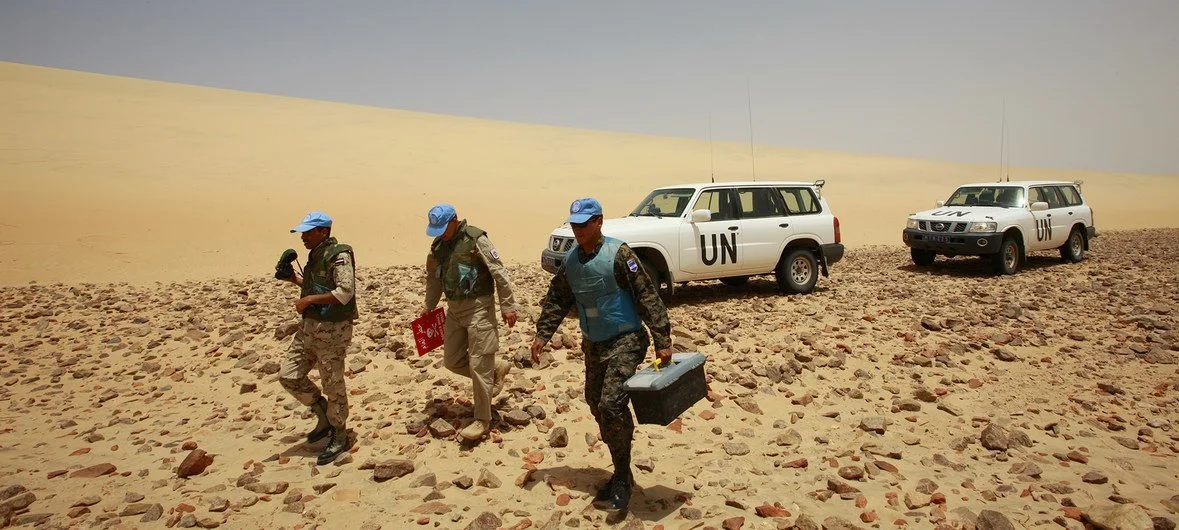
The United Nations has begun winding down its peacekeeping mission in Western Sahara after 35 years, with Secretary-General António Guterres insisting that the territory's people retain their right to self-determination despite the end of the operation.
The UN Mission for the Referendum in Western Sahara (MINURSO) officially ended its operations at midnight on October 31, 2026, after the Security Council failed to agree on extending its mandate.
In a statement delivered by his spokesperson on Sunday, November 1, Guterres reaffirmed the UN's commitment to supporting negotiations aimed at securing a lasting political settlement between the parties involved in the long-running territorial dispute.
“The United Nations remains committed to supporting a just, lasting and mutually acceptable political solution in Western Sahara that provides for the self-determination of its people,” the Secretary-General said.
He stressed that the termination of the peacekeeping mission did not extinguish the rights of the people of Western Sahara, calling on all parties to respect their fundamental freedoms and political aspirations.
“The departure of the UN Mission for the Referendum in Western Sahara does not abrogate the people's inalienable right to self-determination,” the statement said.
The mission's closure follows a divided Security Council meeting on Friday, October 30, during which competing proposals on its future failed to secure the necessary support.
A draft resolution presented by the United States was vetoed by Russia, while a rival Russian proposal seeking a one-year extension of the mission until October 31, 2027, failed to obtain the nine votes required for adoption.
The US delegation argued that its proposal would have supported the principle of self-determination and moved the nearly five-decade-old conflict towards a resolution, describing the existing situation as unacceptable.
However, Russia opposed the American draft, arguing that it risked imposing a one-sided solution on the parties.
Explaining Moscow's decision to veto the proposal, its representative described the move as “a life-saving veto, so to speak”.
Despite the end of MINURSO's peacekeeping operations, the UN says it will continue engaging the parties through diplomatic channels, particularly through the Secretary-General's Personal Envoy for Western Sahara, Staffan de Mistura.
Guterres acknowledged the mission's contribution since its establishment in 1991, particularly its role in monitoring the ceasefire and creating conditions for political negotiations.
He also paid tribute to the 20 MINURSO personnel who lost their lives during the mission's 35 years of operations and expressed gratitude to its staff, including Special Representative Alexander Ivanko, who led the mission during a particularly difficult period following the resumption of hostilities in 2020.
At the time its mandate expired, MINURSO had approximately 200 civilian staff, military observers and staff officers drawn from more than 35 countries.
Its headquarters were in Laayoune, with nine team sites across the territory, including four west of the berm and five east of it, alongside a liaison office in Tindouf. The mission also maintained a dedicated mine-action capability.
The UN has now entered a liquidation period, during which a smaller team reporting to the Department of Operational Support will oversee the disposal of equipment and other administrative arrangements.
Guterres called for full cooperation from all parties to ensure the withdrawal is completed in an orderly manner and without further destabilising the territory.
He also expressed concern about the security situation and warned against actions that could trigger renewed confrontations.
The Secretary-General urged all concerned “to exercise maximum restraint and to refrain from actions that could further increase tensions or undermine regional stability.”
MINURSO was established through Security Council Resolution 690 (1991), following settlement proposals by the UN and the Organisation of African Unity accepted by Morocco and the Frente POLISARIO in 1988.
The proposals envisaged a referendum through which the people of Western Sahara would choose between independence and integration with Morocco. However, disagreements over the process prevented the vote from taking place.
In 2007, Morocco presented an Autonomy Proposal proposing that Western Sahara become self-governing under Moroccan sovereignty as a basis for negotiations.
As the mission enters its liquidation phase, the future of the UN's involvement in the territory will depend increasingly on diplomatic engagement.
Guterres maintained that the organisation would remain involved in efforts to resolve the dispute peacefully, despite the end of its longest-running peacekeeping presence in the territory.
“The United Nations stands ready to continue supporting efforts to advance dialogue and pursue a peaceful resolution of the conflict,” the statement concluded.