
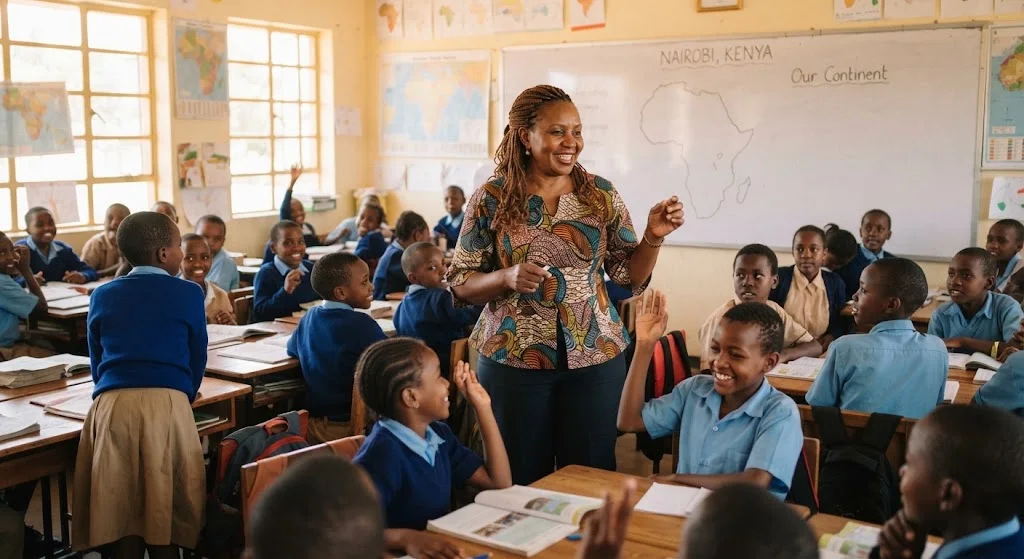
The United Nations (UN) is calling for stronger recognition and support for teachers as the world marks World Teachers’ Day on October 5, 2026, with this year’s observance highlighting six decades of international efforts to protect and advance the teaching profession.
The 2026 celebrations mark 60 years since the adoption of the 1966 ILO/UNESCO Recommendation concerning the Status of Teachers, an international framework that established standards on teachers’ rights and responsibilities, preparation, recruitment, employment and teaching and learning conditions.
World Teachers’ Day is observed annually on October 5 to recognise the contribution of teachers around the world and draw attention to the conditions they need to perform their roles effectively.
The day commemorates the anniversary of the adoption of the 1966 recommendation by the International Labour Organization and UNESCO.
World Teachers’ Day was first celebrated in 1994 and has since become an annual occasion for governments, educational institutions and organisations to recognise teachers while reflecting on challenges affecting the profession.
The 1966 recommendation remains an important international reference point for the status of teachers, covering issues including professional preparation, continuing education, recruitment and employment conditions.
A separate Recommendation concerning the Status of Higher-Education Teaching Personnel was adopted in 1997, extending the framework to teaching personnel in higher education.
World Teachers’ Day is co-convened by UNESCO, the ILO, UNICEF and Education International, bringing together organisations involved in education, labour and the rights and welfare of children.
This year’s observance comes as the 1966 recommendation is being revised to respond to developments that have changed the education landscape over the past six decades.
The 2026 theme is “Standing with teachers: 60 years of protecting the profession, advancing its status and shaping our futures.”
The theme calls for renewed attention to teachers’ status and the measures needed to protect, promote and elevate the profession.
UNESCO said teachers are facing emerging pressures from digital technologies, climate change, inclusion, migration and displacement.
It said these challenges are affecting the symbolic, professional and material status of teachers.
The symbolic status of the profession can be weakened when teaching is not sufficiently recognised or valued, while professional status is influenced by the level of autonomy, support and participation teachers have in policymaking.
Teachers’ material status is also affected by salaries, workloads and working environments that may prevent them from fully exercising their roles.
The 2026 celebrations will therefore provide an opportunity to review these challenges and consider strategies for strengthening the profession.
The global celebration at UNESCO Headquarters will feature high-level discussions on protecting and advancing the status of teachers.
The event will also include the award ceremony for the ninth edition of the UNESCO-Hamdan Prize for Teacher Development, while other celebrations will take place in different parts of the world.
The anniversary also provides an opportunity to reflect on how teachers are transforming education and the support required for them to fully deploy their talent and vocation.
The UN and its partners say supporting teachers is closely linked to broader efforts to build inclusive, peaceful and sustainable societies.
In a joint message marking World Teachers’ Day, UNESCO Director-General Khaled El-Enany, ILO Director-General Gilbert F. Houngbo, UNICEF Executive Director Catherine Russell and Education International General Secretary David Edwards called on governments and partners to strengthen the profession.
“On this World Teachers’ Day, UNESCO, the ILO, UNICEF and Education International call on governments and partners to stand with teachers by advancing the status of the profession and ensuring that every teacher, everywhere, is empowered to help build more inclusive, peaceful and sustainable societies.”
The organisations said World Teachers’ Day should be used not only to celebrate educators but also to reconsider the future of the profession.
As the international community marks 60 years since the adoption of the 1966 recommendation, the 2026 observance places renewed emphasis on ensuring teachers have the recognition, professional support and working conditions needed to educate future generations.
The anniversary comes at a time when education systems are adapting to technological, environmental and social changes, making the protection and advancement of the teaching profession a central focus of this year’s global observance.