
Somalia is proposing sweeping changes to its electoral system, including a new method of selecting the president and other senior leaders, as well as fresh requirements for political organisations seeking recognition as national parties.
The proposed reforms, approved by the Council of Ministers on Tuesday, November 24, will introduce a closed-list voting system for parliamentary elections and set a minimum 10 per cent vote threshold for political associations seeking national party status.
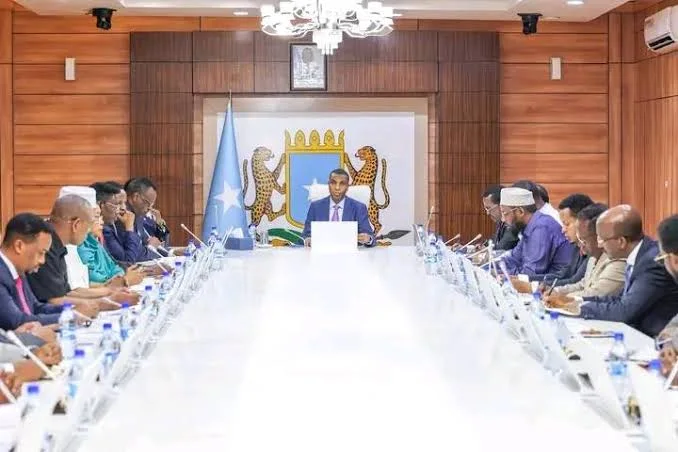
The decision was reached during an extraordinary Cabinet meeting chaired by Prime Minister Hamza Abdi Barre, where ministers endorsed amendments to two key pieces of electoral legislation.
According to a statement from the Office of the Prime Minister, the proposed changes cover 23 articles of the National Elections Law and eight articles of the Law on Political Associations and Parties.
The government said the review was necessary to bring the existing electoral laws into line with the country's Constitution, which was approved after the two laws had already been enacted.
“The amendments have been made to implement the Constitution of the Republic, since these laws were passed before the approval of the Constitution and therefore need to be aligned with it,” the statement said.
One of the most notable changes outlines how citizens will elect their representatives and how senior government officials will assume office.
Under the proposed arrangement, Somali voters will directly elect members of local councils, representatives of federal member states and legislators serving in both chambers of the Federal Parliament.
However, the selection of senior officials, including district commissioners and the President, will be conducted by the respective councils rather than through direct voting by the public.
The proposed amendments also introduce a new qualification requirement for political organisations seeking recognition as national political parties.
Under the arrangement, any political association that obtains at least 10 per cent of the votes cast in a federal-level election will automatically qualify for recognition as a national political party.
Another major proposal is the adoption of a closed-list electoral system, which will require political organisations to present predetermined lists of candidates contesting parliamentary seats.
Unlike a system where voters choose individual candidates, the proposed model will allow citizens to vote for political party lists.
The number of parliamentary seats allocated to each political organisation will then depend on its share of the vote, with successful candidates taking their positions according to the order in which they appear on the submitted lists.
The Cabinet also approved provisions granting the Independent National Electoral and Boundaries Commission authority to introduce measures that will simplify voter registration and participation in elections.
The commission will be guided by a constitutional requirement directing authorities to make it easier for citizens to exercise their right to participate in the electoral process.
Electoral reforms face political disagreements
The latest decision comes at a time when Somalia is grappling with disagreements between the federal government, opposition groups and some federal member states over constitutional changes and the country's future electoral arrangements.
Opposition leaders and regional administrations have raised concerns about aspects of the proposed reforms, calling for wider consultations on the framework that will guide upcoming elections.
The disagreements have largely focused on the proposed voting system, the sharing of political authority between the federal government and regional administrations, and how constitutional changes should be implemented.
Although Cabinet has approved the proposed amendments, they must still undergo the relevant legislative process before they can become law.
Cabinet approves agreement to establish UN human rights office
In a separate decision during Tuesday's meeting, the Council of Ministers approved an agreement between the Federal Government of Somalia and the United Nations to facilitate the establishment of an office of the United Nations Office of the High Commissioner for Human Rights (OHCHR) in the country.
The agreement provides for diplomatic immunity for OHCHR personnel who will be deployed to Somalia.
The government said the officials will work alongside various state institutions, supporting their efforts and cooperation on human rights matters.
The proposed agreement was presented to Cabinet by the Ministry of Family and Human Rights Development.
The statement announcing the decisions was signed by Abdinasir Ahmed Bashir, the Federal Government spokesperson and Director of Information and Public Relations at the Office of the Prime Minister