Kenya among countries hit hardest in new global food insecurity report
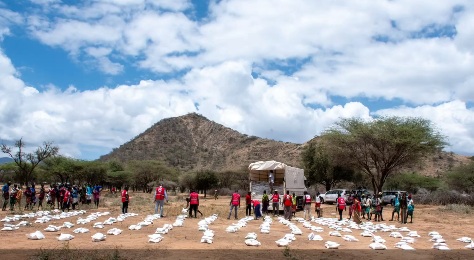
Weather-related shocks remain a major factor driving hunger. The report shows that one-third of people experiencing high levels of acute food insecurity in 2024 were in countries where extreme weather events were the main cause.
Millions of Kenyans are still unable to meet their daily food needs, with a new global report painting a grim picture of a crisis that continues to tighten its grip amid erratic weather, rising food costs and shrinking aid.
According to the tenth edition of the Global Report on Food Crises (GRFC) 2026, between 3 million and 4.9 million people in Kenya are facing acute food insecurity. The report shows the situation worsened between 2024 and 2025, with about 900,000 more people falling into IPC Phase 3 (crisis) or worse.
“Kenya, Somalia, and South Sudan faced deterioration in 2025. These were primarily caused by climatic shocks (drought and floods), conflicts and elevated food prices. The worsening conditions were compounded by reduced humanitarian assistance,” the report says.
The assessment was released by the Food and Agriculture Organization of the United Nations and the World Food Programme, working with the Global Network Against Food Crises and other partners with support from the European Union. It identifies East Africa as the region carrying the heaviest burden of food crises globally.
Weather-related shocks remain a major factor driving hunger. The report shows that one-third of people experiencing high levels of acute food insecurity in 2024 were in countries where extreme weather events were the main cause.
The pressure is also evident among populations in emergency conditions. Of the 39.1 million people classified under Emergency (IPC/CH Phase 4) in 2025, about 9.9 million were in countries where weather extremes played a leading role.
The report further links worsening conditions in the Horn of Africa to La Niña-driven dry spells during the short rains season between October and December 2025, which added strain to already vulnerable communities.
“Between 2021 and 2024, large increases in the populations facing emergency were reported in Haiti, Kenya, Nigeria, Pakistan, Somalia and the Sudan each with more than one million people in this phase.”
Kenya has also been listed among countries facing serious nutrition challenges. Others include Afghanistan, the Central African Republic, Chad, the Democratic Republic of the Congo, Madagascar, Mali, Niger, Nigeria, Somalia and Uganda.
Even in areas where slight improvements have been recorded, the report warns that the gains remain fragile, with many countries exposed to fresh shocks that could quickly reverse progress.
Across regions, West Africa recorded the highest number of children affected by acute malnutrition in 2025 at 12.5 million, followed by East Africa with 8.9 million children. The report attributes this to long-standing crises fueled by overlapping pressures.
Data in the report shows a sharp rise in the most severe forms of food insecurity since 2016, growing from about 155,000 people in two countries to 1.4 million people across six countries. Over the same period, the number of people in urgent need of food assistance has doubled.
It also notes that 33 countries have consistently appeared in every edition of the report since 2016, making up around 80 per cent of the global population facing acute food insecurity.
Conflict remains a key driver of hunger and malnutrition worldwide, continuing to worsen conditions in already fragile settings.




Comments
Sign in with Google to comment, reply, and like comments.
Continue with Google