

Jubilee Party leader Fred Matiang’i has challenged ethnic-based politics, questioning whether Kenyans from smaller communities should remain permanently excluded from the presidency as political divisions over ethnic voting blocs intensify ahead of the 2027 General Election.
Matiang’i argued that leadership should be determined by an individual's ability, qualifications and commitment to serving the country rather than the numerical strength of their ethnic community.
In a video shared on X on Monday, the former Interior Cabinet Secretary challenged the perception that some communities are politically insignificant and therefore cannot produce a president.
“Where do those who don’t matter go? Where is their God?” Matiang’i posed, questioning the treatment of communities considered politically insignificant because of their numbers.
He further challenged the idea that such communities should remain subordinate to politically dominant groups.
“In other words, are they meant to be, then, in that case, slaves forever?” he posed.

The former Cabinet Secretary maintained that denying Kenyans an equal opportunity to seek the presidency because of their ethnic backgrounds undermines democratic principles.
“Then we are not building a democracy. Honestly speaking, we are not building a democracy,” he added.
Matiang’i's remarks followed comments by former Deputy President Rigathi Gachagua, who outlined his proposed opposition vote-sharing arithmetic during an interview on Inooro TV on Sunday, November 1, 2026.
Gachagua, who leads the Democracy for the Citizens Party (DCP), claimed that he could mobilise approximately 10 million votes from the Mount Kenya and Maasai communities, while Wiper leader Kalonzo Musyoka could deliver three million votes from Ukambani.
He also attributed four million potential votes to Nairobi Senator Edwin Sifuna's Linda Mwananchi movement, while estimating that Matiang’i could command approximately 800,000 votes from the Gusii community.
The figures formed part of Gachagua's argument that an alliance involving himself, Kalonzo and Sifuna could assemble sufficient numbers to defeat President William Ruto in the 2027 presidential election.
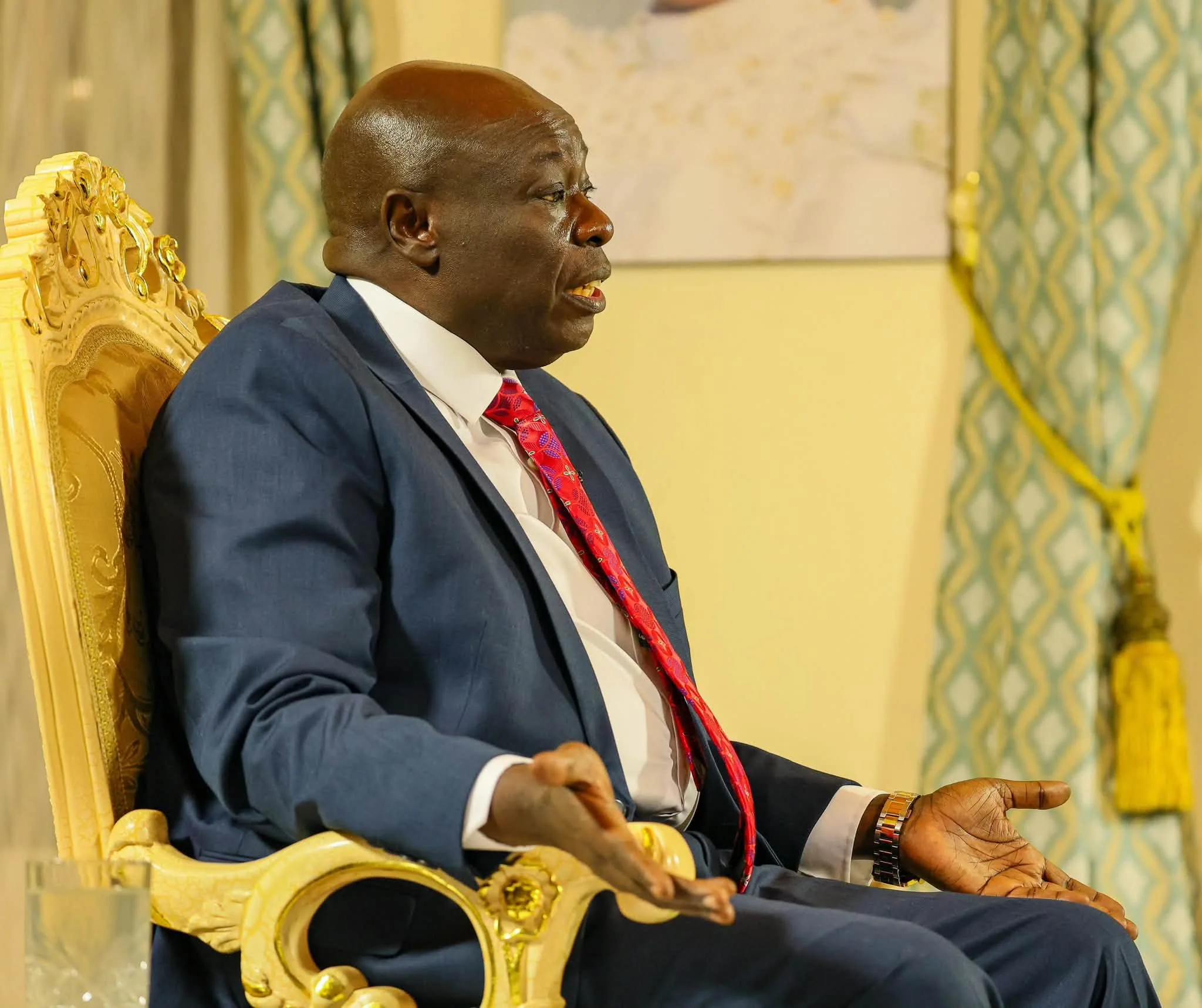
However, the calculations appeared to sideline Matiang’i and other opposition leaders, prompting the Jubilee leader to question an approach that determines political relevance through ethnic numbers.
On his X account, Matiang’i described the attitude as majoritarian arrogance, warning that it could undermine efforts to unite the opposition.
“That majoritarian arrogance and that particular pride is precisely what is going to split the opposition and make it very difficult for the opposition to come together. We are in an enterprise that we should call, for want of a better term, no Kenyan left behind,” he said.
Matiang’i cautioned against repeating the divisions that preceded the 2007-2008 post-election violence, arguing that political exclusion based on ethnic considerations could have serious consequences for national unity.
“If you remember in 2007, when we had challenges in this country, the whole politics started from that level of arrogance, which finally resulted in 41 versus one, and then caused so much pain and anguish in the country,” he said.
He further argued that the opposition's presidential candidate should command support across Kenya rather than be identified with a particular ethnic community.
“Our candidate belongs to more than 40 groups. The leadership and the future of our country is not a matter to be decided on ethnic balkanization. It ought to be decided on the basis of capacity, not community. It is a matter of character, not cultural connections,” he added.
The remarks also come as Matiang’i advances his presidential ambitions under the Jubilee Party, which has endorsed him as its candidate for the 2027 General Election.
On October 30, 2025, Jubilee's National Executive Council formally accepted his presidential candidature and appointed him Deputy Party Leader.
The decision placed the former Cabinet Secretary at the centre of the party's efforts to rebuild its political structures and strengthen its position within the opposition.
In February 2026, Jubilee leaders reaffirmed their support for his candidature, calling for grassroots mobilisation and increased party membership ahead of the elections.
Matiang’i's political messaging has increasingly focused on governance, national unity, institutional accountability and restoring public confidence in government.
His latest comments on ethnic politics could also form part of his broader attempt to appeal to voters beyond his traditional Gusii support base and present himself as a national presidential contender.
By advocating for leaders from smaller communities, including the Borana, to have an opportunity to become president, he is challenging the assumption that electoral numbers should determine who is considered eligible for the country's highest office.
To reinforce his argument, Matiang’i cited former Tanzanian President Julius Nyerere, saying his leadership demonstrated why the size of a person's community should not determine their suitability for the presidency.
He expressed hope that Kenya would eventually elect capable leaders from communities that have historically had limited influence in national presidential politics.
He warned that categorising Kenyans into communities that matter and those that do not risks deepening divisions and weakening national cohesion.
Matiang’i maintained that democracy should guarantee equal political opportunities and allow qualified individuals to compete for leadership without being judged by their ethnic identities.
His intervention adds to the growing debate over ethnic alliances, electoral arithmetic and the search for a presidential candidate capable of attracting support across Kenya's diverse communities as the 2027 elections approach.