
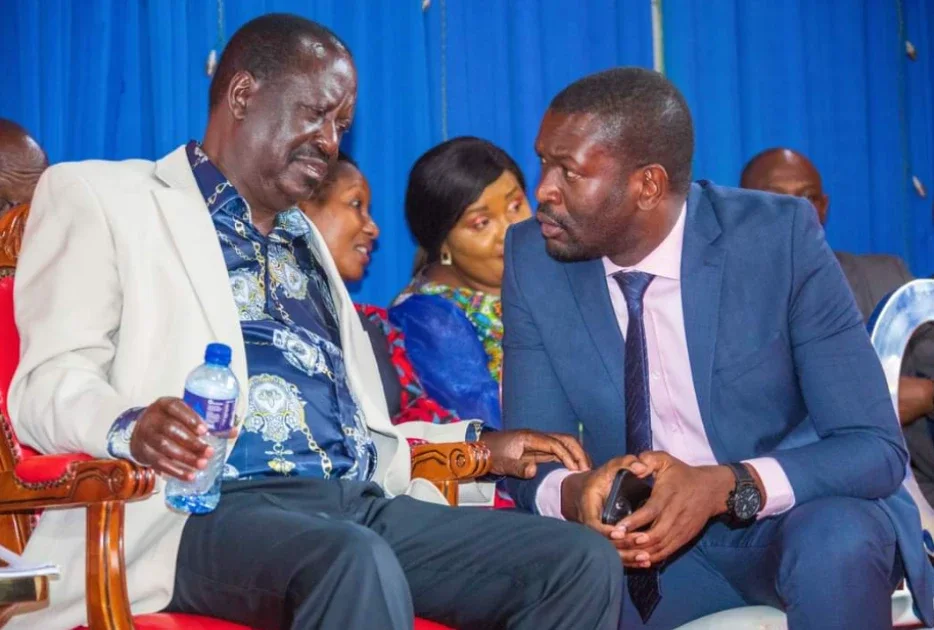
Nairobi Senator Edwin Sifuna has defended his role in the bitter disagreements within the Orange Democratic Movement (ODM), saying he remained committed to protecting the party from internal divisions after the death of its longtime leader, Raila Odinga, despite the conflict that ended his nine-year tenure as Secretary General.
Sifuna, speaking to the media on October 9, 2026, said his attempts to bring the party's leadership together had repeatedly run into challenges, with disagreements persisting despite several rounds of mediation.
He maintained that he had done his best to honour a promise he made to Raila during his burial in Bondo, insisting that he never intended to be responsible for the party's downfall.
The senator, who is also a co-principal of the Linda Mwananchi movement, said ODM was no longer the same organisation it had been under Raila's leadership. He noted that the changes had left some members struggling to find political direction within the party under whose ticket they were elected.
“I want Baba, wherever he is, to know that I actually kept my promise during his burial not to be the one to wreck his party. I have been at the centre of some of the controversy, but I personally believe that I tried my best to keep the party united, just as I said in Bondo,” he said.
Sifuna acknowledged that the period following Raila's death had been difficult for those who worked with or supported the former Prime Minister, describing the changes within ODM as part of a challenging time for the party and its wider political network.
“It has changed quite dramatically since the last time we had Mzee around. It has been a very difficult period for many, many people…from his family to his supporters, his party and all those who knew him," he said.
He said his priority had been to prevent disagreements among senior party officials from weakening ODM, but alleged that the leadership had not always been involved in making decisions affecting the organisation.
“For me, I really do hope that, wherever Baba is, he sees that I personally made an effort to bring the party leadership together. But it was clear to us that decisions concerning ODM were being made elsewhere, and we were simply being told to implement them.”
Efforts to settle party differences
The Nairobi senator said efforts to resolve the leadership disagreements had involved several interventions, including meetings with party trustees and discussions held at the homes of those involved.
He recalled a visit to Ida Odinga, Raila's widow, on the former Prime Minister's birthday, saying she had urged party leaders to put their differences aside and engage in discussions aimed at finding a solution.
“We have had so many interventions. I remember at some point when we visited Mama during Baba's birthday, and she implored the party leadership to sit down. We had many, many sessions and very many mediation efforts to try to intervene,” Sifuna said.
He commended the party trustees who took part in the mediation, noting that the discussions had initially given the impression that the leaders were moving towards an agreement.
However, he claimed that decisions made after some of the meetings went against what had been agreed upon, making it difficult to sustain the progress achieved during the reconciliation efforts.
“We thought we were making progress, but then you would wake up in the morning and find that decisions contrary to the resolutions of the meetings we had were being made,” he said.
Sifuna's account suggests that the dispute went beyond personal disagreements, with his concerns also focusing on how decisions were reached and whether party leaders were respecting agreements made during mediation.
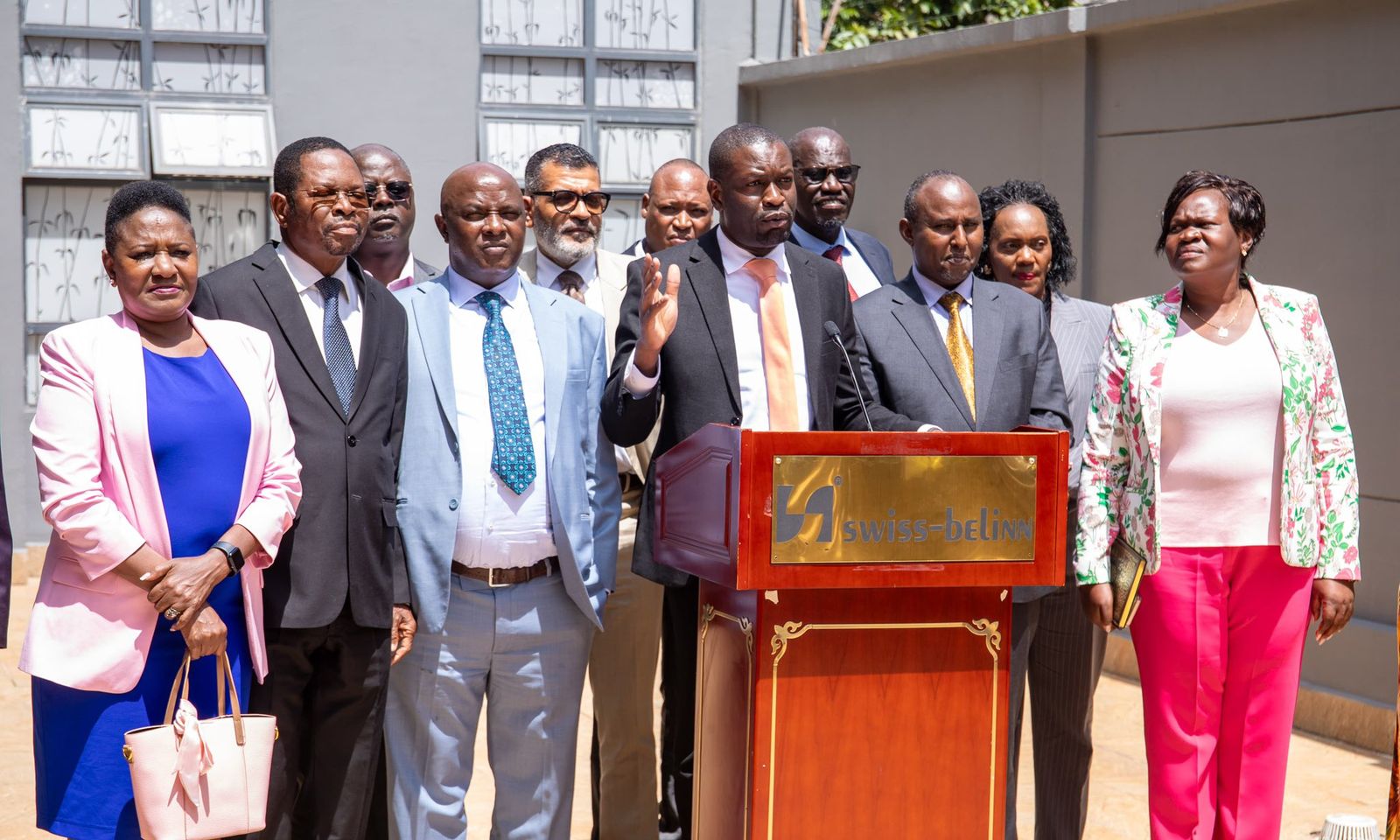
Sifuna also defended his decision to challenge his removal as ODM Secretary General in February, arguing that the party did not follow the proper procedures in ending his tenure.
He said he took the matter to the Political Parties Disputes Tribunal (PPDT), which, according to his account, found that the party had acted wrongly in removing him and directed those involved to comply with the ODM constitution.
After the tribunal proceedings, Sifuna said he wrote to the party seeking arbitration in line with the provisions of its constitution. He claimed, however, that the request was turned down, with the party opting to establish a separate body to handle the disciplinary proceedings against him.
“I wrote a letter pursuant to the ODM Constitution requesting arbitration. The arbitration was rejected. Instead, they decided to set up what I essentially believe was a kangaroo court to try me,” Sifuna said.
He questioned why the party had not referred the matter to its existing disciplinary committee, arguing that the constitution already provides for a body mandated to handle such cases.
Sifuna identified the standing disciplinary committee chaired by Hon. Rama Abubakar as the body that should have considered the allegations against him, rather than a separate panel.
“The ODM Constitution provides for a standing disciplinary committee chaired by Hon. Rama Abubakar. So, the expectation was that they would follow the Constitution and subject me to a disciplinary process. But they set up this separate body, which then tried my case in my absence,” he said.
The senator added that he had also sought the tribunal's intervention over the disciplinary proceedings but was unsuccessful. He maintained that ODM had yet to explain why his case was not handled by the standing disciplinary committee as provided for in the party's constitution.
His defence comes amid continuing disagreements over ODM's leadership and direction following Raila's death. While acknowledging that he had been at the centre of some of the controversy, Sifuna insisted that his actions were driven by efforts to keep the party together.
He maintained that he had tried to honour his commitment to Raila by pursuing reconciliation, even as the dispute over his removal and the party's internal procedures continued.