
Kenya has reported no new cases of Ebola over the past 24 hours, with all 135 contacts linked to the outbreak’s first case traced as the government prepares to release the first group of monitored contacts from quarantine this weekend.
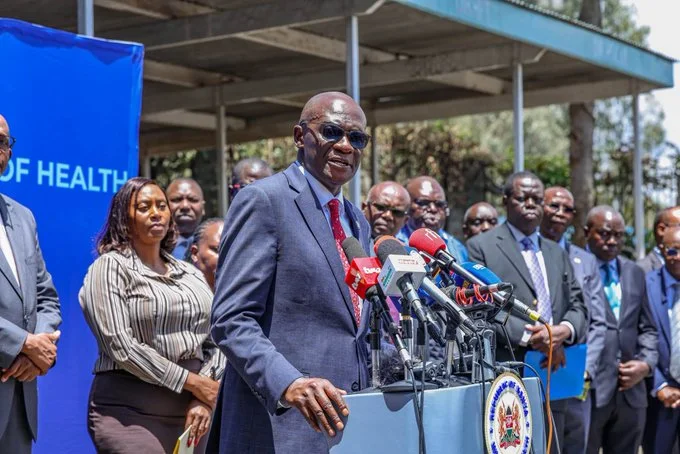
In a press release dated October 22, 2026, Director General for Health Dr Patrick Amoth said all 14 samples collected and tested from alerts reported in different parts of the country over the preceding 24 hours had returned negative results for Bundibugyo Virus Disease (BVD).
The announcement came on Day 17 of Kenya’s response to the outbreak, following confirmation of the first imported case on October 6, 2026.
“The total number of cases confirmed remains nine (9), including the index case, who died on 05th October, 2026,” Amoth said.
He added that all confirmed cases belonged to a single cluster, with no evidence of community transmission.
Eight patients are currently receiving treatment in designated isolation facilities, including four family members and four healthcare workers who cared for the first case.
According to the Ministry of Health, all eight patients are stable and responding well to treatment administered by infectious disease specialists.
“We look forward to each of them completing treatment, recovering fully, and being discharged home to their families,” Amoth said.
The ministry said contact tracing had reached 100 per cent, with all 135 contacts associated with the first case identified within Kenya and internationally.
Relevant health authorities in the countries concerned had also been formally notified in accordance with the International Health Regulations (2005).
Amoth credited national and county contact-tracing teams, families, communities and development partners for helping achieve the milestone.
The health authorities have also mapped the exposure dates, quarantine periods and symptom onset of every confirmed case to establish how the infections occurred.
The investigation found that each patient had been in close contact with the first case between October 3 and 5, before entering quarantine, and subsequently developed symptoms within Ebola’s known incubation period of two to 21 days.
“This pattern is consistent with infection from the first case,” Amoth said.
He added that the findings showed no infection had been traced to transmission within quarantine facilities, where infection prevention and control measures had been further strengthened.
The ministry said it was calculating each contact’s 21-day monitoring period from their last exposure. Contacts exposed to a later confirmed case would have their monitoring period counted from that subsequent exposure.
Nationwide surveillance and testing are continuing as authorities seek to contain the outbreak and prevent further infections.
The ministry reported that it had screened 709,093 travellers at points of entry since the response began, including 3,107 in the 24 hours before the latest update.
A total of 461 samples had been tested since the outbreak began in May 2026, according to the statement.
The government expects the first contacts to complete their 21-day monitoring period to leave quarantine from Sunday, October 25, provided they remain in good health.
Amoth urged communities, workplaces and neighbours to welcome those released from quarantine, noting that they would have completed the full monitoring period without developing the disease.
“They have passed the full monitoring period without falling ill and cannot pass the infection to anybody,” he said.
The ministry also reassured Kenyans that travel, trade and public gatherings remained unrestricted, urging the public to continue following official health guidance and cooperate with response teams.
People experiencing symptoms such as fever, unusual tiredness, muscle or joint pain, sore throat, vomiting, diarrhoea, or unexplained bleeding were advised to seek medical attention immediately.
The ministry said people could report suspected cases through the toll-free number 719 or the Jali WhatsApp chatbot on 0700 719 719.
Amoth called on the public to support patients, contacts and healthcare workers while avoiding stigma against those affected by the outbreak.
“Let us stand with our patients, contacts and health workers with compassion, not stigma,” he said, adding that the end of the outbreak was within reach.
The ministry said surveillance, testing and contact monitoring would continue as health authorities work to prevent further transmission.