
Kenya's sugar production increased by 56.7 per cent in the first nine months of 2026, easing pressure on the domestic market as retail prices fell by Sh32 for a two-kilogramme packet compared with the same period last year.
Data from the Kenya Sugar Board shows that the country produced 690,521 tonnes between January and September 2026, up from 440,652 tonnes recorded during a similar period in 2025.
The increase represents an additional 249,869 tonnes of locally produced sugar, strengthening domestic supply and reducing the country's reliance on imports.
Kenya Sugar Board CEO Jude Chesire said the country was targeting production of 900,000 tonnes against an estimated annual demand of one million tonnes.
This would mark a significant improvement from the approximately 650,000 tonnes produced last year.
The growth in output was supported by increased sugarcane processing, with factories crushing 7.76 million tonnes during the nine-month period, compared with 4.97 million tonnes in 2025, representing a 56.2 per cent increase.
Consumers have also benefited from the improved supply, with the national average retail price declining to Sh155 per kilogramme in September 2026 from Sh171 during the same month last year.
This means households paid approximately Sh310 for a two-kilogramme packet, compared with Sh342 a year earlier, representing a Sh32 reduction.
The improved domestic production also contributed to a decline in sugar imports, which fell by approximately 31 per cent to 251,690 tonnes between January and September 2026, from 364,486 tonnes in the corresponding period last year.
Imports of mill white and brown sugar recorded the sharpest decline, dropping by about 71 per cent to 65,845 tonnes from 226,730 tonnes.
However, imports of refined white sugar increased to 158,006 tonnes from 137,756 tonnes, highlighting continued demand for imported sugar despite the growth in local production.
Meanwhile, local millers increased their cumulative sales by 45.6 per cent to 635,672 tonnes, compared with 436,593 tonnes in the first nine months of 2025.
Sugar stocks at the end of September also increased to 70,773 tonnes from 14,033 tonnes a year earlier, providing a larger buffer against potential supply disruptions.
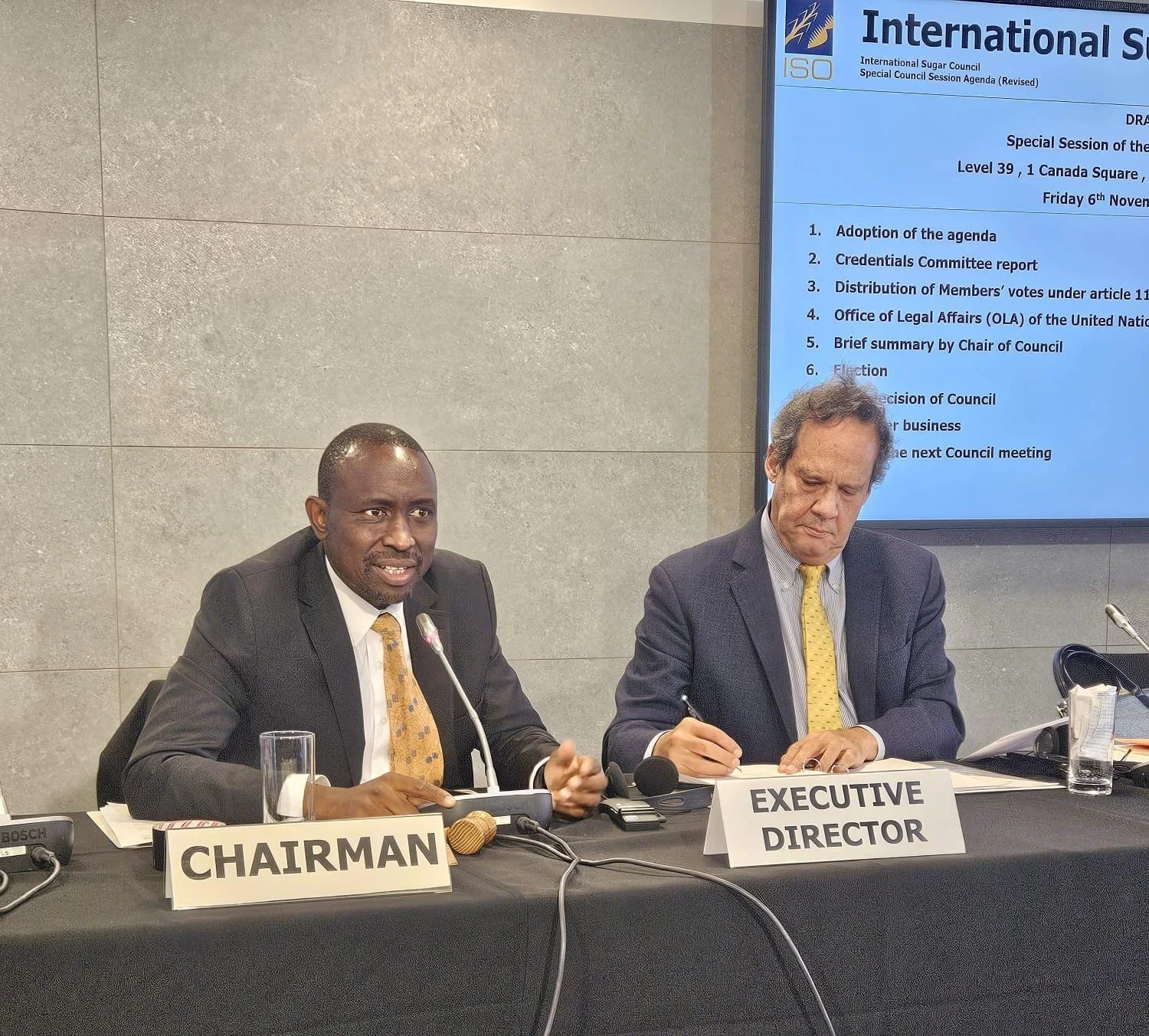
Beyond the domestic market, Kenya is seeking to position itself as a stronger player in the international sugar industry through its leadership at the International Sugar Organization (ISO).
Chesire, who chairs the ISO Council, recently helped resolve a leadership stalemate at the organisation after three rounds of voting failed to produce a candidate with the required two-thirds majority for the Executive Director position.
Following consultations among member states, the Council agreed that Mauritius' Devesh Devani would serve the first four-year term, followed by Brazil's Eduardo Leão de Sousa for the subsequent four years.
The agreement followed inconclusive voting on September 22, 2026.
Chesire said Kenya intended to use its position in the organisation to explore export markets as domestic production continues to grow.
"Kenya by next year will start building surpluses for exports and requires such a platform to create new markets," he said.
Kenya exported 315.57 tonnes of sugar between January and September 2026, compared with 244.80 tonnes during the same period in 2025.
The country is also exploring opportunities in ethanol and biofuel production, with Brazil identified as a potential partner for knowledge and technology exchange.
"Conversations are now building up towards biofuels and ethanol production," Chesire said, adding that Kenya was seeking to benchmark with established producers.
The development comes as molasses production, a by-product of sugar manufacturing, increased by 62.1 per cent to 307,617 tonnes from 189,809 tonnes in the first nine months of 2025.
Chesire said expanding into ethanol production could provide additional commercial opportunities for the sugar industry while creating alternative uses for molasses.
The government is therefore seeking to sustain the production gains while attracting investment into processing, developing export markets and diversifying the country's sugar industry.