
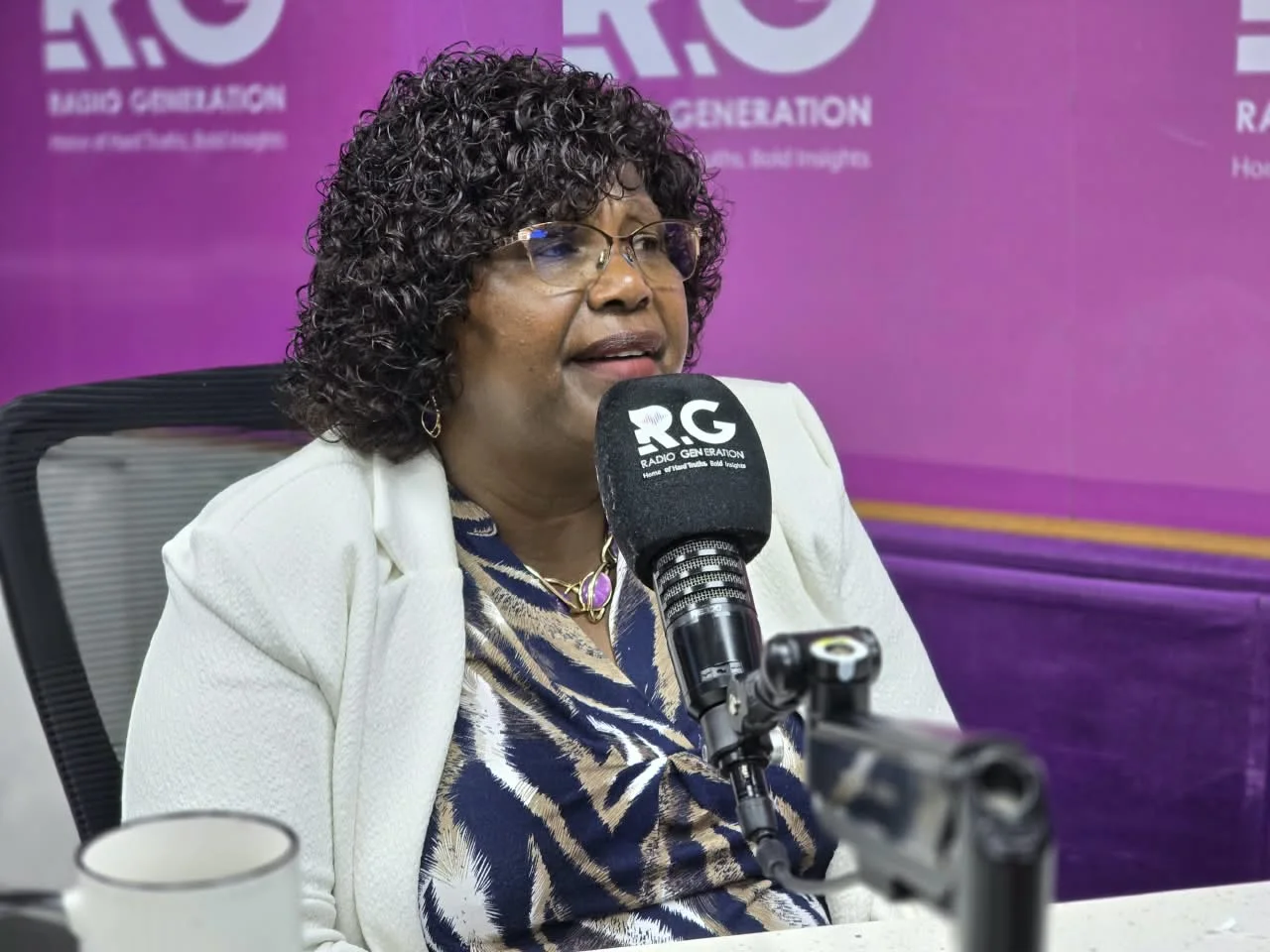
Naivasha Member of Parliament Jayne Kihara has accused President William Ruto of betraying the expectations of Mount Kenya voters who helped propel him to power in 2022, citing unfulfilled campaign promises.
Speaking on Radio Generation on October 14, 2026, Kihara maintained that she initially believed Ruto had the solutions to Kenya’s challenges but became disillusioned after his administration took office.
“You know, like we can all see even now. Ruto just talked. Some of us believed what he said, like me. You know, I was an insider myself. So we talked about many things, and we thought he had the solutions for this country. Only that when he got there, he became completely the opposite. The opposite things that we said we will do. We didn't do. He's doing things we never said we would. That's my biggest problem,” she said.
Kihara’s remarks highlight the widening political rift between Ruto and some of the leaders who campaigned for him in the populous Mount Kenya region, which was instrumental in securing his victory over Azimio presidential candidate Raila Odinga.
According to the Independent Electoral and Boundaries Commission’s 2022 presidential results, Ruto garnered 7,176,141 votes, or 50.49% of the national vote, against Odinga’s 6,942,930 votes, or 48.85%.
Mount Kenya delivered a particularly strong showing for Ruto, with the president winning large majorities in counties including Kiambu, Murang’a, Nyeri, Kirinyaga, Embu, Meru and Tharaka-Nithi.
One of the defining moments in the changing relationship between Ruto and Mount Kenya came in October 2024, when Deputy President Rigathi Gachagua was impeached and subsequently removed from office.
Gachagua had played a central role in mobilizing support for Ruto in the region during the 2022 campaign. His removal, following an increasingly public disagreement with the President, exposed divisions within the Kenya Kwanza administration and unsettled the political alliance that had helped bring the government to power.
On October 8, 2024, the National Assembly voted to impeach Gachagua, with 281 lawmakers supporting the motion and 44 opposing it. The Senate later upheld the impeachment, and Ruto nominated Interior Cabinet Secretary Kithure Kindiki to replace him.
Gachagua denied the allegations against him and described the proceedings as politically motivated.
Kihara argued that the fallout should be understood in the context of the broader political relationship between Ruto and the region, insisting that Mount Kenya’s support during the election was built on expectations she believes were not met.
The Naivasha MP also accused the President of attempting to fragment the region’s voting bloc as political alignments shift ahead of the next election.
“Looking back, I believe Ruto had a plan for the Mount Kenya vote all along. I will ensure the region does not unite behind him the way it did in 2022. I can now see what he began doing immediately after taking office,” she said
Kihara recalled that more than 60 leaders from across Mount Kenya met during the 2022 campaign to coordinate their political support, arguing that the did so to consolidate the region’s influence.
“When Ruto was campaigning, he went to Mount Kenya more than he went to his region. Although Mount Kenya was who would vote, so he didn't need to go and convince them. What was he doing? He was going out to tell these people and to show them, 'Here I am. I'm supporting your son.' And with his language, oratory skills na ujanja, to call it, people in Mount Kenya just took him.”
She further rejected claims that Mount Kenya East and West were separate political constituencies, describing their differences as products of electoral mobilization rather than a fundamental division.
“Mount Kenya East and West have not been that we are not the same people. It was just our mobilization boundaries. We are one,” Kihara said.