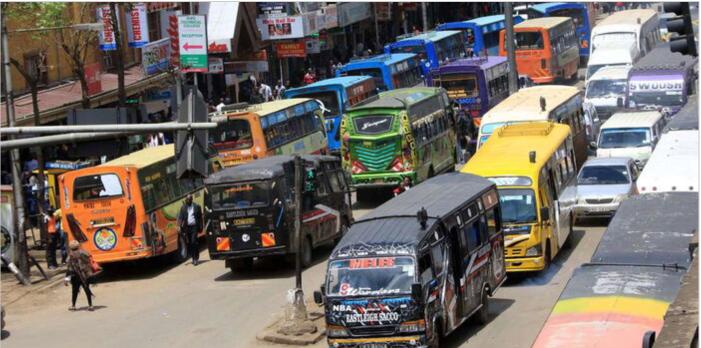
A proposal to stop unpredictable matatu fare increases has gained fresh backing in Parliament, bringing Kenya closer to introducing government oversight on what commuters pay for public transport. Lawmakers say the changes are aimed at protecting passengers from arbitrary charges that often leave many stranded or forced to dig deeper into their pockets without warning.
Members of Parliament are backing the NTSA (Amendment) Bill, 2023, which seeks to give the National Transport and Safety Authority (NTSA) powers to regulate fares charged by public service vehicles.
The proposed law seeks to amend the NTSA Act by requiring the development of policy guidelines that will govern the fares payable by passengers using public transport.
The Bill, sponsored by Kimilili MP Didmus Barasa, seeks to end the wide discretion matatu operators have had over the years in determining transport charges. If enacted, NTSA will be mandated to validate and approve fares charged by PSVs and provide commuters with an official channel to report operators who impose excessive charges.
The proposal would also place Kenya among countries such as Ghana, Ivory Coast, Rwanda, Tanzania, Cameroon, Fiji and Germany, where governments regulate public transport fares.
While debating the Bill, lawmakers argued that fare regulation is long overdue, saying passengers have for years been subjected to unpredictable charges, especially during bad weather, peak hours and holiday seasons.
“We cannot continue encouraging a banana republic in Kenya where transport from point A and B is not predictable. We cannot have a country where fare is dictated by the weather and the number of people at a stage,” said Didmus Barasa.
“We cannot leave Kenyans in the hands of cartels.”
Barasa said government intervention is necessary, arguing that public transport should be treated like other essential sectors where prices are monitored to protect consumers.
“A Kenyan who left his house with Sh100 as fare does not know what he will pay in the evening. This Bill will bring equity, order and Kenyans can effectively budget,” Barasa said.
Kesses MP Julius Ruto supported the proposal, saying Parliament has a duty to protect ordinary Kenyans from practices that make the cost of living even harder.
“We are saying, we can have an organised entity... we are looking at that common man who must survive, eat and live,” he said.
Tigania West MP John Mutunga said transport operators should not be allowed to raise fares whenever fuel prices go up while failing to reduce them once fuel becomes cheaper.
“We have seen cases where fuel prices increase and fare goes up but when fuel decreases, fare does not come down. Matatus can’t be allowed to change fares as they want,” Mutunga said.
“Where circumstances have changed, we must have a mechanism of reviewing the changes. In Europe and America, the fares are cheaper because they are regulated.”
Dagoretti North MP Beatrice Elachi said introducing fare controls would help create a more organised public transport system for future generations despite the political sensitivity surrounding the issue.
“I know it’s a live wire to touch because of politics, but we have to do it for the future,” she said.
“Something must be done, we must have regulations to guide them even though they are our voters, they are our sons and daughters and we must guide them.”
She also urged Parliament to introduce rules governing the conduct of matatu crews, saying passengers deserve to be treated with dignity.
“This idea of throwing people out when they don’t have fare must be stopped,” she said.
Nominated MP Sabina Chege said regulation would protect consumers and improve standards in the public transport sector.
“In countries where there are these regulations, there is decency. Public dignity is a must,” Chege said.
Despite the growing support in Parliament, the proposal has previously faced opposition. The National Assembly Transport Committee rejected the Bill, while former Transport Cabinet Secretary Kipchumba Murkomen also raised concerns over the proposal.
In submissions made to the Transport Committee in November 2023, Murkomen said fare controls should only be considered after detailed studies and consultations with stakeholders.
“We advise that a comprehensive study and stakeholder engagement should be undertaken on the Bill’s proposals to determine their practicability and ensure the same do not violate any conventions or treaties applicable,” Murkomen said.
The debate over regulating matatu fares is not new. In 2018, Parliament rejected a proposal by the Transport Ministry to amend the Traffic Act and give the Cabinet Secretary powers to regulate PSV fares. Another similar proposal was opposed by the Matatu Owners Association in 2020.