
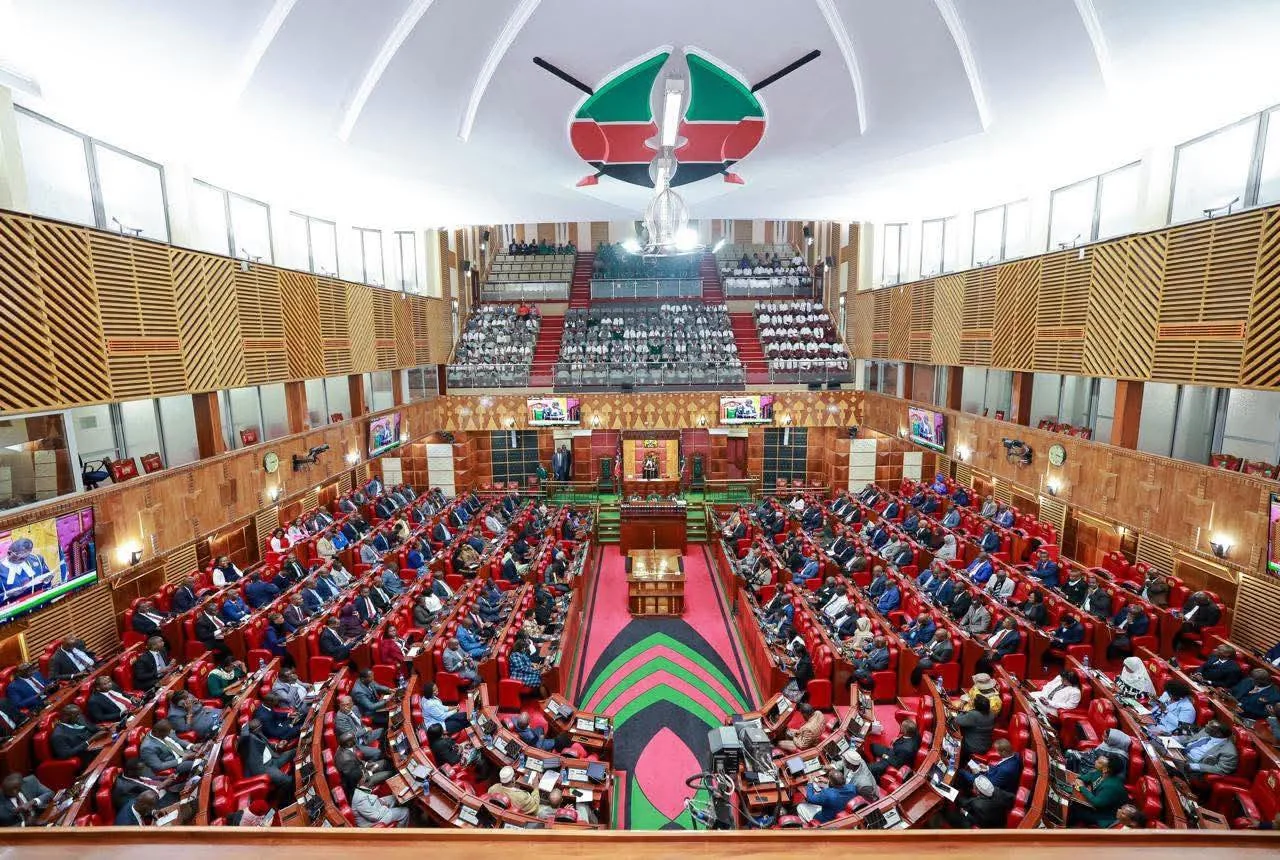
The push to increase the number of voters assigned to each polling station ahead of the 2027 General Election has run into strong opposition in Parliament, with MPs warning that the change could stretch voting hours, create opportunities for malpractice and leave some voters unable to cast their ballots.
The lawmakers want the current ceiling of 700 voters per polling station retained, arguing that the Independent Electoral and Boundaries Commission (IEBC) has not done enough to increase the number of polling stations needed to support a larger voter population at each centre.
The proposal came up during debate on the Elections (Amendment) Bill 2024, where MPs questioned the practicality of moving the limit from 700 to 1,000 voters.
Some lawmakers said the commission should instead consider lowering the number of voters allocated to individual polling stations to make the process faster and more manageable.
Under the existing law, a polling station can have a minimum of 50 voters and a maximum of 700.
Justice and Legal Affairs Committee chairman George Murugara said the committee was not satisfied with the proposal and would seek the support of other MPs to retain the existing limit.
"As a committee, we have a problem with this proposal, and we will move an amendment so that the current number is retained, especially since the IEBC is not in a position to review polling stations," said Mr Murugara.
Murugara said the commission had limited time to prepare for the next election and should already have made progress in identifying and establishing additional polling stations if it intended to accommodate more voters in each centre.
"Time is running out, and there is a lot to be done. We thought IEBC would come up with new polling stations for the upcoming elections. However, this does not appear to be the case, so it may not be appropriate to implement this provision now," he said.
Wajir East MP Aden Mohammed said the priority should be to make the voting process simple for Kenyans rather than introduce measures that could make it harder for voters to cast their ballots.
He said placing as many as 1,000 voters at one polling station could force the exercise to continue for many hours.
"A limit of 1,000 people per polling station could mean that voting takes more than 12 hours. We will therefore propose an amendment to that section and retain the number at 700, if the House agrees" he said.
Marakwet West MP Timothy Toroitich said the proposed increase did not make sense, arguing that polling stations should handle fewer voters if the aim was to improve the voting experience.
"The number should have been reduced. As it stands, a polling station is, politically speaking, a unit of development. So increasing the number of voters per polling station from 700 to 1,000 is quite unreasonable," he said.
Nominated MP Irene Mayaka focused on the wording of the proposal, saying the provision could cause confusion over the number of voters to be assigned to a polling station.
"At each polling station, we need clear definitions and specifications. All polling stations should have a specific number. The provision should not allow for a range of 50 to 1,000 people. That is not clear. The previous law, which set the limit at 700, was much clearer. If we want to increase the number, we should specify the new limit We should not introduce ambiguity" said Ms Mayaka.
IEBC has asked Parliament to amend Section 38A of the principal Act to change the rules governing the number of voters assigned to each polling station.
In its submission to Parliament, the commission initially proposed increasing the upper limit from 700 to 1,000 voters.
However, the wording contained in the proposal states: "The commission proposes the following amendment to section 38A of the principal Act: For the purposes of the efficient and effective conduct of elections, the number of voters per polling station shall not exceed eight hundred."
The commission has defended the proposed changes by pointing to improvements in voter identification technology.
IEBC said the new voter identification machines are faster than the equipment used during the 2013, 2017 and 2022 elections, allowing voters to go through the identification process in less time.
The commission also told the Justice and Legal Affairs Committee during a retreat in Mombasa in April that it would deploy additional clerks for the 2027 elections.
The extra personnel are expected to help voters establish where they are registered, reducing the time spent searching for names on boards before identifying the polling station where they should vote.
IEBC said the proposed adjustment was also informed by findings from its post-election assessment of the 2022 General Election.
The commission said the research was supported by data collected during the review and used to assess how polling stations performed during the previous election.
According to IEBC's projections, approval of the proposal would allow most polling stations to complete voting by 4pm. The commission also said the arrangement would prevent queues from continuing late into the evening.
Besides seeking a higher voter ceiling, IEBC has asked Parliament to remove the minimum requirement of 50 voters at a polling station.
The commission argued that eliminating the minimum threshold would give it greater room to respond to the needs of areas where voters are spread out or where people have to cover longer distances to reach polling centres.
Despite the commission's arguments on technology, staffing and the findings from the 2022 election review, MPs have raised concerns about implementing the change without a corresponding increase in the number of polling stations.
The lawmakers have indicated that they want the 700-voter limit maintained as Parliament considers the proposed amendments ahead of the 2027 General Election.