Surveyors body rejects blanket charges in South C collapse case, calls for individual liability
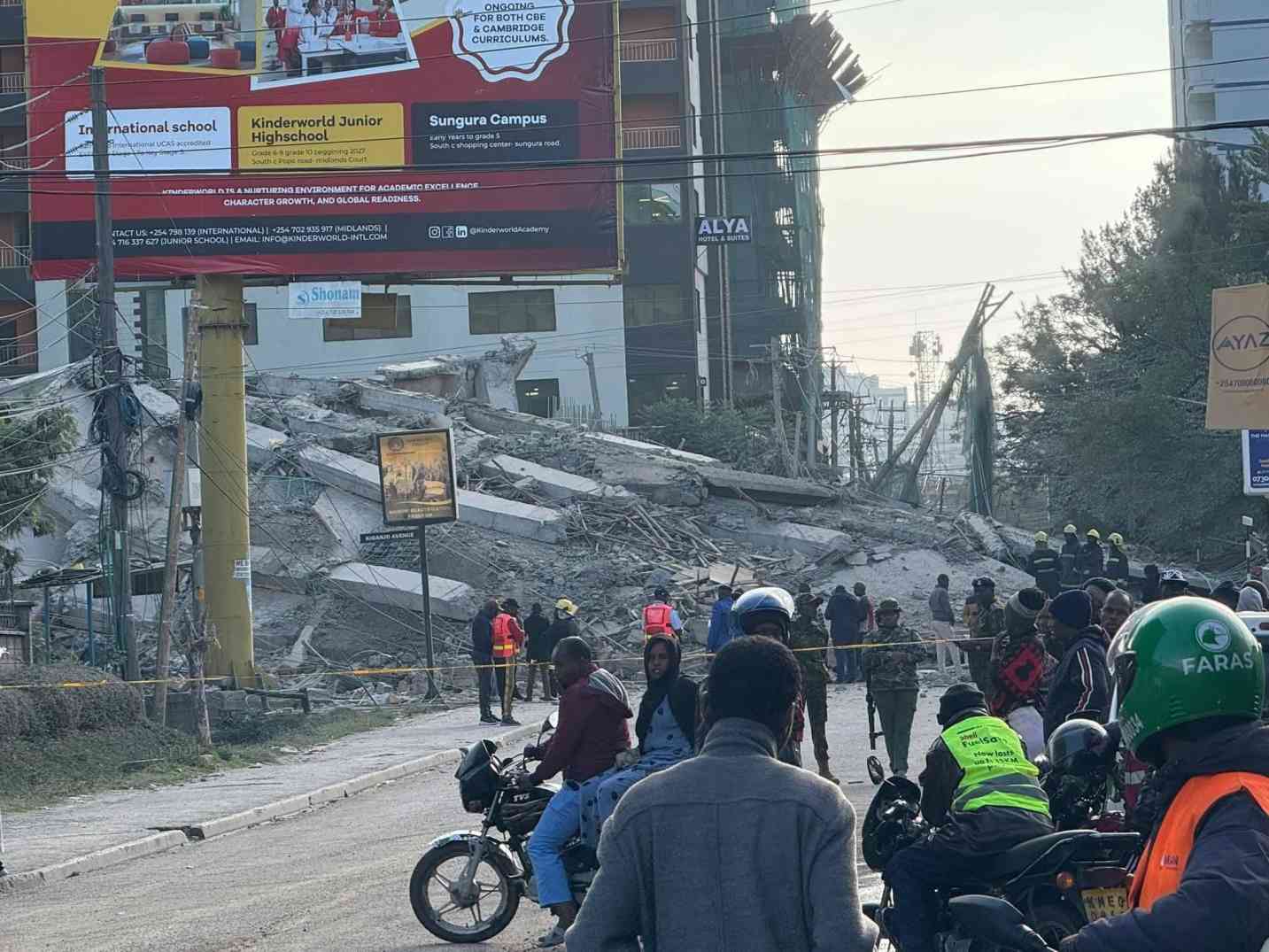
The Institution of Surveyors of Kenya (ISK) says charges against Nairobi City County’s Urban Planning Technical Committee members should be based on individual evidence, not “blanket” liability, after the South C collapse.
A dispute has emerged over who should be held responsible in the South C building collapse case, with the Institution of Surveyors of Kenya pushing back against moves to prosecute members of Nairobi City County’s Urban Planning Technical Committee, arguing that liability must be pinned on individuals based on clear evidence rather than shared across an advisory body.
In a statement issued on Thursday, June 11, 2026, ISK said it had taken note of the decision by the Office of the Director of Public Prosecutions to initiate charges against members of the committee following the fatal collapse. The institution also acknowledged Governor Johnson Sakaja’s decision to reconstitute the committee after the incident.
While expressing sympathy to those affected, ISK maintained that accountability in the matter must be guided by facts and not general assumptions that treat all committee members as equally responsible.
“The institution is deeply concerned by the apparent blanket approach adopted by charging members of the Urban Planning Technical Committee without sufficiently investigating whether processes were followed or not,” the statement said.
ISK explained that the Urban Planning Technical Committee is made up of representatives from multiple sectors, including government agencies, professional bodies, utility providers, county officials, and private sector players. It said the group is designed to offer technical input on development applications before approvals are made.
However, the institution insisted that the committee does not issue approvals, does not grant construction certificates, and does not carry out enforcement or site inspection functions.
“The Committee does not issue development approvals; the Committee does not grant construction certificates; and the Committee does not inspect enforcement works,” ISK stated.
According to ISK, these distinctions are critical when determining liability in cases involving building failures, warning that failure to separate roles could unfairly expose technical advisers to criminal responsibility.
The institution added that similar concerns have been raised by other professional groups, including the Architectural Association of Kenya, the Kenya Institute of Planners, the Institution of Engineers of Kenya, and the Kenya Alliance of Resident Associations.
These bodies have argued that the Urban Planning Technical Committee only provides technical recommendations and does not make final approval decisions, cautioning that criminalising advisory input could discourage professionals from participating in public planning systems.
The South C collapse has again brought attention to Nairobi’s building safety record, with repeated incidents over the years raising questions about enforcement of construction rules, approval procedures, and compliance with approved plans.
ISK said while issues such as negligence, abuse of office, misconduct, and corruption within the planning system must be addressed, investigations should be precise in identifying those directly responsible rather than applying broad liability.
The institution also defended the existence of the Urban Planning Technical Committee, describing it as a key structure that supports technical review within the city’s development approval process.
At the same time, it warned that the ongoing debate could affect the property and construction sector, especially where financing is involved. It noted that lenders often factor in regulatory risk when funding developments, and uncertainty around liability could lead to tighter lending conditions.
This, it said, may result in stricter due diligence, longer approval timelines, and more cautious lending practices, with smaller developers likely to be most affected due to reliance on borrowed funding.
As investigations continue, ISK has called for reforms that strengthen oversight while protecting due process. It urged the establishment of clearer accountability systems, stronger enforcement mechanisms, and more transparent planning procedures to improve safety in the construction sector.



Comments
Sign in with Google to comment, reply, and like comments.
Continue with Google