Groups urge review of ODPP charges against UPTC members over Manzil Towers case
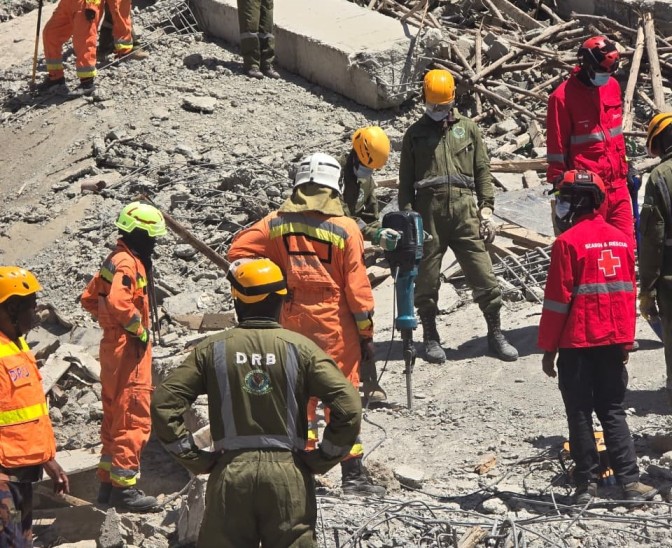
KARA, AAK, KIP and IEK have asked the ODPP to review charges against Nairobi City County’s Urban Planning Technical Committee members linked to the Manzil Towers collapse, arguing technical input is advisory and lacks final approval authority.
The Kenya Alliance of Resident Associations (KARA), the Architectural Association of Kenya (AAK), the Kenya Institute of Planners (KIP), and the Institution of Engineers of Kenya (IEK) have called for a review of the Director of Public Prosecutions’ decision to charge members of Nairobi City County’s Urban Planning Technical Committee over the Manzil Towers collapse, warning that the case exposes a critical gap between advisory roles and executive authority in urban governance.
In a joint statement dated June 6, 2026, the professional bodies said the prosecution raises fundamental concerns about how liability is assigned in public planning systems, arguing that technical committees do not hold statutory approval powers.
“The UPTC is fundamentally an advisory and review body established to evaluate development applications from multidisciplinary technical perspectives and provide professional recommendations,” the statement said.
They added that “no final approval authority” rests with the committee, noting that “the statutory role of the CECM is strictly one of checks and balances,” with legal authority to approve or reject developments resting solely with the County Executive Committee Member for Built Environment and Urban Planning.
The groups warned that treating advisory input as criminal liability risks undermining governance systems.
“By its very nature, an advisory committee cannot bear criminal or executive liability for decisions it lacks the statutory power to make or implement,” they said.
They further cautioned that the approach could discourage professionals from participating in public service.
“This blanket attribution of collective liability acts as a form of institutional intimidation,” the statement read, warning it could “create a culture of fear” and weaken technical oversight in urban development.
The organisations stressed that accountability must be directed at those with decision-making power.
“Accountability must follow authority,” they said, calling for investigations to focus on individuals who had executive responsibility or engaged in malpractice, negligence, or falsification.
They also urged authorities to “immediately review and terminate the blanket intended prosecution of the Nairobi City County UPTC members,” including Arch. Christopher Naicca, Arch. Brenda Nyawara, and Plan. Alfred Eshitera, arguing that charges should be tied to “demonstrable individual culpability rather than collective technical consultation.”
The statement also called for a clearer institutional separation between advisory and executive functions, urging collaboration with the Ethics and Anti-Corruption Commission (EACC) and Nairobi County to legally define roles in urban planning governance.
The intervention comes after the Office of the Director of Public Prosecutions (ODPP) approved charges against 37 individuals linked to the collapse of a 16-storey building in South C, Nairobi, which killed two people in January 2026.
According to the ODPP, the suspects include senior county officials, developers, and engineers involved in the approval and supervision of the project. Among them is suspended Nairobi County Chief Officer for Urban Development and Planning Patrick Analo, who faces charges including abuse of office and neglect of duty.
The ODPP said it reviewed evidence from the Directorate of Criminal Investigations and concluded there was “sufficient evidence of conviction to warrant the prosecution of several suspects connected to the incident,” citing failures in oversight, approvals, and construction compliance.




Comments
Sign in with Google to comment, reply, and like comments.
Continue with Google