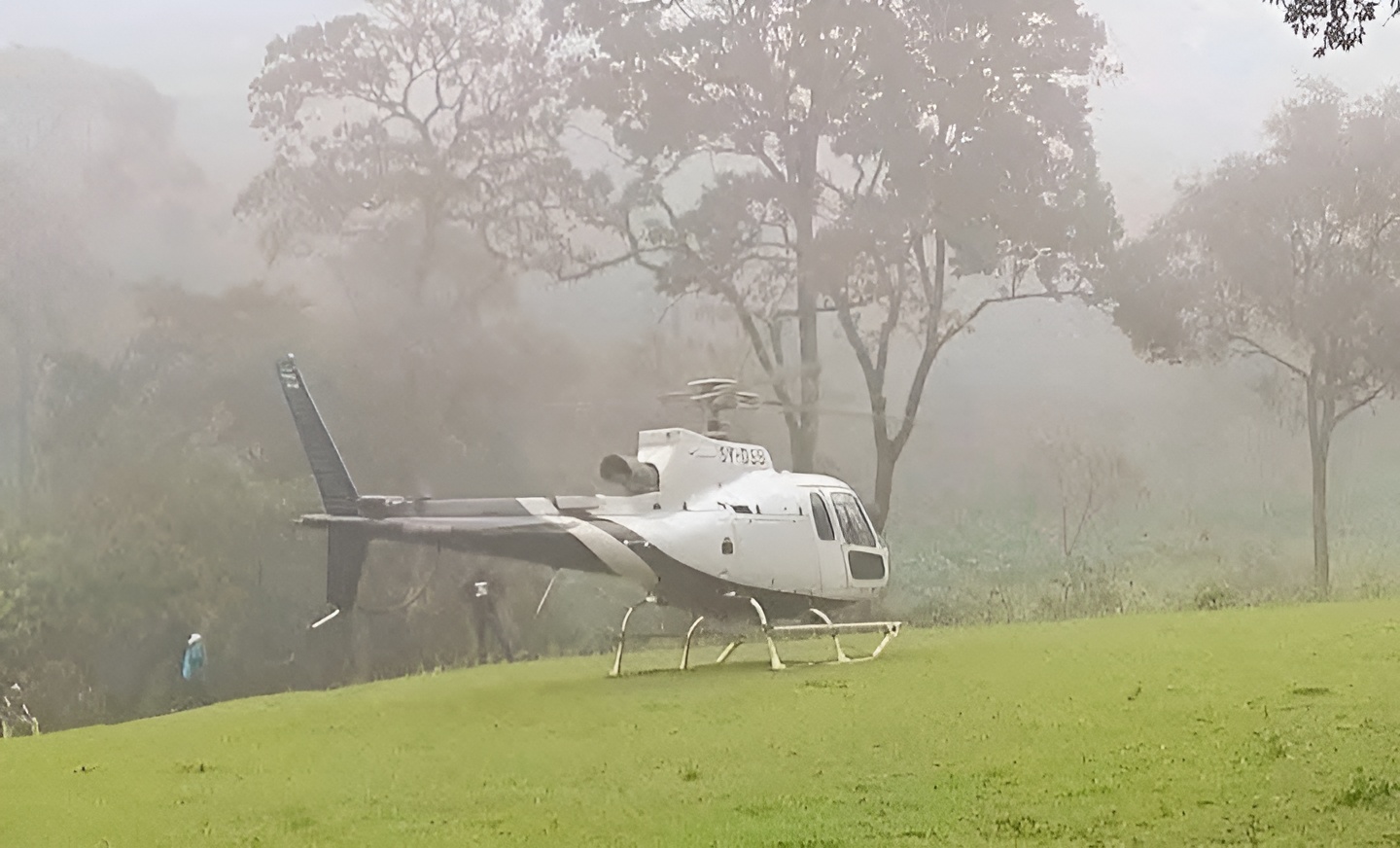
The helicopter that went down in Nandi County, killing Emurua Dikirr MP Johana Nge'no and five others, was an Airbus H125, registration 5Y-DSB — a light single-engine aircraft widely used for charter and VIP transport.
New details about its movements and the weather conditions it faced have begun to paint a clearer picture of the final moments before the fatal crash.
The aircraft, previously known as the Eurocopter AS350 B3e, belongs to the Ecureuil family, a series recognised across the world for its strength and flexibility in different environments.
Latest Stories
Flight tracking data from Flightradar24 shows that the helicopter left Wilson Airport at 11:02 am on Saturday, February 28.
Records that are publicly accessible also show that its last logged flight before that day was on February 22, and it had also departed from Wilson Airport.
However, the available tracking information does not clearly indicate when the aircraft arrived at its intended destination on the day of the accident or the exact time it was scheduled to take off again.
Preliminary accounts indicate that while flying over parts of Nandi County from Endebess in Trans Nzoia, the helicopter ran into heavy rain and low visibility. Due to the worsening weather, the pilot is said to have made a precautionary emergency landing.
One of the first responders said the pilot, after stopping due to bad weather, consulted someone on the ground about how long the mist would take to clear before taking off. After a short wait and once the conditions appeared to improve, the helicopter reportedly attempted to continue with its journey.
It was during this second takeoff that the crash occurred. Reports indicate that the aircraft struck a tree before crashing and bursting into flames. All six people on board lost their lives.
The Airbus H125 is not considered a basic helicopter. It is known for strong performance and the ability to operate in tough areas. The model holds the world record for the highest altitude landing and takeoff, achieved on Mount Everest, highlighting its capacity to operate in extreme conditions.
Built to perform well in what aviation experts call “hot and high” areas, the H125 has built a name for reliability, especially in mountainous regions and places with high temperatures. It is usually configured to carry one pilot and up to five or six passengers and is powered by a single turboshaft engine that provides steady lift and stable performance.
The helicopter can reach speeds of about 287 kilometres per hour, or around 155 knots, and can travel roughly 630 kilometres on a full tank. Its wide cabin space, large windows and flexible seating arrangement allow it to be used for executive travel, tourism, rescue missions and aerial surveys.
In Kenya, the aircraft type is common among private charter firms as well as government agencies. The ill-fated 5Y-DSB was operated by a Nairobi-based private charter company headquartered at Wilson Airport and was on a charter mission at the time of the crash.
The helicopter had often been hired for official and high-profile trips. As investigations continue, aviation authorities are expected to review several factors, including the weather at the time, decisions made during the flight, the aircraft’s performance and whether there were any mechanical problems.
Although the Airbus H125 is widely viewed as dependable, aviation experts warn that flying in poor weather and low visibility raises risks, especially in areas with trees and uneven ground.
The crash of 5Y-DSB has once again brought focus to the dangers of flying during the rainy season and the need for careful weather checks and proper flight planning.




Comments
Sign in with Google to comment, reply, and like comments.
Continue with Google