State defends ownership of Miwani Sugar Mills land amid legal disputes
Central to the dispute are a series of court rulings and contested transactions involving the attempted acquisition of the land.
The Ministry of Agriculture and Livestock Development has defended the government’s ownership of land linked to Miwani Sugar Mills, highlighting a long history of financial troubles, legal disputes, and contested claims over the property.
The matter emerged during a National Assembly Lands Committee hearing, where officials outlined the complicated circumstances surrounding the land and the company’s past financial difficulties.
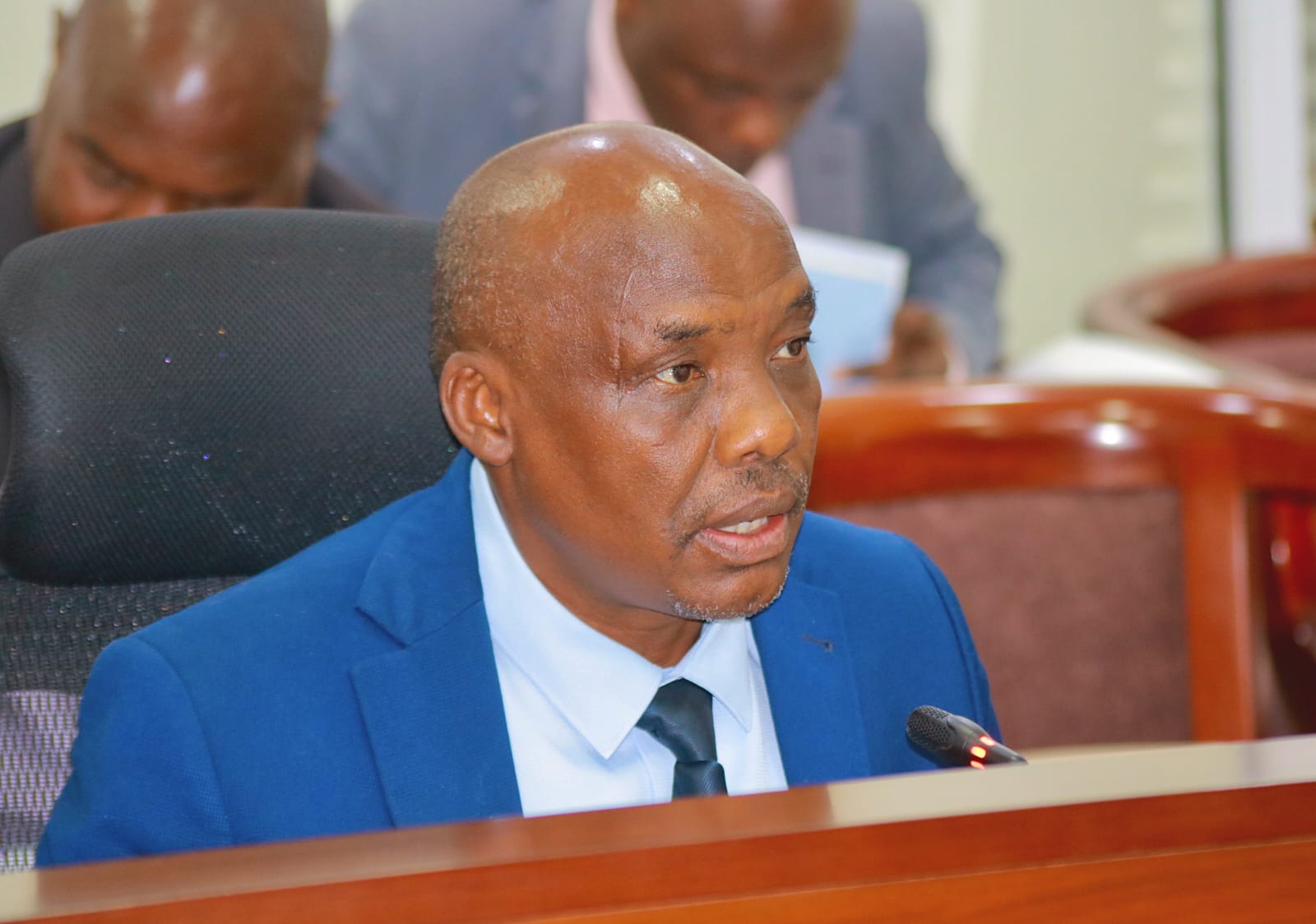
Appearing before the committee chaired by the MP for North Mugirango, Joash Nyamoko, Principal Secretary Paul Ronoh on Tuesday clarified the government’s position regarding Petition No. 28 of 2025 over Land Reference No. 7545/3 (IR 21038), which forms the nucleus estate of Miwani Sugar Mills Limited.
“The Government alienated the land for the purpose of establishing a nucleus estate for Miwani Sugar Mills Limited as succeeded by Miwani Sugar Company (1989) Limited (In Receivership),” Ronoh said.
On the company’s financial history, Ronoh acknowledged difficulties in the 1980s but emphasized that the firm was placed under receivership by its lenders, namely Chase Manhattan Bank and Somen Sokeri.
“It is true that Miwani Sugar Mills ran into financial difficulties in the 1980s but it was placed under receivership by the lenders, namely Chase Manhattan Bank and Somen Sokeri,” he told MPs.
Questions arose regarding a controversial figure, Nagendra Saxena, who was alleged to have been involved in legal proceedings linked to the land.
The Ministry distanced itself from the issue, stating: “The Ministry is not in a position to respond to this averment, as neither the Ministry nor Miwani Sugar Company (1989) Limited were party to the proceedings between Nagendra Saxena and Miwani Sugar Mills save for where they challenged the attachment of the property and the Court ruled that the suit was a nullity.”
Further claims that investigative agencies had failed to trace Saxena locally and internationally were met with limited responses.
“The Ministry was not informed of that position,” Ronoh added.
Central to the dispute are a series of court rulings and contested transactions involving the attempted acquisition of the land.
The Ministry pointed to a decisive Court of Appeal judgment that annulled prior purchase attempts.
“The Court of Appeal declared all the proceedings carried out to purchase and acquire the land to be void and a nullity,” Ronoh said.
The petition also referenced allegations by Lady Justice Olga Sewe, who reportedly stated that a court order used to justify the land’s auction was forged.
The Ministry again refrained from commenting, noting: “The Ministry was not a party to the criminal case and is not aware of the evidence that was tendered by Lady Justice Olga Sewe.”
The exchanges underscored the complex and long-running legal battles surrounding Miwani Sugar Mills, once a key player in Kenya’s sugar industry, while also highlighting gaps in coordination and accountability among institutions.
During the same hearing, National Land Commission (NLC) CEO Kabale Tache addressed the committee on the land’s classification and historical context.
Petitioners had claimed the land was originally community land before being alienated for the sugar mill.
“The Petitioners contend that the land was originally alienated from land occupied by local communities for the purpose of establishing a nucleus estate for Miwani Sugar Mills Limited,” Kabale said.
She clarified that the land was initially classified as private land owned by Miwani Sugar Mills Limited but refrained from confirming its current ownership.
“The Commission‘s position is that the land was initially classified as private land and was owned by Miwani Sugar Mills Limited. However, the current ownership status and registration particulars can best be confirmed by the State Department for Lands and Physical Planning, being the custodian of land registration records,” Tache told the MPs.
The Commission also noted it had previously handled a related issue under its historical land injustice mandate but in a different context involving boundary disputes.
“The Commission, after reviewing the case, made a finding that the claim is premised on a boundary dispute between Nandi and Kisumu Counties and proceeded to recommend that the claim be dismissed,” Kabale said.




Comments
Sign in with Google to comment, reply, and like comments.
Continue with Google