Political analyst Oloo warns devolution and citizen input are undermined by centralisation
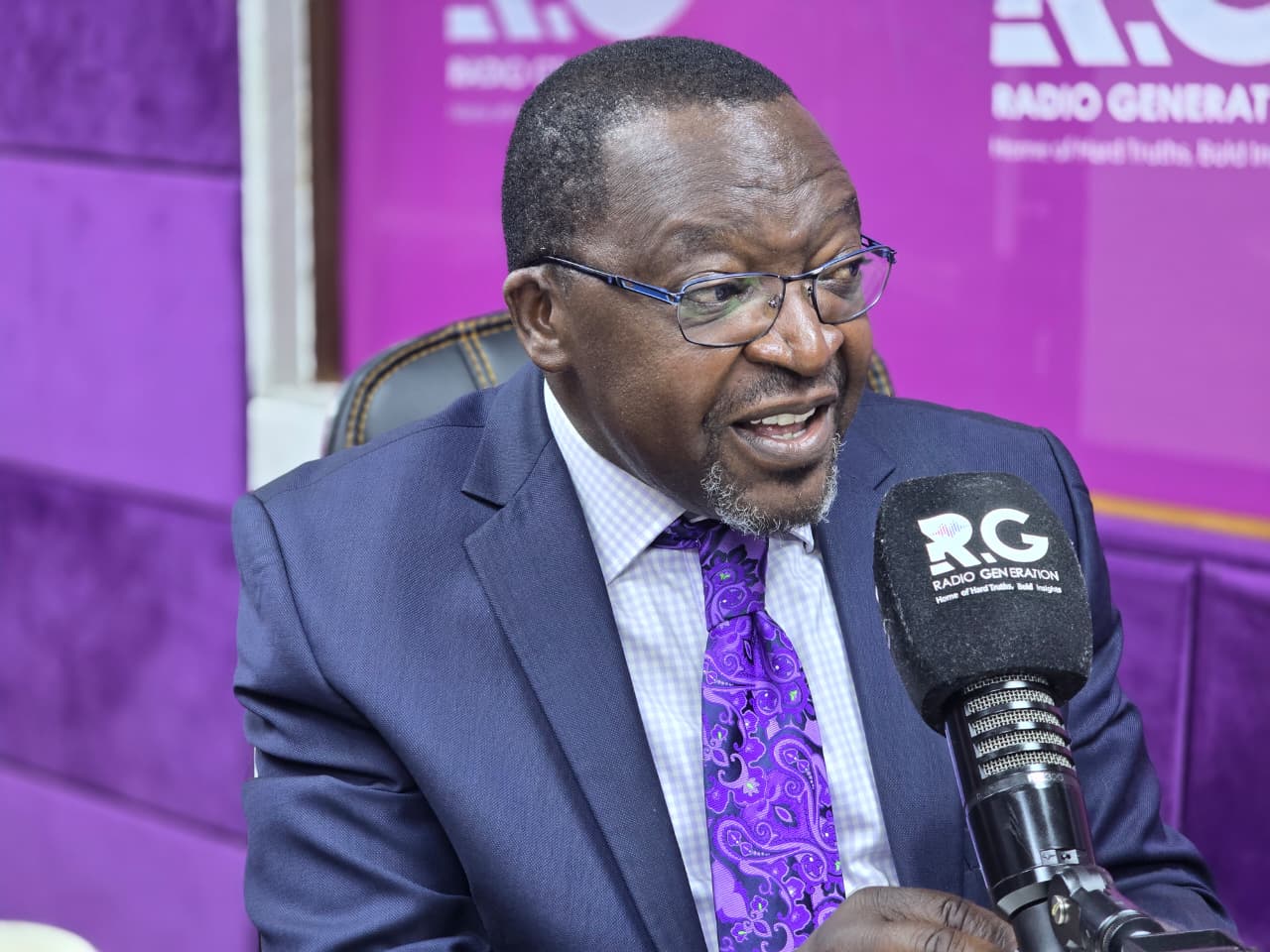
He argues that public participation is often manipulated, devolution is undermined by centralisation, and leadership remains focused on personal gain.
Advocate and Political Analyst Martin Oloo has criticised Kenya’s political culture, calling it extractive and resistant to reform despite constitutional safeguards.
He argues that public participation is often manipulated, devolution is undermined by centralisation, and leadership remains focused on personal gain.
Oloo says real change depends on accountability, citizen action and stronger implementation of constitutional principles.
Speaking during a Radio Generation interview on Monday, Oloo argued that governance challenges in Kenya stem from a leadership culture that prioritises personal gain over public interest.
He said, “the political culture is endemic, extractive, exploitative, and it’s about riches for no work,” adding that the same behaviour is widespread across all levels of government, from national to county institutions, where public office is often used for personal gain rather than service delivery
He criticised both county and national leaders for centralising resources and failing to devolve them effectively to sub-county levels.
According to the analyst, this has left ordinary citizens excluded from decision-making processes. “The ordinary person remains the stranger in this relationship,” he said.
Oloo likened the political system to a virus that infiltrates institutions and reproduces itself.
“It’s like a virus that takes over the mechanism of multiplication and multiplies itself and then just discards the cell,” he said, arguing that entrenched political behaviour continues regardless of leadership changes.
While acknowledging Kenya’s constitutional framework, he said the challenge lies in implementation rather than design.
He pointed to provisions on separation of powers and public participation, arguing that in practice these mechanisms are often weakened or manipulated.
“The current constitution does provide checks and balances,” he said, citing the separation of powers between the executive, legislature and judiciary, as well as oversight roles at both national and county levels.
However, he questioned how public participation is conducted, arguing that it is often structured to predetermine outcomes.
“How do publics participate? How do publics hold any of their organs to account?” he asked, adding that participation is sometimes is reduced to symbolic exercises.
The advocate criticised the way public participation is sometimes organised, saying, “if I want people to participate, and I will bring them in a bus, and I will pay them, I have predetermined the outcome of that discourse,” meaning that such incentives compromise genuine public input and influence the direction of the discussion in advance
He also reflected on Kenya’s political evolution, arguing that electoral processes have increasingly become transactional.
However, he acknowledged that change is possible, citing moments in history when citizens collectively shaped political outcomes.
“We also learn, we correct our mistakes,” he said, noting that political awareness and civic engagement have evolved over time.
Drawing comparisons with other political systems and communities, Oloo referenced different mobilisation models, arguing that leadership structures and decision-making cultures vary widely.
He said some communities rely on structured consultation processes, while others depend heavily on political or financial influence.
He emphasised the importance of example-setting in governance, arguing that reforms are more likely to succeed when demonstrated by leadership.
Oloo also revisited the country’s constitutional history, describing the 2010 Constitution as a major milestone that once seemed unattainable.
“It was an extremely serious moment in time,” he said, noting that the referendum process marked a rare moment of national consensus.
Despite this progress, he argued that implementation gaps remain, particularly in public participation and accountability structures.
He said meaningful reform requires citizens to actively reject systems that undermine accountability, including financial inducements in politics.
“You come to us and talk to us when we agree,” he said, suggesting that local decision-making structures should be strengthened to reflect genuine public will.
Oloo further argued that political mobilisation often determines electoral outcomes, but warned that over-reliance on patronage systems weakens democratic accountability.
He concluded that while Kenya has made institutional progress, political behaviour remains largely unchanged.
“There is a place for action, there is a place for mobilisation, and there’s a place for taking responsibility,” he said.
His remarks come amid ongoing debates over devolution, governance efficiency, and political accountability, with growing calls for reforms that strengthen citizen participation and reduce entrenched patronage networks.




Comments
Sign in with Google to comment, reply, and like comments.
Continue with Google