Supreme Court nominee Kigen responds to concerns over past legal ties
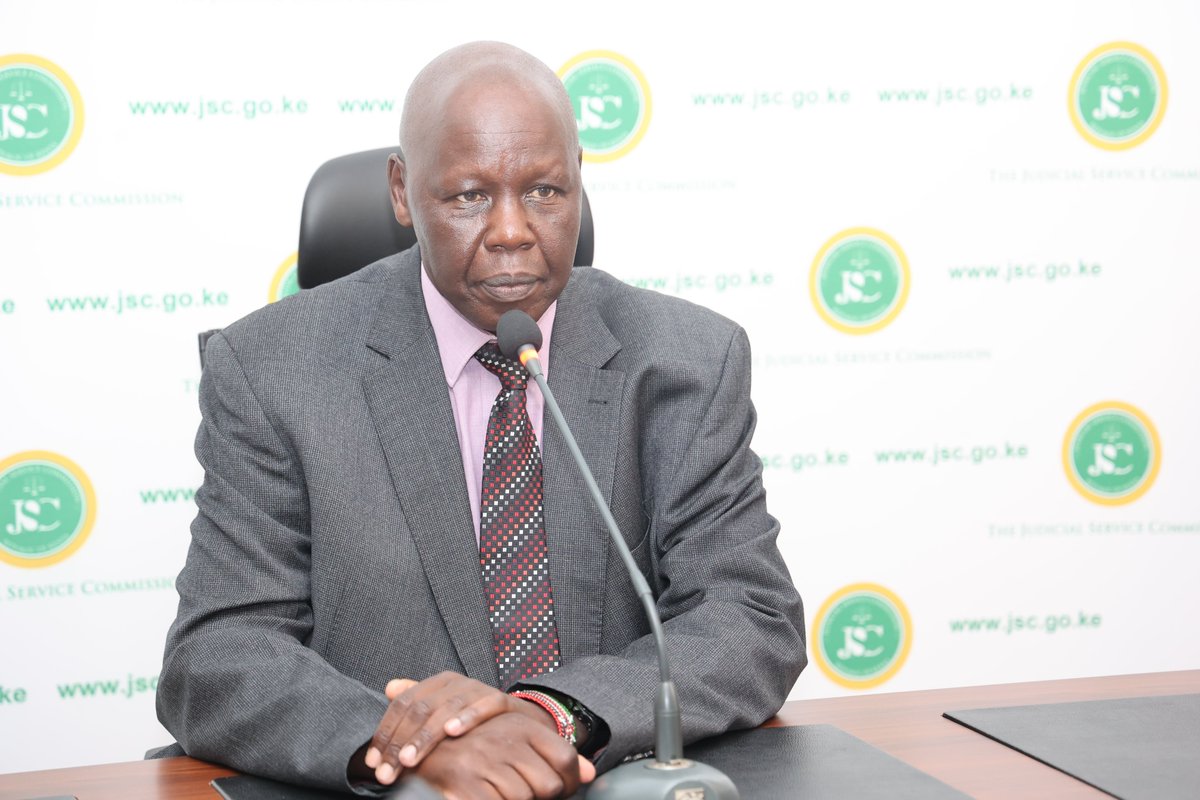
Supreme Court nominee Katwa Kigen told Kenya’s Judicial Service Commission he would act fairly despite prior legal work for President William Ruto, citing recusal and judicial safeguards in election disputes.
The competition to replace a judge at Kenya’s highest court saw lawyer Katwa Kigen face close questioning on Tuesday as he appeared before the Judicial Service Commission to defend his independence while addressing concerns about his past role as legal counsel for President William Ruto.
Kigen told the panel that his earlier professional engagement representing the President should not be taken as evidence of bias, insisting that a lawyer’s previous clients do not determine how they will serve once appointed to the bench. He said judicial work is guided strictly by law and facts, not by past legal instructions.
“I can understand the concerns but I just want to give the assurance that I would be fair and I would only deal with facts and the law,” he said.
He argued that many judges have previously represented different individuals in their legal careers before joining the judiciary, adding that such experience is part of normal legal practice and should not be treated as a disadvantage during vetting. According to him, lawyers routinely handle varied briefs that should not later be used to question their integrity.
“For me to be told that you have a disadvantage because you represented a particular individual would be a borderline case of discrimination,” he said.
https://twitter.com/RadioGenKe/status/2049088232353050886
Kigen asked the commission to evaluate him based on his values, professional record and conduct rather than focusing on one segment of his past work. He said fairness, integrity and objectivity would guide him if given the position.
“With a lot of humility I would pray that first of all you look at me for what I stand for, integrity, fairness and justice and that I will apply the law fairly and objectively,” he said.
He further pointed to existing safeguards within the judiciary that allow judges to step aside from cases where there is a perceived conflict of interest. He said such mechanisms ensure fairness even in sensitive matters.
“There are provisions for how that can be handled including recusal,” he said, noting that even presidential election petitions have previously been heard by benches that were not fully constituted.
Kigen also emphasized that the Supreme Court’s mandate is broader than election disputes, saying it also deals with constitutional interpretation and major appellate issues that shape national law.
“The Supreme Court is not focused or limited to only presidential petition,” he said.
The Judicial Service Commission is conducting interviews to fill a vacancy left after the death of Supreme Court judge Mohamed Ibrahim in December 2025.
The process is attracting public attention as the country moves closer to the 2027 elections, a period when the Supreme Court is expected to play a key role in resolving potential electoral disputes.
Kigen, who recently joined the Court of Appeal, is among five shortlisted candidates. The others are Joseph Kiplagat Sergon, Warsame Abdulahi Mohammed, Francis Kipruto Tuiyott and Anne Waceke Kiratu Makori. Lilian Wanjiku Wachira had applied but did not make the final shortlist.
His appearance drew interest because of his previous involvement in high-profile cases linked to the President, raising debate on how prior legal representation may be viewed in judicial appointments.
The commission is expected to conclude interviews before forwarding its recommendation for appointment through the constitutional process.




Comments
Sign in with Google to comment, reply, and like comments.
Continue with Google