Lady Justice Aluoch (Rtd) details global voting map for Njoki Ndung’u ICC bid
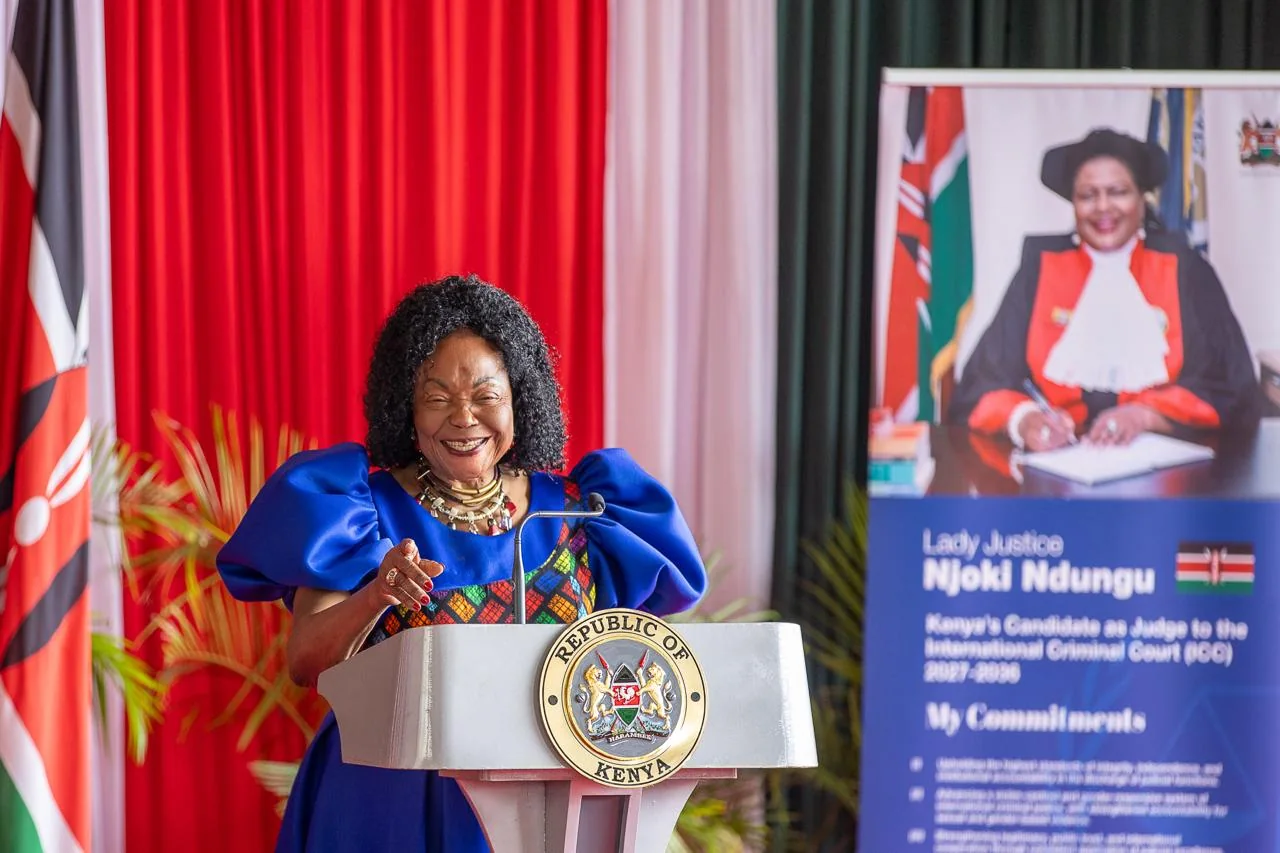
Lady Justice Aluoch noted that Africa has 33 voting states, Latin America 28, Eastern Europe 20, Western Europe 25, and Asia-Pacific 19, making a total of 125 countries involved in choosing judges.
Kenya’s push to secure a judgeship at the International Criminal Court has been framed as a wide diplomatic contest involving 125 member states, with Lady Justice Joyce Aluoch outlining how the country must carefully navigate regional voting blocs to succeed.
Speaking during the launch of Justice Njoki Ndung’u’s candidature for ICC Judge at State House in Nairobi on Wednesday, the former International Criminal Court judge explained how the election process works and why broad international engagement will be key ahead of the December vote in New York.
She said the ICC voting system is divided into regions, each carrying a set number of states whose combined votes determine the outcome of the election.
Lady Justice Aluoch noted that Africa has 33 voting states, Latin America 28, Eastern Europe 20, Western Europe 25, and Asia-Pacific 19, making a total of 125 countries involved in choosing judges.
“I think this is important, just for record purposes, we shall be looking for votes,” Lady Justice Aluoch stressed. “Because election, you're looking for votes from 125 countries who are state parties to the Rome Statute.”
She pointed out that during her earlier campaign years, the number of participating states was 108, but that figure has since risen, making the race broader and more demanding in terms of diplomacy.
According to her, candidates cannot rely on a single region, as support must be built across all blocs for a successful outcome.
“These are the votes we are going to look for,” she highlighted, expressing confidence that Kenya had a candidate that can get all that.
Her remarks came as Kenya formally presented Justice Njoki Ndung’u for election to the ICC bench during the Assembly of States Parties scheduled for December 7 to December 17, 2026, in New York, where six judges will be elected.
Justice Njoki Ndung’u, who currently serves at the Supreme Court of Kenya, has built a long career in law, governance, and human rights work, and has served on the bench since June 2011.
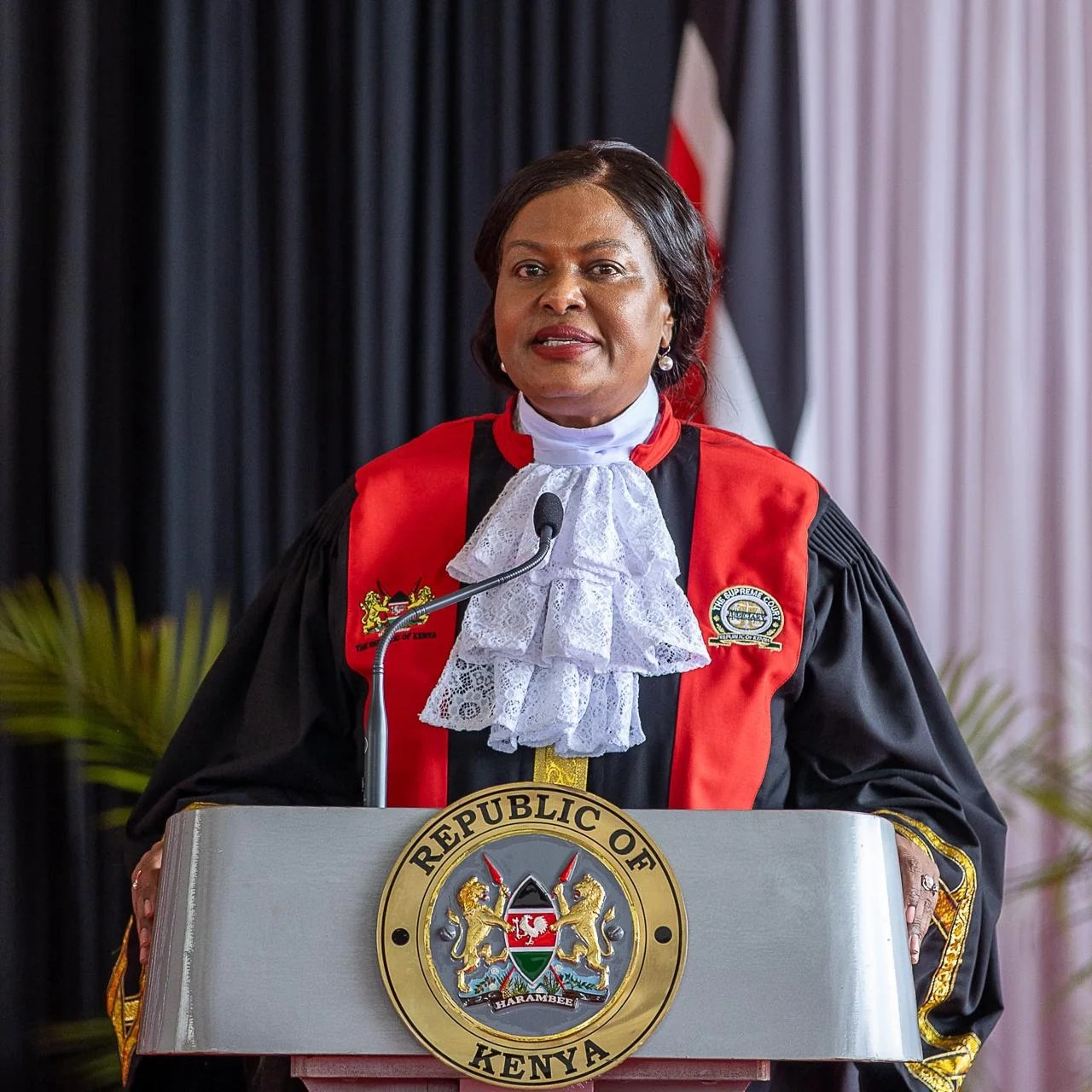 Hon. Lady Justice Njoki Ndungu speaking at State House during the Launch of her Candidature for the Judge of International Criminal Court, May 13, 2026. PHOTO/PCS
She was also elected unopposed in January 2026 as the Supreme Court representative to the Judicial Service Commission, replacing the late Justice Mohammed Ibrahim.
Her background includes a Bachelor of Laws degree from the University of Nairobi, work as a State Counsel in the Attorney General’s office, a protection officer with the United Nations refugee agency, and a political analyst with the African Union.
She also served as a nominated Member of Parliament between 2003 and 2007 and took part in Kenya’s constitutional reform process that led to the 2010 Constitution.
Lady Justice Aluoch explained that ICC elections differ from those of the International Court of Justice, noting that the ICC draws its voters only from states that have ratified the Rome Statute, while the ICJ operates under the broader United Nations system.
She added that ICC campaigns involve intensive lobbying, where candidates and governments engage directly with embassies and permanent missions across different countries.
Recalling her own experience during the 2009 ICC elections in New York, she described a highly organized process where candidates and delegations interact with voting states in a structured environment.
“In New York, there's a big hall where different embassies sit with their candidate in separate corners, and that's the process of the campaign that Njoki Ndung'u is going to go through,” she noted.
She said voting states often go beyond assessing legal qualifications and also consider the international image and diplomatic standing of the country presenting the candidate.
“They look beyond the candidate that they have with them, and they are looking at the country,” she stated.
Lady Justice Aluoch further observed that issues such as governance, peace, and stability often influence how states make their decisions during the vote.
She pointed to Kenya’s recent hosting of the Africa Forward Summit, co-chaired by President William Ruto and French President Emmanuel Macron, saying it had improved the country’s global standing and could support the bid.
“The successful African Forum Summit that has just ended, that's a big plus for our candidate,” she said.
She stressed that peace-building and mediation are central in international relations, noting that countries seen to promote stability tend to gain stronger diplomatic support.
“It is important that we talk about peace, peace building, mediation and peace building to take us forward,” she elaborated.
Lady Justice Aluoch also reflected on her work as an international mediator, saying her experience in South Sudan showed how peace processes can strengthen trust in global institutions.
She linked Kenya’s international reputation to youth engagement, saying she plans to focus on mentoring young people, especially Gen Z, through peace and leadership initiatives after taking leadership of one of Kenya’s oldest Rotary clubs on July 4.
She expressed confidence that Justice Njoki Ndung’u’s candidature is strong and capable of attracting wide support if diplomatic efforts are sustained.

Comments
Sign in with Google to comment, reply, and like comments.
Continue with Google