Justice Ndung’u accepts Kenya’s endorsement for ICC judge bid, vows to defend judicial independence, African jurisprudence
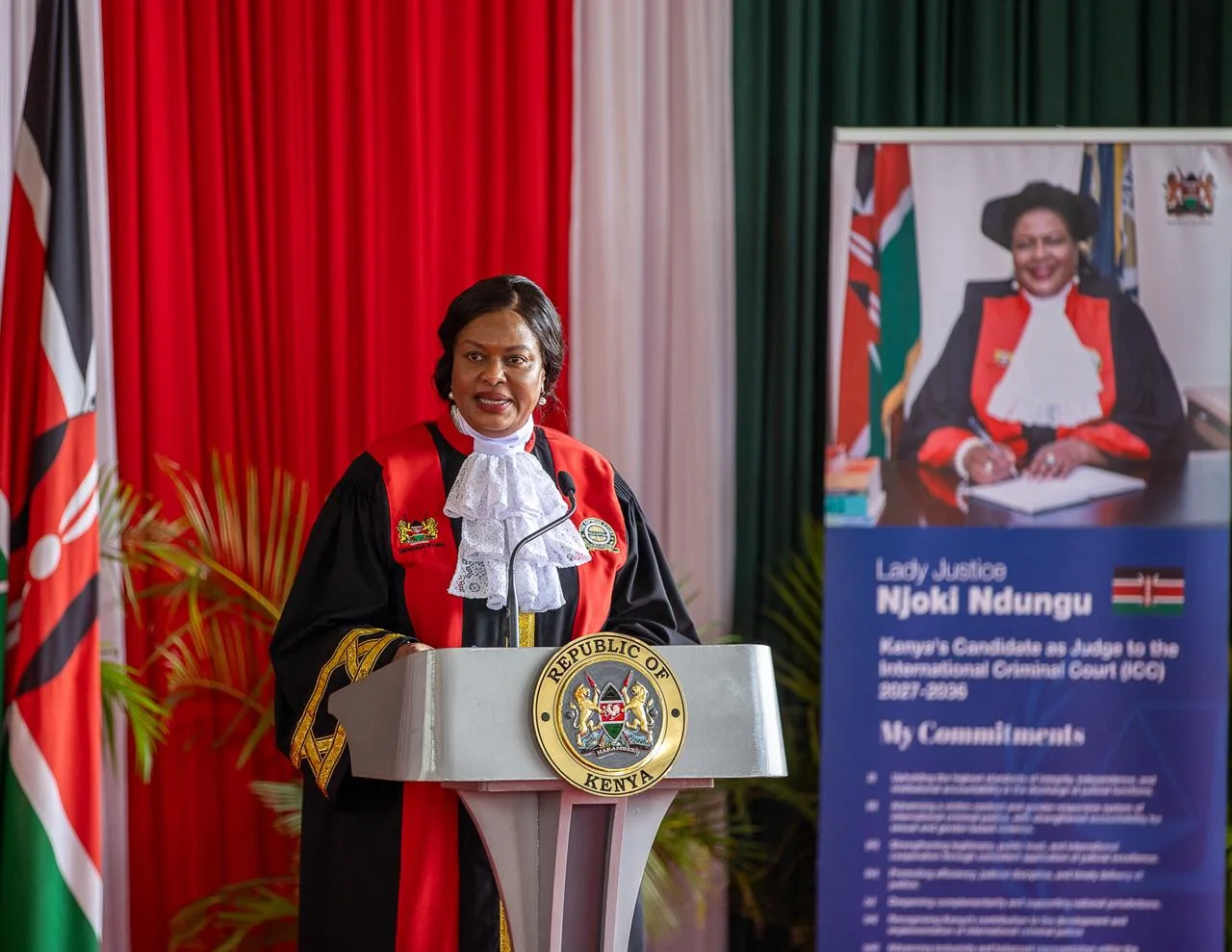
Justice Ndung’u said she accepted the nomination “with humility and gratitude,” adding that she is “proud to do so as a Kenyan dedicated her professional life to the service of Justice and the global and the protection of human dignity.”
Lady Justice Njoki Ndung’u has accepted Kenya’s endorsement for election as a judge of the International Criminal Court, saying she is ready to serve in strengthening global justice systems and protecting judicial independence amid rising political pressure and human rights challenges.
Speaking during the official launch of her candidature at State House, Nairobi on Wednesday, Ndung’u said she accepted the nomination “with humility and gratitude,” adding that she is “proud to do so as a Kenyan dedicated her professional life to the service of Justice and the global and the protection of human dignity.”
She thanked President William Ruto for decisive leadership in advancing her candidature and for helping secure international support ahead of the December ICC elections.
.
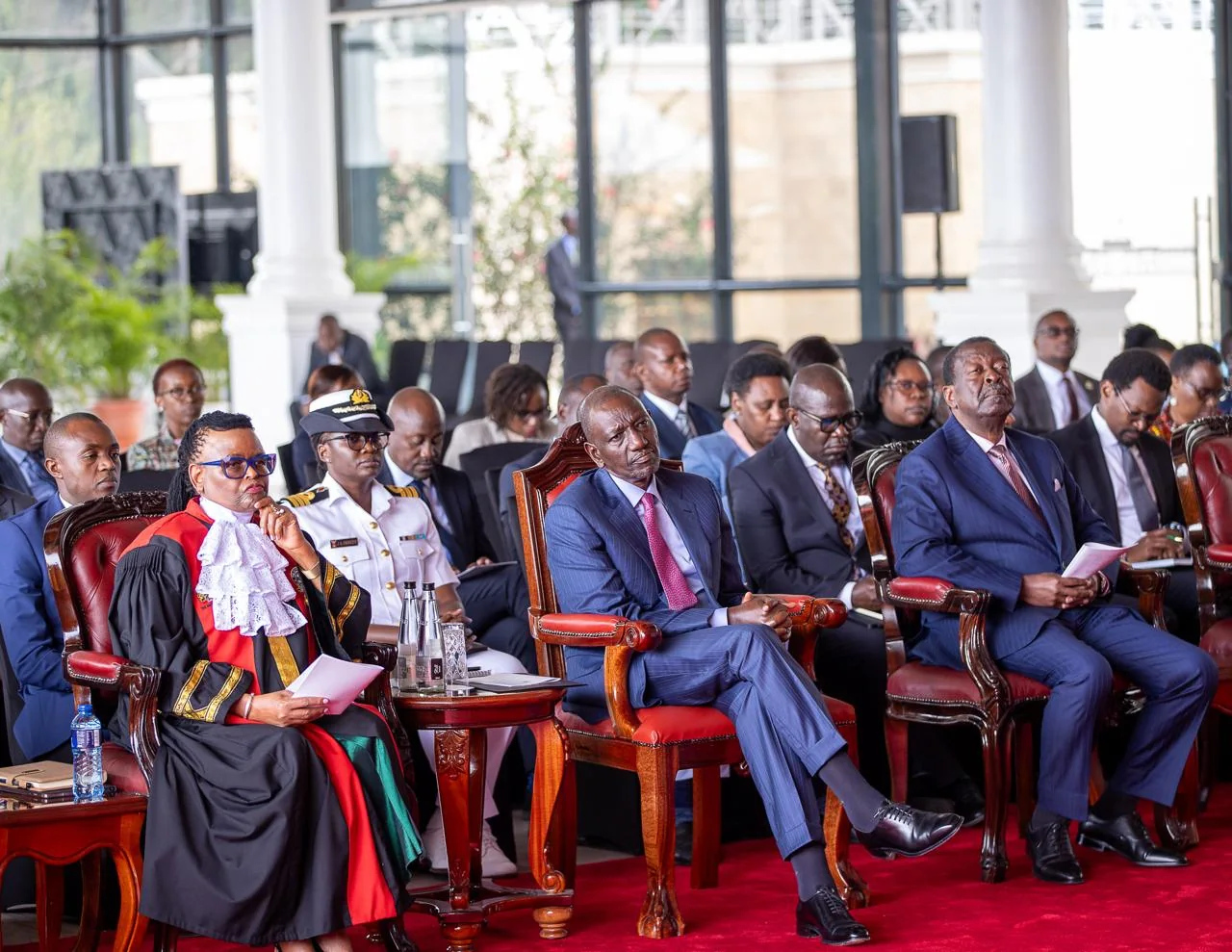 President William Ruto (centre),Chief Justice Martha Koome (left) and other government officials during the launch of Justice Njoki Ndung’u’s candidature for ICC judge. PHOTO/PCS
Ndung’u said her campaign is anchored on five guiding principles—courage, pragmatism, efficiency, victim-centred justice and African-focused jurisprudence—arguing that the ICC must remain independent and resist political interference.
She warned that ICC judges operate under intense pressure, saying “Judges of ICC currently have faced direct threats, political pressure and even sanctions. Therefore, courage is the quality that enables the judges to uphold the law,” she said.
She pointed to her experience in constitutional adjudication, legal reform and international engagement, including work with the African Union and United Nations, saying her judicial record reflects consistency, principle and firm decision-making, including dissenting opinions on key legal issues.
Ndung’u said efficiency in international justice must go beyond procedure and focus on reducing delays faced by victims, saying it should help “reduce the time victims have to wait for justice.”
She emphasized that victims must remain at the centre of international justice systems, saying access to justice should be meaningful and timely. “Equality of the law must be matched by equality in access to justice,” she said, warning that delays weaken public confidence in global courts.
On Africa’s role, she said the continent must have stronger influence in shaping international legal thinking, insisting that African jurisprudence should be more visible within the ICC framework. “Africa has often carried the weight of ICC scrutiny… the ICC must confront bias directly, not deny it,” she said.
Chief Justice Martha Koome said the nomination followed a structured and competitive process through the Judicial Service Commission before President Ruto selected Ndung’u from a shortlist of candidates.
She described the judiciary as a key institution in governance, calling it “a strategic national asset” and highlighting its role in advancing constitutionalism, human rights and alternative dispute resolution.
Former ICC judge Joyce Aluoch said the election will be conducted by 125 states parties to the Rome Statute.
She noted that regional balance is important, with Africa expected to present candidates for at least two of the six judicial seats in the December 2026 ICC elections.
Aluoch added that diplomatic engagement and country reputation often influence voting outcomes, as states coordinate support for their preferred candidates.
Ndung’u’s candidature now moves into an international campaign phase ahead of the ICC judicial elections where six judges will be elected



Comments
Sign in with Google to comment, reply, and like comments.
Continue with Google