
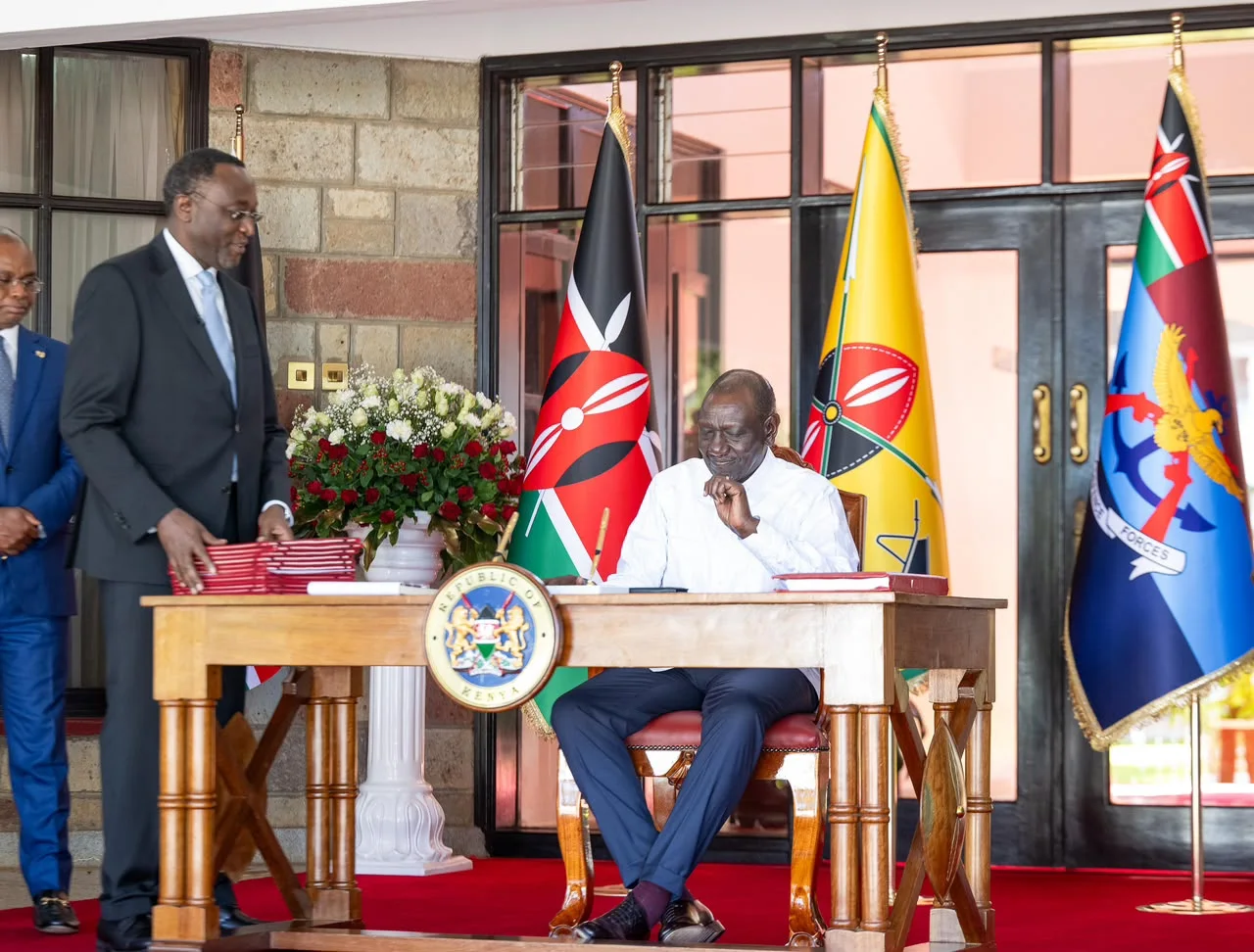
President William Ruto has signed two Bills into law, providing county governments with Sh71.09 billion in additional funding for the 2026/27 financial year and introducing changes to the management of county assembly administrations.
The President assented to the County Governments Additional Allocations Bill, Senate Bills No. 8 of 2026, and the County Assembly Services (Amendment) Bill, 2023, at Eldoret State Lodge in Uasin Gishu County on Monday.
The laws address two key aspects of devolution: financing county governments to deliver essential services and strengthening the administrative frameworks governing county assemblies.
The County Governments Additional Allocations Act provides for Sh71,091,926,967 in additional resources, an increase of approximately Sh425.6 million from the Sh70.67 billion allocated in the preceding financial year.
The funds will be drawn from the national government's share of revenue and development-partner loans and grants, supporting county infrastructure, healthcare programmes and community health services.
Deputy Chief of Staff to the President Josephat Nanok said the allocations would help counties meet development priorities and fulfil obligations under national healthcare programmes.
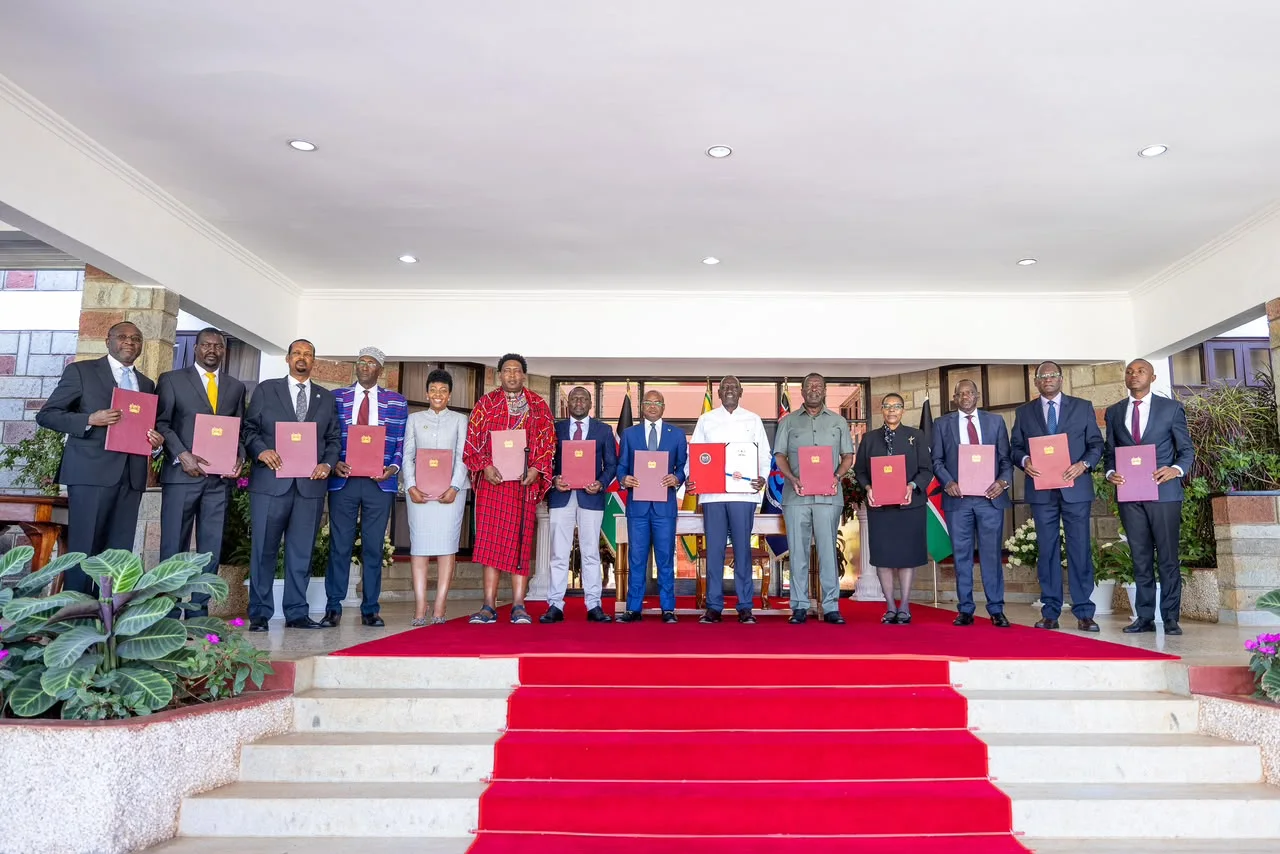
“The conditional allocations from the national government’s share will go a long way to supplement the construction of county headquarters,” Nanok said.
He added that the funding would support Universal Health Coverage workers transitioning to permanent and pensionable terms, alongside community health promoters.
Parliamentary material on the legislation indicates that approximately Sh8.61 billion has been allocated towards transitioning UHC workers to permanent and pensionable employment, while Sh3.23 billion will support community health promoters.
The additional funding comes as county governments continue to grapple with financial pressures, including unpaid bills owed to suppliers, contractors and service providers.
The National Treasury's 2025 Budget Review and Outlook Paper reported that counties had accumulated pending bills of approximately Sh176.9 billion as of June 30, 2025.
Such financial constraints can disrupt project implementation, delay payments, and affect the delivery of essential services. Timely disbursement and proper management of the new allocations will therefore be crucial to ensuring that the funds benefit residents.
The additional allocations law establishes a framework for transferring the money to county governments and requires the funds to be incorporated into approved budgets.
It also strengthens accountability through reporting requirements.
The National Treasury Cabinet Secretary must publish quarterly reports on actual transfers to counties, while county treasurers are required to account for conditional allocations in their financial records and periodic reports.
The measures are intended to improve transparency and help track whether funds reach counties and are spent for their intended purposes.
The second law, the County Assembly Services (Amendment) Act, 2023, addresses governance and administrative challenges within county assemblies.
County assemblies exercise legislative and oversight responsibilities at the devolved level, while their service boards oversee key human-resource and administrative functions. Disputes involving board members, clerks and employees can therefore disrupt assembly operations and affect the execution of their constitutional mandates.
The amendments introduce provisions governing county assembly service board members, clerks and staff, including procedures relating to removal from office, suspension, supervision of employees and protections for staff on secondment.
The Senate Clerk said the legislation was designed to resolve persistent administrative challenges and establish clearer procedures for managing county assembly personnel.
“It is a Bill whose primary objective is to address the governance challenges that have beset the civil service of our county assemblies,” the Clerk said.
He pointed to disputes and uncertainty involving county assembly officials, adding: “There has been quite a bit of upheaval in the civil service of the county assemblies with the removal and threats of removal of county assembly board members, clerks and staff.”
The amendments are intended to clarify how personnel-related decisions are handled and provide a more predictable framework for resolving disputes within county assembly administrations.
The effectiveness of both laws will depend on implementation, including the timely release and accountable use of county funds, alongside adherence to the revised procedures governing county assembly staff and officials.