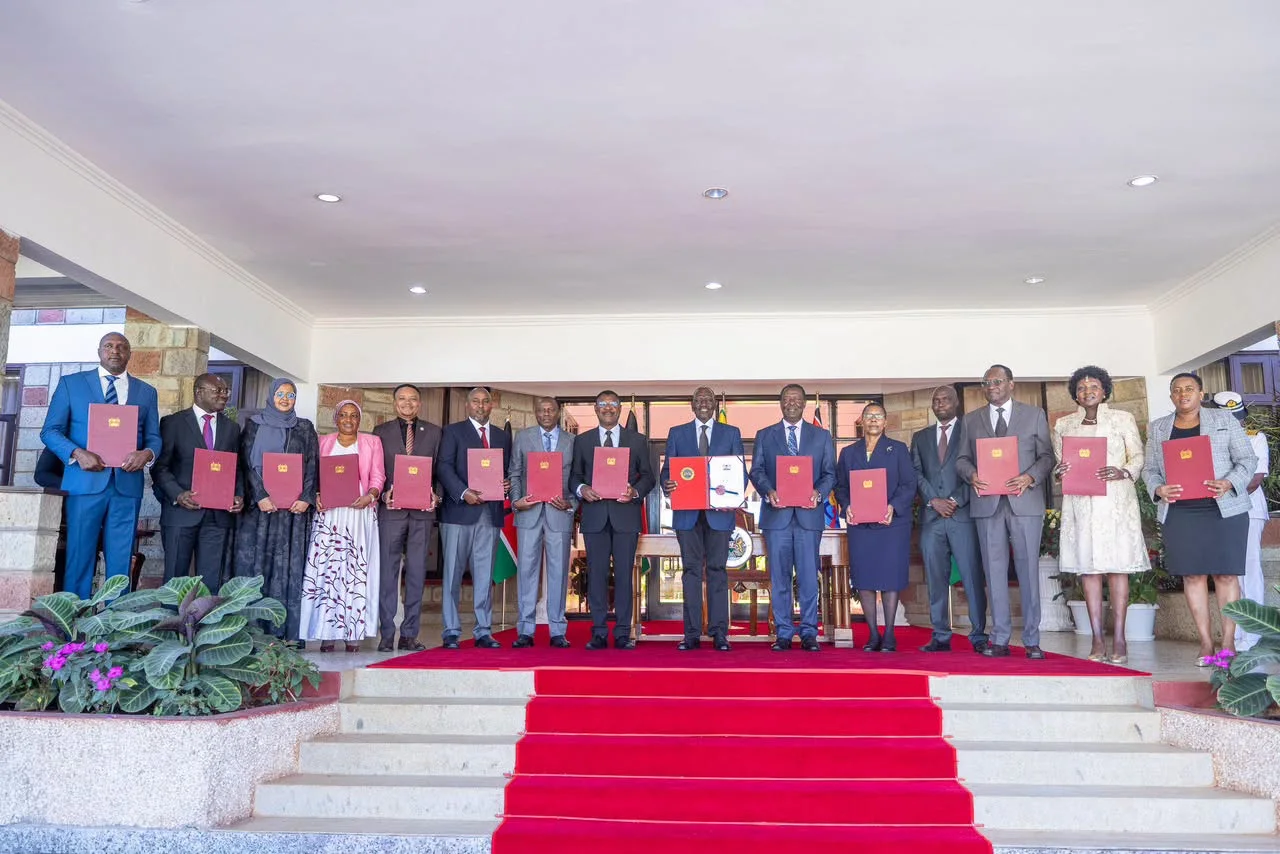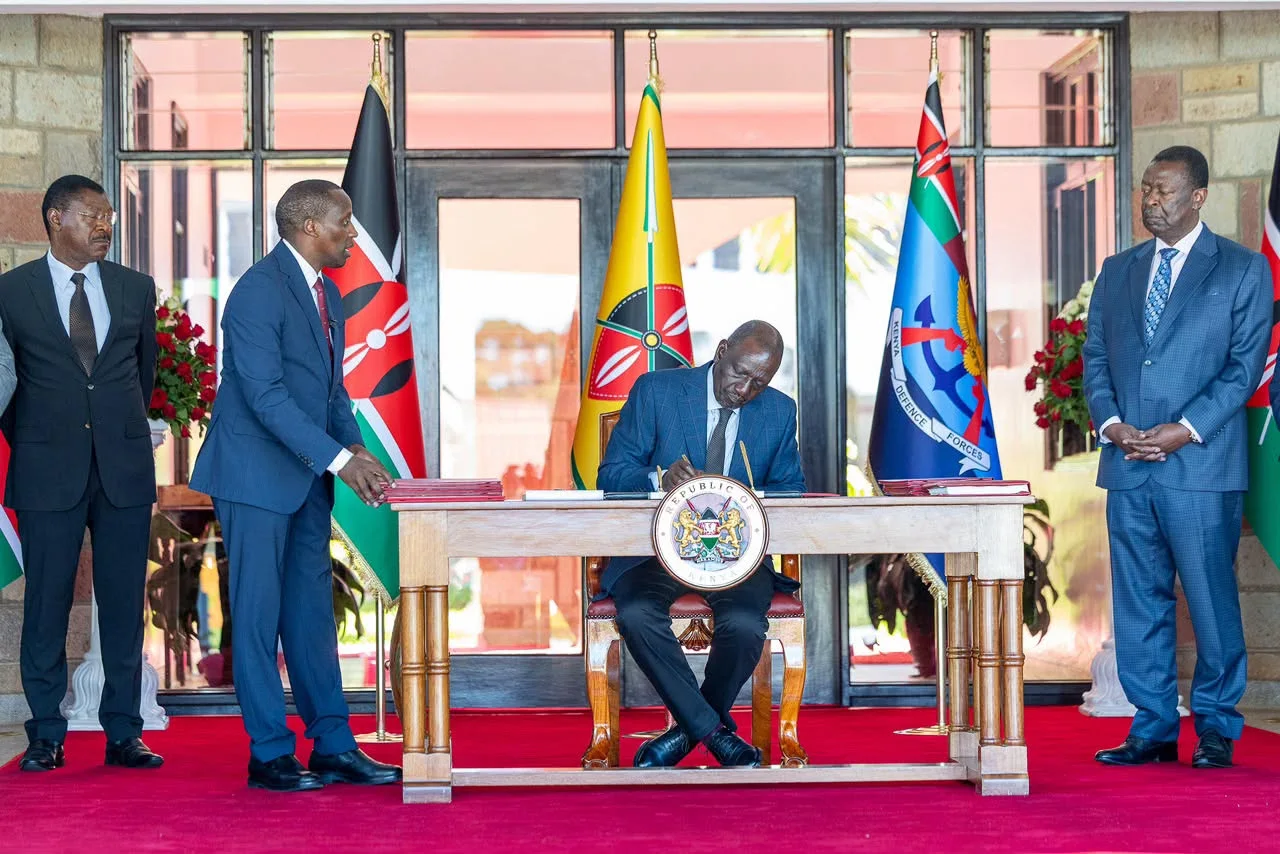
President William Ruto has signed two laws that will keep value-added tax (VAT) on petroleum products at 8 per cent for another 90 days and guarantee the Kenya Revenue Authority (KRA) at least 2 per cent of its projected annual revenue collections.
The Tax Laws Amendment Bill, 2026, extends the reduced tax rate on petrol, diesel and paraffin to help households and businesses cope with rising fuel costs, while introducing tax cuts on selected construction materials. The Kenya Revenue Authority Amendment Bill, 2026, changes the agency’s funding arrangement and board membership as part of efforts to strengthen tax collection and administration.
The two bills were presented to the President for assent at State Lodge, Eldoret on Friday, after being passed by the National Assembly.
Fuel tax relief extended for another 90 days
Under the Tax Laws Amendment Act, VAT on petrol, diesel and paraffin will remain at 8 per cent, half the standard rate of 16 per cent.
The extension is intended to ease the pressure of rising fuel prices on consumers and businesses amid the crisis in the Middle East, which has affected the cost of petroleum products.
The reduced rate will apply for 90 days, with the law allowing the Cabinet Secretary for the National Treasury to extend the period for a further 90 days through a notice published in the Kenya Gazette.
The move gives the government room to maintain the lower tax rate beyond the initial period if the need arises, while seeking to limit the effect of high fuel costs on households and businesses.
Construction materials get tax relief
Beyond petroleum products, the Tax Laws Amendment Act introduces changes to excise duty on selected construction materials, in a move aimed at supporting the building industry and wider economic activity.
The law changes how excise duty on construction tiles is calculated, shifting the basis from weight to size. The new rate is set at Sh400 per square metre.
It also reduces excise duty on sanitary ware, including ceramic sinks, from Sh50 to Sh30 per kilogramme, lowering the tax charged on the products.
In another measure, float glass and other glass products imported into Kenya from East African Community member states will be exempt from excise duty.
The changes are expected to support construction activities, including affordable housing projects, by adjusting the tax burden on some of the materials used in building.
The government is also seeking to encourage economic growth and job creation through the changes, with the construction sector among the areas targeted by the new tax measures.
KRA guaranteed at least 2 per cent of projected collections
The second law makes changes to the Kenya Revenue Authority Act, focusing on the agency’s funding and governance.
Under the revised arrangement, KRA will receive at least 2 per cent of the revenue it estimates collecting in each financial year. This replaces the previous system, under which the agency’s allocation was capped at 2 per cent of projected collections.
The change follows concerns raised by the tax agency over its funding, with National Assembly representatives saying KRA had reported receiving less than 2 per cent of the revenue it expected to collect.
The new provision sets a minimum allocation linked to the agency’s projected revenue collections, giving it a different funding arrangement from the previous capped system.
The law also expands KRA’s board by including the managing director of the Kenya Ports Authority.
The appointment reflects the link between port operations and revenue collection, given the role played by ports in the movement of imported goods and the collection of taxes on trade.
The legislation also updates references to laws that have since been repealed and brings additional statutes relating to revenue administration under KRA’s jurisdiction.
These changes are intended to align the authority’s legal framework with the laws governing its operations and responsibilities.
Together, the two laws introduce changes to fuel taxation, construction-related duties and the administration of public revenue.
While the first law maintains temporary tax relief on petroleum products and reduces duties on selected building materials, the second revises how KRA is funded and represented at board level.
The measures cover both the immediate pressure of fuel costs on consumers and businesses and the longer-term administration of tax collection.