
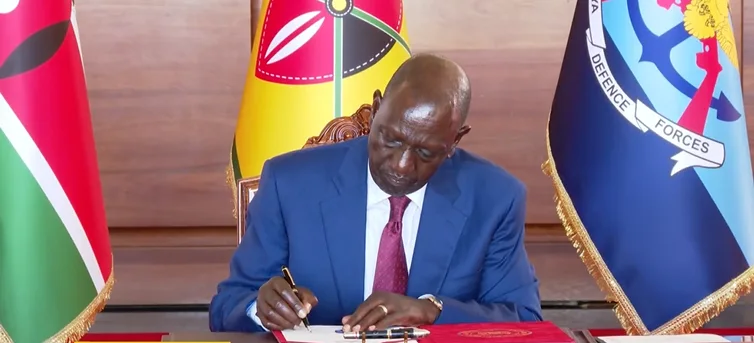
The days of breastfeeding mothers struggling to find private spaces at work to nurse or express milk could be addressed under a new law requiring employers to provide dedicated facilities, reasonable breaks and flexible working arrangements, signed by President William Ruto on Thursday.
The Breastfeeding Mothers Act, 2024, is among six National Assembly bills Ruto assented to at State House, introducing new provisions on workplace rights, the handling of sexual offence cases, public service retirement benefits and accountability in the use of public funds.
The legislation, sponsored by former nominated MP Sabina Chege, requires employers to provide private, clean and properly equipped lactation spaces, allow reasonable breastfeeding breaks and make arrangements for flexible working schedules.
It further requires public buildings with an occupancy capacity of at least 50 people to have baby-changing facilities while prohibiting discrimination against women on grounds of pregnancy, childbirth or breastfeeding.
Speaking after signing the bills, Ruto directed State House staff to establish breastfeeding facilities at the institution, saying he wanted it to lead by example.
"I will immediately instruct staff in State House to make sure that we become the first institution," he said.
The President also signed two Sexual Offences Amendment Acts, which introduce measures aimed at strengthening the handling of sexual crimes, protecting victims, including teenage mothers, and ensuring cases are concluded without prolonged delays.
The laws require courts to conclude sexual offence cases within six months of plea-taking, introduce public education programmes on sexual crimes and provide safeguards for complainants.
The Sexual Offences (Amendment) Act, 2025, further restricts the use of traditional dispute resolution mechanisms in sexual offence cases and introduces offences involving threats, intimidation or coercion directed at complainants.
Ruto also assented to the Environmental Professionals Institute of Kenya Act, 2024, which establishes a framework for registering, licensing and regulating environmental practitioners.
The institute is expected to finance its operations independently without relying on government funding.
The Public Service Superannuation Scheme (Amendment) Act, 2025, allows public officers serving on fixed-term contracts to transfer accrued gratuity into retirement savings accounts, subject to an agreement with their employers.
Meanwhile, the East African Development Bank (Amendment) Act, 2026, introduces additional controls on public funds allocated to the regional lender, requiring parliamentary approval and authorisation by the Controller of Budget before money is released.
Ruto said the changes would strengthen accountability in the management of public resources.
"The resources put together by the people of Kenya" must be managed responsibly and remain open to public scrutiny, he said.President William Ruto has signed six bills into law, requiring employers to provide breastfeeding facilities, tightening prosecution of sexual offences and introducing new rules governing public service pensions.
The six National Assembly bills, signed at State House on Thursday, also amend the Public Service Superannuation Scheme and require parliamentary approval for government payments to the East African Development Bank (EADB).
The bills include the Breastfeeding Mothers Act, 2024, the Sexual Offences (Amendment) Act, 2023, the Sexual Offences (Amendment) Act, 2025, and the Environmental Professionals Institute of Kenya Act, 2024.
The legislation also includes the Public Service Superannuation Scheme (Amendment) Act, 2025, and the East African Development Bank (Amendment) Act, 2026.
The Breastfeeding Mothers Act, sponsored by former nominated MP Sabina Chege, requires employers to provide private, clean and properly equipped lactation spaces, reasonable breastfeeding breaks and flexible working arrangements.
It also requires public buildings with an occupancy capacity of at least 50 people to provide baby-changing facilities and prohibits discrimination against women on grounds of pregnancy, childbirth or breastfeeding.
Speaking after signing the bills, President William Ruto directed State House staff to establish breastfeeding facilities for women working at the institution.
"I will immediately instruct staff in State House to make sure that we become the first institution," he said.
The two Sexual Offences Amendment Acts introduce public education programmes on sexual crimes, protect victims, including teenage mothers, and require courts to conclude sexual offence cases within six months of plea-taking.
The 2025 amendment also restricts the use of traditional dispute resolution mechanisms in sexual offence cases and introduces offences involving threats, intimidation or coercion of complainants.
The Environmental Professionals Institute of Kenya Act, 2024, establishes a framework for registering, licensing and regulating environmental practitioners, with the institute expected to finance its operations without relying on government funding.
The Public Service Superannuation Scheme Amendment Act, 2025, allows public officers on fixed-term contracts to transfer accrued gratuity into retirement savings accounts, subject to agreement with their employers.
Meanwhile, the East African Development Bank Amendment Act, 2026, requires parliamentary approval and authorisation by the Controller of Budget before public funds are released to the regional lender.
President Ruto said the changes would strengthen accountability in the management of public resources.
"The resources put together by the people of Kenya" must be managed responsibly and remain open to public scrutiny, he said.