
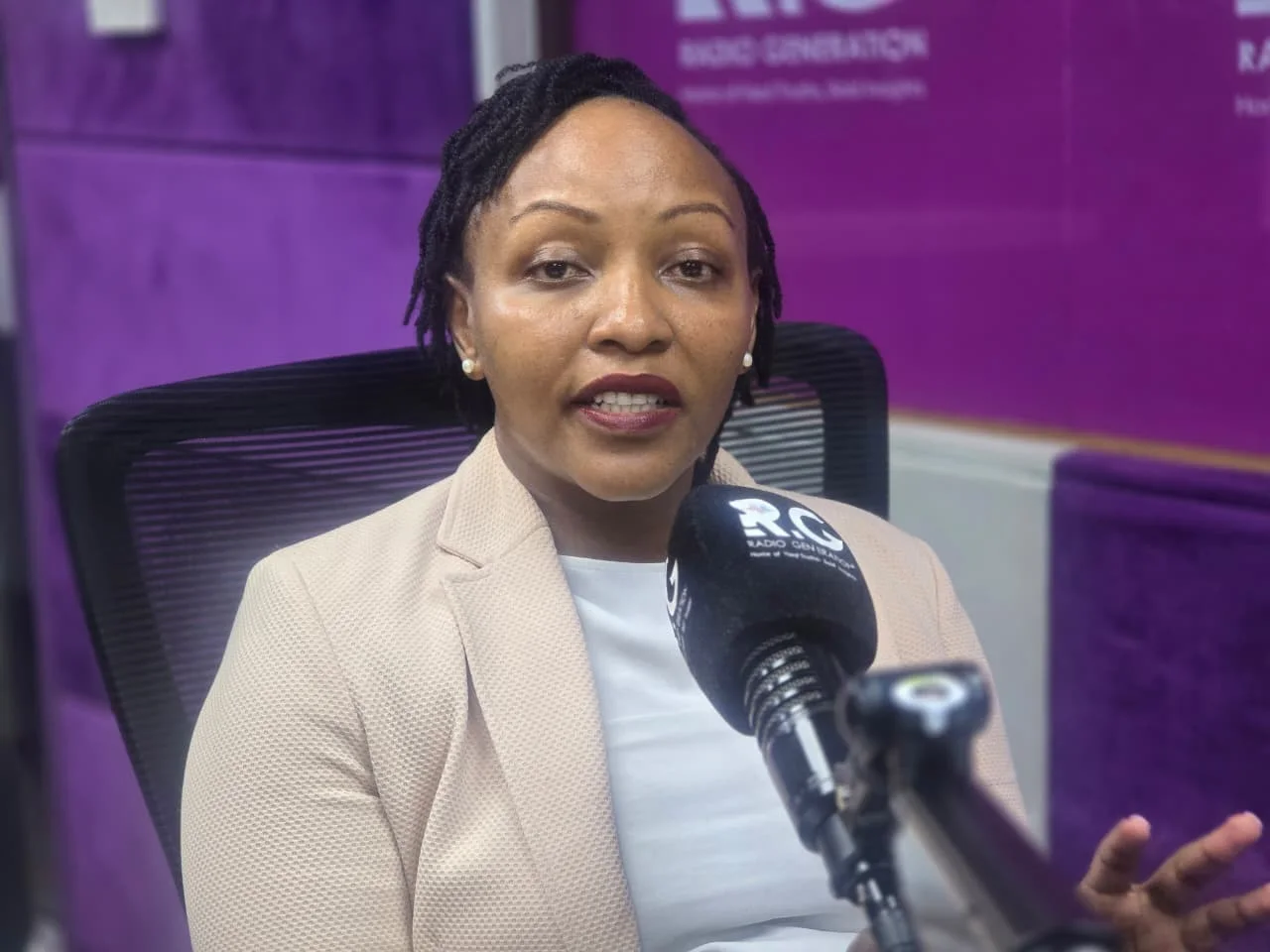
FIDA-Kenya Executive Director Sophie Kaibiria has raised concern over the persistent obstacles facing women seeking elective positions, warning that financial pressure, political violence, gender stereotypes and unfair party nominations continue to limit their chances of competing for leadership despite constitutional guarantees on gender representation.
Kaibiria said women aspiring to political office were often disadvantaged by nomination processes that favour candidates with stronger financial resources and greater ability to mobilise supporters, making it difficult for them to secure party tickets ahead of the 2027 General Election.
Speaking on Radio Generation on Tuesday, November 24, she pointed to the 2022 General Election, when only about 1,900 women were cleared to contest despite approximately 16,000 aspirants seeking nominations through political parties.
She argued that the nomination process often gives an advantage to candidates with money and the capacity to mobilise large numbers of supporters rather than providing equal opportunities to all aspirants.
“When it comes to elections, when they are doing their nomination process, the person who has the greatest mobilising power, financial power, is the one who will get the party ticket,” she said.
Kaibiria identified inadequate finances, threats and violence, as well as deeply rooted gender stereotypes, as some of the major challenges discouraging women from seeking elective positions and limiting their participation in political activities.
She further warned that technology-facilitated gender-based violence was creating additional barriers, with manipulated images, deepfakes and other forms of online attacks increasingly being used to intimidate women and damage their public standing.
According to Kaibiria, FIDA-Kenya's 2022 analysis of electoral-related gender-based violence established that 52 per cent of the violations examined occurred online, highlighting the growing threat women face beyond physical political attacks.
She called on the Independent Electoral and Boundaries Commission (IEBC) and the National Police Service to strengthen measures aimed at protecting women aspirants and ensuring that perpetrators of election-related violence are held accountable.
“What is not happening is that these institutions are not holding political parties to account, so that they do deliver when it comes to inclusivity,” she said.
The FIDA-Kenya director said the organisation was working towards increasing the number of women cleared to contest in the 2027 elections to more than 1,900, arguing that a larger pool of female candidates would improve the chances of more women winning elective positions.
“We've realised that critical mass is what gets more women elected,” she said.
As part of its efforts, Kaibiria said FIDA-Kenya was working with the police to improve investigations and evidence handling in cases involving electoral violence against women, ensuring that complaints are properly pursued.
She also called for political parties to take responsibility for violations committed within their structures, proposing clear offences and penalties to address misconduct and ensure parties comply with gender inclusion requirements.
Beyond enforcement, the organisation is promoting mentorship programmes and encouraging men to become champions of women's leadership. The initiatives seek to challenge traditional gender roles and create an environment in which women can participate in politics without facing discrimination or intimidation.
Kaibiria's concerns come amid renewed scrutiny of Kenya's commitment to constitutional gender representation requirements, particularly following a High Court decision that found President William Ruto's Cabinet did not comply with the two-thirds gender rule.
On June 30, 2026, a three-judge High Court bench comprising Justices Eric Ogola, Stephen Githinji and Jairus Ngaah ruled that the composition of the 25-member Cabinet violated Article 27(8) of the Constitution.
The provision requires that no more than two-thirds of members of elective or appointive public bodies belong to the same gender, guaranteeing greater representation for women in public leadership.
At the time, the Cabinet had 18 men and seven women, a composition the court found unconstitutional. It directed the President to make changes within 120 days, ruling that at least nine members of the Cabinet had to be women to meet the constitutional requirement.
However, the implementation of the orders became the subject of further legal proceedings after the judgment.
On October 29, 2026, the Court of Appeal declined to suspend the implementation of the High Court ruling, leaving the original orders in force after the 120-day compliance period had expired.
The decision renewed debate over the enforcement of constitutional gender requirements, with questions emerging over the country's progress in ensuring women receive equal opportunities in public appointments and elective leadership.
Kaibiria's warning highlights the wider challenges facing women in politics, with financial disadvantages, violence, discriminatory nomination practices and online attacks continuing to affect their ability to compete for political positions as the country approaches the 2027 General Election.