
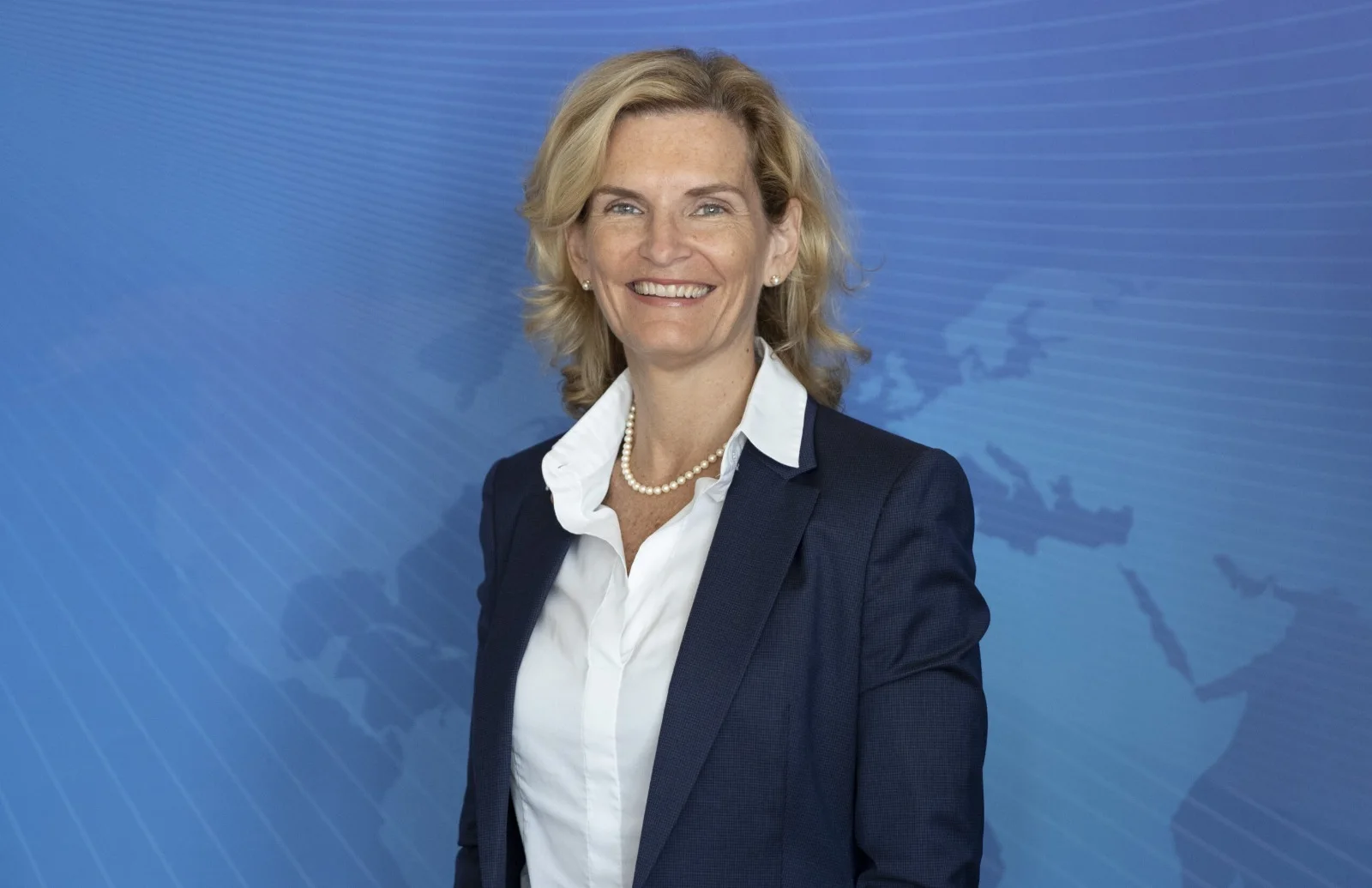
Doreen Bogdan-Martin has been given another four years at the helm of the International Telecommunication Union (ITU), winning 164 votes in an election that will see her continue directing the UN agency’s work on global connectivity and digital development.
Bogdan-Martin secured the second mandate on Thursday, November 12, after defeating the election process with 164 votes out of the 173 cast during the ITU Plenipotentiary Conference 2026 in Doha, Qatar.
The re-election allows her to continue implementing the agency’s digital agenda, with particular attention to expanding internet access, improving cybersecurity and ensuring that advances in technology benefit communities worldwide.
“I am deeply honoured for the trust ITU Member States have placed in me to serve a second term as Secretary-General of the International Telecommunication Union,” she said.
She also pointed to the rapid changes in the technology sector, saying the agency must ensure the benefits reach people who still lack access to digital services.
“The digital world has changed dramatically in four years, and it will change even faster going forward. Our job is to make sure that change works for everyone, especially the 2 billion who are unconnected. Together, we can make sure the digital future leaves no one behind.”
Bogdan-Martin first won the position in 2022 and began her tenure in 2023, making her the first woman to head the UN agency.
Before becoming Secretary-General, she served as Director of ITU's Telecommunication Development Bureau from 2018 to 2022. She became the first woman to occupy both elected positions and brings more than 30 years of experience in international telecommunications policy.
Her first term saw the agency step up efforts to close the global digital divide through partnerships and institutional reforms.
The Partner2Connect Digital Coalition, operating under ITU, attracted more than USD 120 billion in commitments towards expanding connectivity. The agency also broadened its network to over 1,000 companies, universities, research institutions and civil society organisations, alongside its 194 Member States.
During the same period, ITU introduced a wide-ranging reform programme to update its internal systems, improve service delivery and strengthen the organisation's overall performance.
In her second term, Bogdan-Martin intends to build on these efforts by targeting the estimated two billion people who remain offline.
Her agenda also includes improving the security and resilience of digital networks, promoting cybersecurity awareness and widening access to digital skills.
She has also prioritised ensuring that new technologies, particularly artificial intelligence, open up opportunities rather than leave sections of society behind.
Internally, she plans to push ahead with reforms aimed at making the agency more responsive, transparent and efficient in serving its membership.
The election will take place during the Plenipotentiary Conference 2026, the organisation's highest decision-making forum, where Member States determine its leadership, strategic priorities and financial direction.
The meeting, taking place at the Doha Exhibition and Convention Centre until November 27, will also determine other senior positions within the agency.
Delegates are expected to elect the Deputy Secretary-General as well as directors of the Radiocommunication Bureau, Telecommunication Standardisation Bureau and Telecommunication Development Bureau.
The voting process will also cover membership of the 12-seat Radio Regulations Board and the 48-member ITU Council, which supervises the organisation's work between the main conferences.
In addition to choosing leaders, Member States will deliberate on the agency's strategic and financial plans, which will shape its programmes and operations over the next four years.