
For years, the gym has largely been associated with lifting weights, building muscles, and achieving a particular physique.
However, as fitness culture continues to attract more people, the conversation is increasingly shifting towards discipline, mental well-being, inclusivity, and the kind of environment that allows individuals to pursue their health goals comfortably.
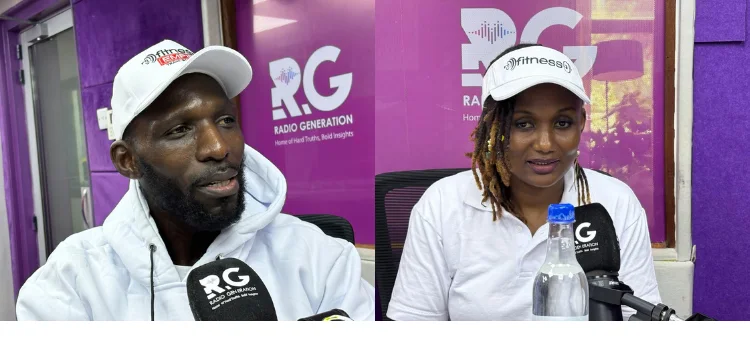
At Fitness Empire in Eastleigh, Nairobi, bodybuilding champion and fitness coach Rashid Issa says the shift is reflected in two complementary approaches to fitness: the pursuit of competitive excellence and the creation of welcoming spaces where women can exercise without feeling intimidated.
Issa's journey into bodybuilding began in 2007, with his first competition coming a year later.
What started as an interest in the sport gradually developed into a competitive career that saw him become one of the prominent figures in Kenya's bodybuilding scene.
His first major breakthrough came in 2014 when he won the Mr Nakuru bodybuilding title, seven years after beginning his bodybuilding journey.
The following year, he won Mr Nairobi before competing in his first Mr Kenya championship, where he finished third. He also participated in the Mr Modern Fitness competition in Mombasa, securing third place.
Rather than settle for those results, Issa returned to the competitive stage with renewed determination.
In 2016, he retained his Mr Nairobi title before finally winning Mr Kenya, having finished third in his previous attempt.
The same year, he travelled to Dubai, where he secured third place overall, and went on to win Mr Kakamega.
His success continued in 2017 when he retained the Mr Kenya title and won Mr Kakamega for a second time.
By then, Issa had accumulated an impressive collection of titles, including one Mr Nakuru championship, two Mr Nairobi titles, two Mr Kenya titles and two Mr Kakamega titles.
After years of competing, he decided to shift his attention towards building a business.
In 2017, he and his team established Fitness Empire, a decision that eventually required him to take a break from competitive bodybuilding to concentrate on the gym's development.
However, his competitive ambitions were far from over.
In 2021, he returned to the stage and won the Mr 001 competition before adding the Mr East Africa title to his achievements.
For Issa, the achievements represent years of commitment to a sport that demands considerably more than simply spending hours in the gym.
“Bodybuilding is expensive. Trust me, it is. We have been winning titles, but even earning KSh100,000 as a competitive athlete does not necessarily cover the costs involved. I am talking about an athlete who is serious about competing for a title, not someone who simply steps on stage to participate. You have to give your best in terms of diet, supplementation and everything else required to compete at that level,” he said during an interview on Radio Generation on October 30, 2026.
The financial demands, he explained, begin long before an athlete steps onto the competition stage.
Bodybuilding requires carefully structured training, specialised nutrition, supplements and adequate recovery. For athletes seeking to compete at the highest level, these expenses can become a significant barrier, particularly when prize money does not adequately reflect the investment required.
Issa believes that concentrating solely on the financial rewards can also undermine an athlete's commitment to the sport.
"When you step on stage and you actually all you're winning is the title, you look at the prize money, and you're like, no, it's not enough. But again, if you are going to focus on the cash prize as an athlete, then you are not going to give your best," he said.
Beyond the financial challenges, Issa raised concerns about the regulation of bodybuilding in Kenya, particularly the use of performance-enhancing substances.
He recalled a period when authorities and sports officials were more actively involved in conducting random tests on competitors to establish whether athletes were adhering to competition requirements.
However, he argued that the absence of an effective national bodybuilding federation has created an environment in which athletes can make decisions about their preparation without adequate oversight.
"Currently we do not have a federation for Kenya bodybuilding, and that has put us in a position whereby guys are doing what they want to do in order to win, without being regulated. As much as that might look like the sport is growing, it is causing so much damage to athletes' health," he added.
While open competitions allow athletes to participate regardless of whether they have used performance-enhancing substances, natural bodybuilding is intended for competitors who meet the requirements of drug-free participation.
For Issa, proper regulation is important not only for maintaining fairness but also for protecting the health of athletes who invest years of their lives in the sport.
Yet, while competitive bodybuilding remains one side of Fitness Empire's identity, the gym's approach to fitness extends beyond professional athletes.
For Mercy Maina, a fitness coach at the establishment, the bigger ambition is to encourage ordinary women to make physical activity part of their everyday lives.
Her focus is on women who may not necessarily aspire to compete, build pronounced muscles or achieve a particular body shape, but simply want to maintain their health while balancing work, family and other responsibilities.
Maina believes fitness should not be viewed as an activity reserved for professional athletes or people with unlimited time.
Instead, she wants women to recognise the importance of creating time for themselves, particularly in a society where many juggle demanding work schedules and domestic responsibilities.
"My story, on the other hand, is not a champion story. My space in fitness is occupying the female side. I don't mean in terms of bodybuilding. I like it, I love that, but in terms of the regular day-to-day woman, the one with two kids, should they be at the gym? Should they be in the house? The one who is going to work eight to five, should they make time for the gym? Yes," she said.
For Maina, the benefits of exercising extend beyond physical transformation to include mental health and social interaction.
She argues that creating opportunities for women to interact, train together, and pursue personal goals can contribute to improved emotional well-being.
In her view, a woman who makes time for fitness alongside her daily responsibilities can develop a stronger sense of confidence and belonging.
This philosophy informed Fitness Empire's decision to establish a dedicated women's gym rather than simply allocating specific hours for female clients in a mixed training environment.
The arrangement is particularly significant in areas where social and cultural expectations can influence how women participate in public spaces.
Rather than restricting women to particular training sessions, the gym provides a separate space where they can exercise at different times of the day, including early mornings and evenings.
According to Maina, the facility allows women to organise their fitness routines around their schedules without having to worry about whether they are exercising alongside men.
"We wanted to create that comfortable environment where ladies would feel comfortable to train without feeling like they are being stared at by men or intimidated," she explained.
The initiative also challenges perceptions surrounding women's strength and their participation in weightlifting.
Maina said she has observed that women sometimes approach training differently in mixed-gender gyms, potentially holding back because of the presence of men.
However, in a women-only environment, they are often more willing to challenge themselves and lift heavier weights.
She believes this demonstrates that women are capable of achieving significant strength gains when provided with an environment where they feel comfortable.
"Females are powerful, but you find I think they weaken themselves around the other gender. When they are in the female-only gym, you see that we are babes that can lift. And hakuna kuficha," she said.
The discussion also touched on concerns raised by some men about their spouses attending gyms, particularly where male trainers are involved.
Issa maintained that professional conduct should remain central to relationships between trainers and clients, arguing that the fitness industry should not be unfairly singled out for misconduct that can occur in other professions.
Maina, however, was emphatic that the women's gym was not established to accommodate male insecurities or restrictions imposed on women.
"Now, when it comes to that part of, 'I'm not comfortable with my wife being trained', that's a man issue. I have a problem with that. I will categorically say we did not do this to cater to a man's ego. It is just for comfort. We're just making sure that you can be comfortable if you want to train," she explained.
Beyond providing the right environment, Issa believes choosing a gym should begin with understanding individual fitness goals.
Someone interested in bodybuilding, for instance, requires access to strength-training equipment, while another person focused on cardiovascular fitness may need a facility with a different range of machines.
He also argues that gyms should offer more than access to equipment, insisting that professional guidance is an important part of the service clients pay for.
According to him, trainers should develop structured programmes that help clients work towards their goals instead of simply pointing them towards equipment.
"Most of the gyms are not actually offering what we call in-house trainers. They are mostly doing personal training. You go there, and the only person that, let me call them a gym instructor, will show up and tell you, 'You're gonna chest.' That is a gym instructor. The gym is supposed to give you a trainer to lead you through your workout. They're supposed to come up with a training programme for you, so that you feel like you're actually getting what you're paying for," he said.
However, achieving results requires commitment beyond the gym environment.
Issa emphasised that consistency in training, nutrition and sleep plays a central role in physical transformation.
He noted that people sometimes assume that simply registering at a gym and attending occasional sessions is enough to achieve their desired results.
But the body requires a coordinated approach involving regular exercise, balanced nutrition and sufficient recovery.
He suggested that individuals who remain consistent could begin noticing changes in muscle tone after approximately 12 weeks, although progress depends on their routines and individual circumstances.
"People just assume it's about going to the gym. Do you know that not everyone who goes to the gym is after achieving a certain physique? People come to the gym to just socialise. You need to be consistent with your workout. You need to be consistent with your sleeping pattern. Sleeping pattern is a key factor in achieving results. You cannot be sleeping for four hours because your body needs to recover," he said.
Ultimately, the experiences of Issa and Maina illustrate how the fitness industry is evolving beyond the traditional emphasis on physical appearance.
While competitive bodybuilding demands discipline, financial investment, and effective regulation, everyday fitness requires accessible facilities, professional guidance, and an environment that accommodates different needs.
At Fitness Empire, the two coaches are pursuing these complementary ambitions: developing competitive athletes while encouraging more women to embrace fitness as part of their everyday lives.
Their message is that the gym should not simply be a place to build muscles or pursue championship titles, but a space where people can invest in their physical health, confidence, and overall well-being.