Why I okayed proposed Ebola facility in Laikipia - Ruto
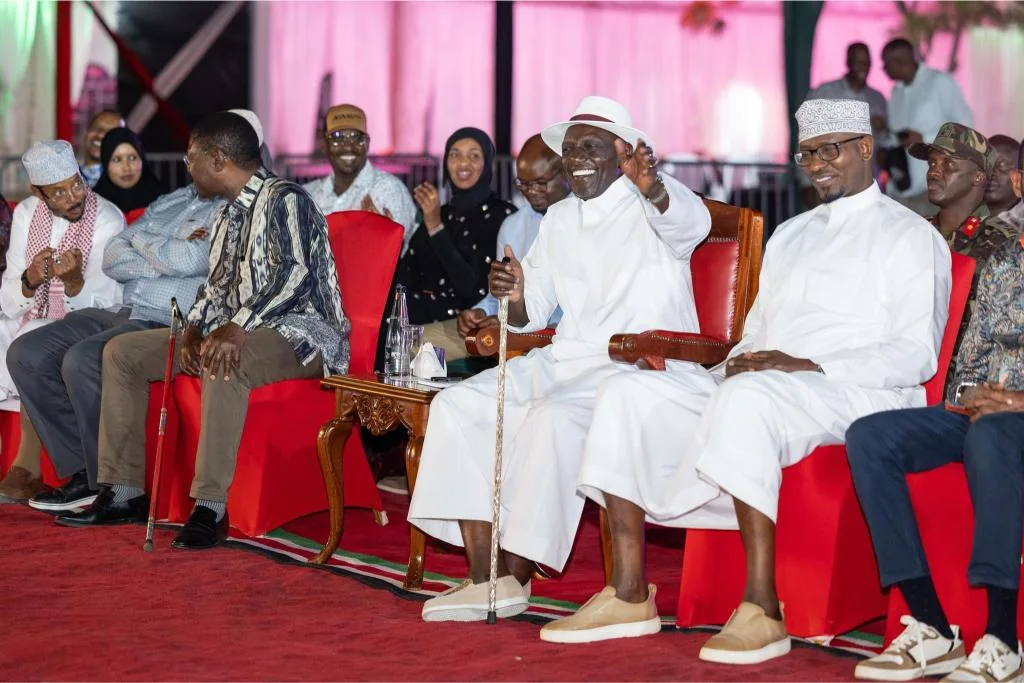
The president said the facility is part of a wider government plan to strengthen the country's ability to detect, isolate and respond to infectious diseases, including Ebola, which has previously affected countries in the region.
President William Ruto has defended the government’s plan to establish an Ebola preparedness facility at Laikipia Air Base, linking the project to Kenya’s long-standing cooperation with the United States on global health security and pandemic response.
Speaking on Monday during a media roundtable with North Eastern journalists at Wajir State Lodge, the President said the arrangement was part of wider international collaboration aimed at strengthening Kenya’s public health systems and emergency response capacity.
Ruto said the decision to host the facility was made within the framework of existing partnerships, noting that Kenya has worked with the United States for decades on disease control and medical research.
“When President Trump asked the government of Kenya to support them by having a centre at Laikipia Air Base, I gave the okay because it was an agreement and a partnership with friends who have worked with Kenya for 30 or 40 years. The American government has supported us,” Ruto said.
“They have deployed huge resources in Kenya to work with us on HIV/AIDS and other diseases. They worked with us on Ebola. In fact, KEMRI was one of the institutions that worked on research on the vaccines for COVID because we have a solid partnership with America and other partners.”
The President said Kenya’s preparedness for Ebola and other infectious diseases is already well established, with surveillance systems, isolation units and treatment facilities activated across the country.
He said 23 counties have already activated response mechanisms, with designated hospitals ready to handle suspected cases in the event of an outbreak.
“We have deployed every arsenal that we have to make sure that we protect Kenya, that we deal with the challenge. We have made preparations for isolation units, for surveillance, for treatment,” he said.
Ruto added that health authorities are screening about 3,000 people daily at entry points, including travellers and transit passengers, as part of early detection efforts.
“Fortunately for our country, not a single person tested has tested positive for Ebola,” he said.
He urged leaders and the public to trust the government’s preparedness, dismissing criticism of the Laikipia project as political interference in a public health issue.
“We are a responsible government. We know what we are doing. People should relax. Politicians should avoid reckless, unnecessary talk that doesn’t mean anything,” he said.
The President further defended the Laikipia arrangement, saying it was consistent with Kenya’s broader cooperation with international partners in managing health emergencies and was not an isolated initiative.
He pointed to previous joint efforts, including Kenya’s collaboration during the COVID-19 pandemic, and cited a United Nations facility in Nairobi that supported global operations during the crisis as an example of the country’s role in international health response systems.
Ruto also noted that Kenya operates more than 20 specialised health facilities across the country, including Kenyatta National Hospital, Moi Teaching and Referral Hospital, the Police Hospital, Thika Hospital and Alupe Hospital, which support disease surveillance and response.
“These facilities are meant to make sure that there is proper screening and, if there is any positive identification of people who have Ebola, then immediately they are isolated and treated so that we avoid any spread of the disease,” he said.
The President linked Kenya’s preparedness to its regional role, saying its proximity and relations with neighbouring countries, including the Democratic Republic of Congo, increase exposure risks to infectious diseases such as Ebola.
He said movement across borders and Kenya’s participation in regional humanitarian and security operations made readiness essential.
“The fact that we could end up with a case is not far-fetched,” he said.
Ruto also revealed that the Ebola preparedness arrangement at Laikipia Air Base was made following a request linked to United States cooperation in global health security, saying Kenya has consistently benefited from American support in strengthening its health systems.
He added that institutions such as the Kenya Medical Research Institute have played a key role in international research efforts, including during the development of COVID-19 vaccines.
The President said the government’s approach reflects a broader commitment to universal healthcare and national security, insisting that preparedness remains a critical responsibility of any administration.

Comments
Sign in with Google to comment, reply, and like comments.
Continue with Google