Senate uncovers dire conditions in county hospitals
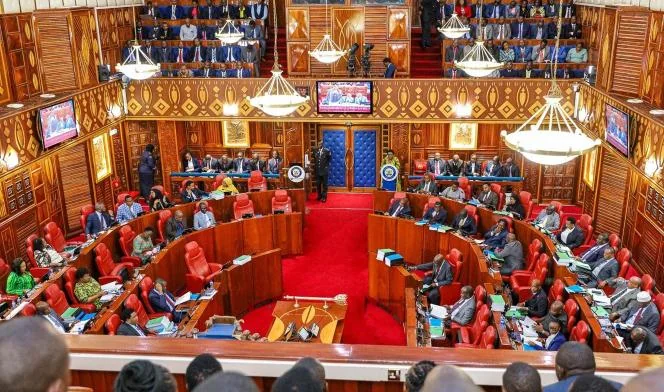
The committee, led by Uasin Gishu Senator Jackson Mandago, toured health facilities in Bungoma, Kakamega, Kitui, Makueni and Machakos counties to assess the state of healthcare services.
A Senate inspection of hospitals across Western and Eastern Kenya has exposed a healthcare system under pressure, with patients battling overcrowded wards, ageing facilities and a shortage of health workers as county hospitals struggle to keep up with demand.
Findings contained in a report by the Senate Health Committee show that several major hospitals are operating in poor conditions, with damaged infrastructure, inadequate staffing and delayed funding affecting service delivery.
The committee, led by Uasin Gishu Senator Jackson Mandago, toured health facilities in Bungoma, Kakamega, Kitui, Makueni and Machakos counties to assess the state of healthcare services.
Among the facilities visited were Bungoma County Referral Hospital, Kimaeti Health Centre, Kakamega County Referral Hospital, Kitui County Referral Hospital and Makueni County Referral Hospital. The senators also inspected Mukuyuni Subcounty Hospital, Athi River Level 4 Hospital, Mwala Level 4 Hospital and Machakos Level 5 Hospital.
The report reveals that deteriorating infrastructure remains one of the biggest challenges facing the facilities.
“The committee observed widespread infrastructure deterioration across the visited facilities,” the report says.
At Bungoma County Referral Hospital, senators found worn-out buildings characterised by cracked floors, broken furniture, leaking and damaged ceilings, peeling paint and overcrowded wards. Due to lack of space, some patients were being accommodated in verandahs that had been converted into treatment areas.
Conditions at Kakamega County Referral Hospital were found to be equally worrying.
“Kakamega County Referral Hospital exhibited equally concerning conditions. The hospital infrastructure was in a dilapidated state with several broken window panes temporarily blocked with cartons,” the report notes.
The committee further identified safety concerns within the hospital, including exposed electrical cables that pose risks to both patients and staff.
It also raised concerns about the continued use of asbestos roofing.
“Most alarmingly, the facility’s roofing structure was made of asbestos,” the report states, warning that the materials posed “serious environmental and occupational health hazards”.
The inspection further revealed severe congestion in referral hospitals, particularly in maternity and newborn units.
At Kakamega County Referral Hospital, senators found 65 mothers sharing 45 beds in the labour ward, while 15 infants were being cared for using only eight incubators.
“The labour ward was found to be congested with 65 mothers occupying only 45 available beds, thereby compromising patient privacy,” the report says.
The committee heard that Bungoma County Referral Hospital is also facing immense pressure due to the high number of patients seeking services from neighbouring counties as well as Uganda.
As a result, available resources and staff have been stretched beyond capacity.
“It was reported that in some shifts, only one nurse was on duty,” the committee observed.
The report also highlights a widespread shortage of healthcare workers across the facilities visited.
At Kimaeti Health Centre, staffing levels were found to be below the standards required by the Ministry of Health, affecting both efficiency and quality of care.
“Understaffing emerged as a critical challenge across all visited facilities,” the report says.
The committee also faulted county governments over the continued reliance on workers serving under uncertain employment terms.
In Kakamega County, senators found that a mortician had worked for nine years without being moved to permanent and pensionable terms. In Bungoma County, more than 245 workers employed under the Universal Health Coverage programme were yet to be confirmed.
The findings point to deep-rooted challenges facing county health facilities, with the committee warning that urgent measures are needed to improve infrastructure, strengthen staffing levels and ensure patients receive safe and quality healthcare services.




Comments
Sign in with Google to comment, reply, and like comments.
Continue with Google