
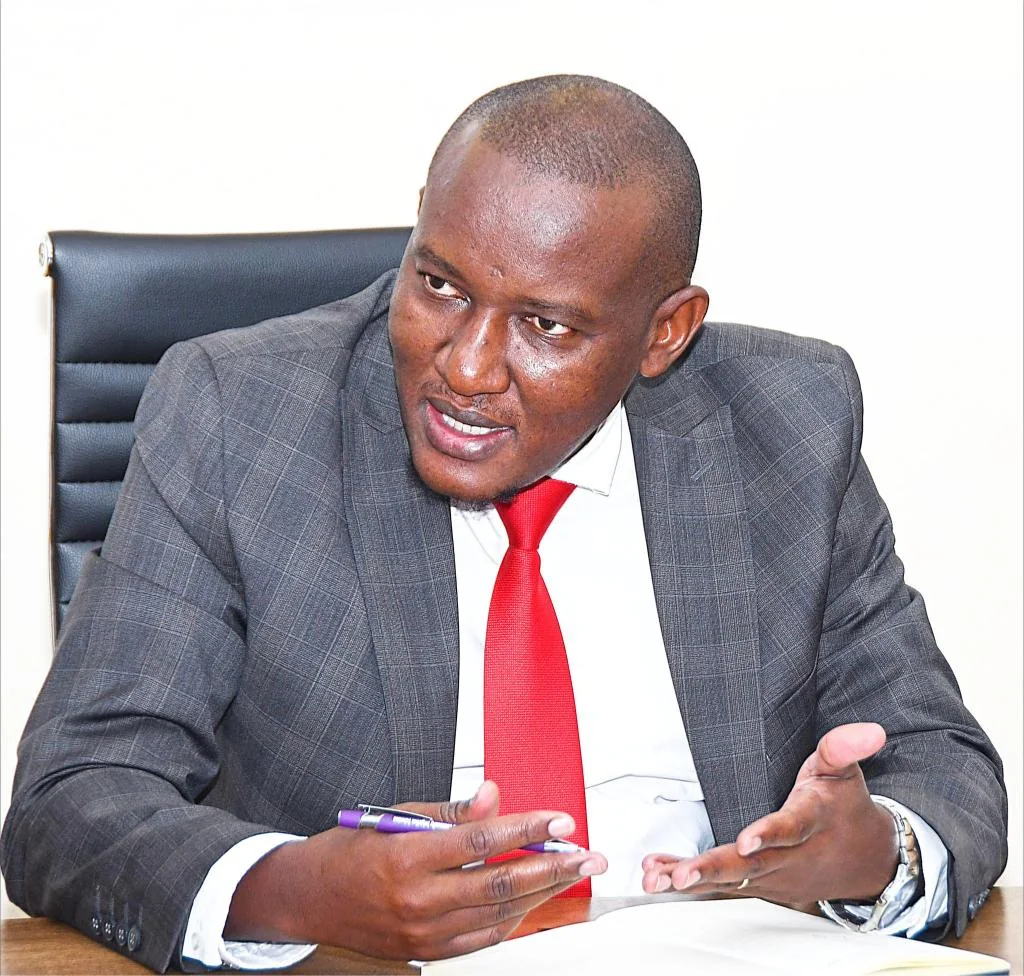
Irrigation Principal Secretary Ephantus Kimotho has called for increased investment in irrigation infrastructure to reduce Kenya's dependence on food imports following the signing of a five-year partnership between the State Department for Irrigation and the United Nations Office for Project Services (UNOPS).
Kimotho said the partnership would strengthen technical capacity, improve project delivery and accelerate the development of irrigation infrastructure as the government seeks to expand the country's irrigated agricultural land by an additional one million acres over the next decade.
Kimotho announced the agreement after signing a five-year Memorandum of Understanding (MOU) with Massimo Diana, Director of the UNOPS East and Southern Africa Sub-Regional Office.
The agreement comes as Kenya implements the National Irrigation Sector Investment Plan (NISIP) 2025–2035, which targets an additional one million acres under irrigation by 2035.
The government intends to use the programme to increase agricultural productivity, unlock the country's agricultural potential and strengthen national food security.
Speaking during the signing ceremony on Monday, Kimotho noted that Kenya continued to rely heavily on imported food commodities, particularly rice, whose domestic production remains significantly below national consumption requirements.
He disclosed that the country had considerable untapped agricultural land and water resources that could support increased food production if properly developed through strategic irrigation investments.
“Kenya remains a net food importer, particularly of essential commodities such as rice, where domestic production continues to fall significantly below national consumption requirements. We have considerable untapped agricultural land and water resources which, if effectively harnessed through strategic irrigation investments, can significantly reduce our dependence on food imports while creating employment and improving livelihoods,” Kimotho said.
Under the agreement, UNOPS will provide technical support in project design and structuring, feasibility studies, procurement, environmental and social impact assessments, infrastructure implementation and long-term asset management.
The partnership will also support the preparation of commercially viable and bankable projects that can attract investment from development partners, climate finance institutions and private sector players.
Kimotho said the collaboration would help the government improve the quality of irrigation projects while strengthening its ability to mobilise resources beyond traditional public financing.
The agreement will also provide opportunities for innovative blended financing arrangements, combining government resources, development partner support, climate finance and private sector capital.
Speaking during the ceremony, Diana reaffirmed UNOPS' commitment to making its technical expertise and institutional capacity available to support Kenya's irrigation development priorities.
The organisation will support capacity development, project procurement, technical assistance, feasibility studies and infrastructure project preparation.
The partnership will also prioritise climate resilience and sustainability in the planning, construction and management of irrigation infrastructure.
Diana highlighted the importance of incorporating climate considerations into infrastructure design, warning that poor planning and construction standards could expose projects to damage from extreme weather events.
He noted that floods alone did not necessarily destroy infrastructure, pointing to poor design, inadequate construction quality and failure to integrate climate resilience into infrastructure planning as some of the underlying causes of infrastructure damage.
UNOPS will therefore support the integration of climate resilience and sustainability throughout the project lifecycle.
The technical assistance is expected to strengthen the government's capacity to develop infrastructure that can withstand climate-related risks while delivering long-term benefits to agricultural communities.
Kimotho clarified that the five-year MOU does not constitute a direct financing agreement between the government and UNOPS.
Instead, it establishes a framework for technical cooperation, with specific interventions, consultations and project support to be identified and undertaken individually according to the government's priorities and requirements.
He said the arrangement would help the State Department prepare bankable projects and connect them with appropriate financing opportunities.
The collaboration is particularly important as the government shifts from predominantly publicly funded irrigation investments towards blended financing models that incorporate private sector participation.
The signing ceremony was attended by senior government officials, including the Secretary for Land Reclamation, Climate Resilience and Irrigation Water Management and Secretary of Administration David Kipkemei.
Other participants included directors and senior officers from the State Department for Irrigation, alongside UNOPS representatives Mewael Addis Kahsay, Head of Programmes, and Emmah Akinyi.
The government expects the partnership to strengthen institutional capacity, accelerate irrigation expansion and support efforts to reduce food import dependence as Kenya pursues its 2035 agricultural and food security targets.