High Court blocks withdrawal of Kenya–US health data case
Justice Nyaundi ruled that public interest cases cannot be ended through private agreements where constitutional issues remain unresolved, especially when broader public rights are involved. The judge directed that the consolidated petitions will proceed to hearing on May 25, 2026.
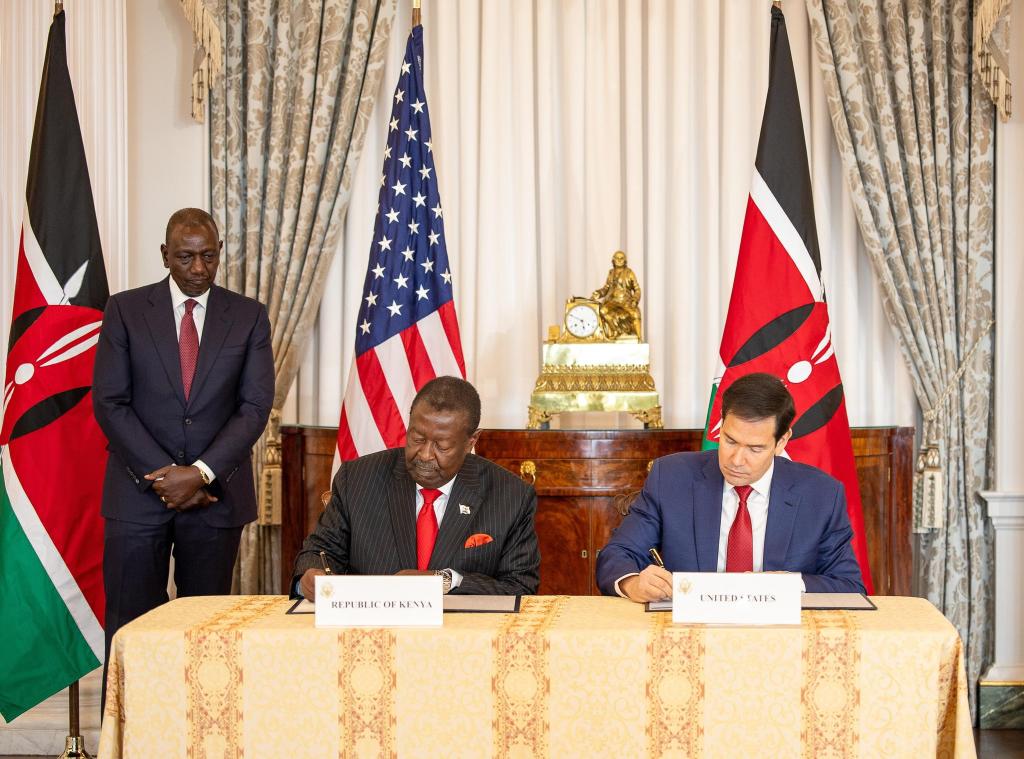
The Nairobi High Court has declined to allow the withdrawal of a constitutional petition challenging the Kenya–United States health data sharing agreement, keeping the matter active and setting it for full hearing next year.
Justice Nyaundi ruled that public interest cases cannot be ended through private agreements where constitutional issues remain unresolved, especially when broader public rights are involved. The judge directed that the consolidated petitions will proceed to hearing on May 25, 2026.
The decision followed an objection by Katiba Institute against an application by the Consumer Federation of Kenya (COFEK), which had sought to withdraw Constitutional Petition No. E809 of 2025.
The petition questions the legality of the health data sharing arrangement between Kenya and the United States, raising concerns over privacy, data protection, legality, and possible violations of constitutional rights.
Katiba Institute told the court that COFEK had indicated it reached a consent arrangement with the government and had sought to end the case through withdrawal.
However, lawyers representing Katiba Institute opposed the move, arguing that constitutional violations cannot be settled through private agreements where the alleged breaches remain unresolved.
In court submissions, the lawyers maintained that “there can be no consent to constitutional violations, and that constitutional petitions cannot be withdrawn by consent where the alleged violations persist.”
They further argued that the case was filed in the public interest and therefore does not belong solely to the original petitioner.
The court was also told that because the issues raised affect the public, “the Petition was filed in the public interest and is not the sole property of COFEK; any member of the public may prosecute it.”
In her ruling, Justice Nyaundi agreed that courts must retain control over constitutional matters filed on behalf of the public, especially where key legal questions remain unsettled.
Katiba Institute said the judge held that courts “must retain control over constitutional petitions filed in the public interest, and that a notice of withdrawal may be declined where the Court is persuaded to do so.”
The court also noted that another petitioner, Senator Okiya, had already expressed willingness to continue with the case alongside his separate Constitutional Petition No. E816 of 2025.
As a result, the court directed that the matter proceed to full hearing rather than being terminated through consent withdrawal.
The ruling means the challenge to the Kenya–United States health data sharing agreement remains active and will be determined through consolidated proceedings.
The case has drawn attention due to concerns over cross-border sharing of health data, touching on privacy, national sovereignty, digital governance, and protection of sensitive personal information.
Public interest litigation has increasingly been used in Kenya to challenge government decisions where constitutional rights and accountability are in question.
The hearing scheduled for May 25, 2026 is expected to focus on whether the agreement complies with constitutional standards on privacy rights, public participation, and lawful administrative action.
The court’s decision ensures the case will continue under judicial scrutiny until a final determination is made on the legality of the agreement.


Comments
Sign in with Google to comment, reply, and like comments.
Continue with Google