
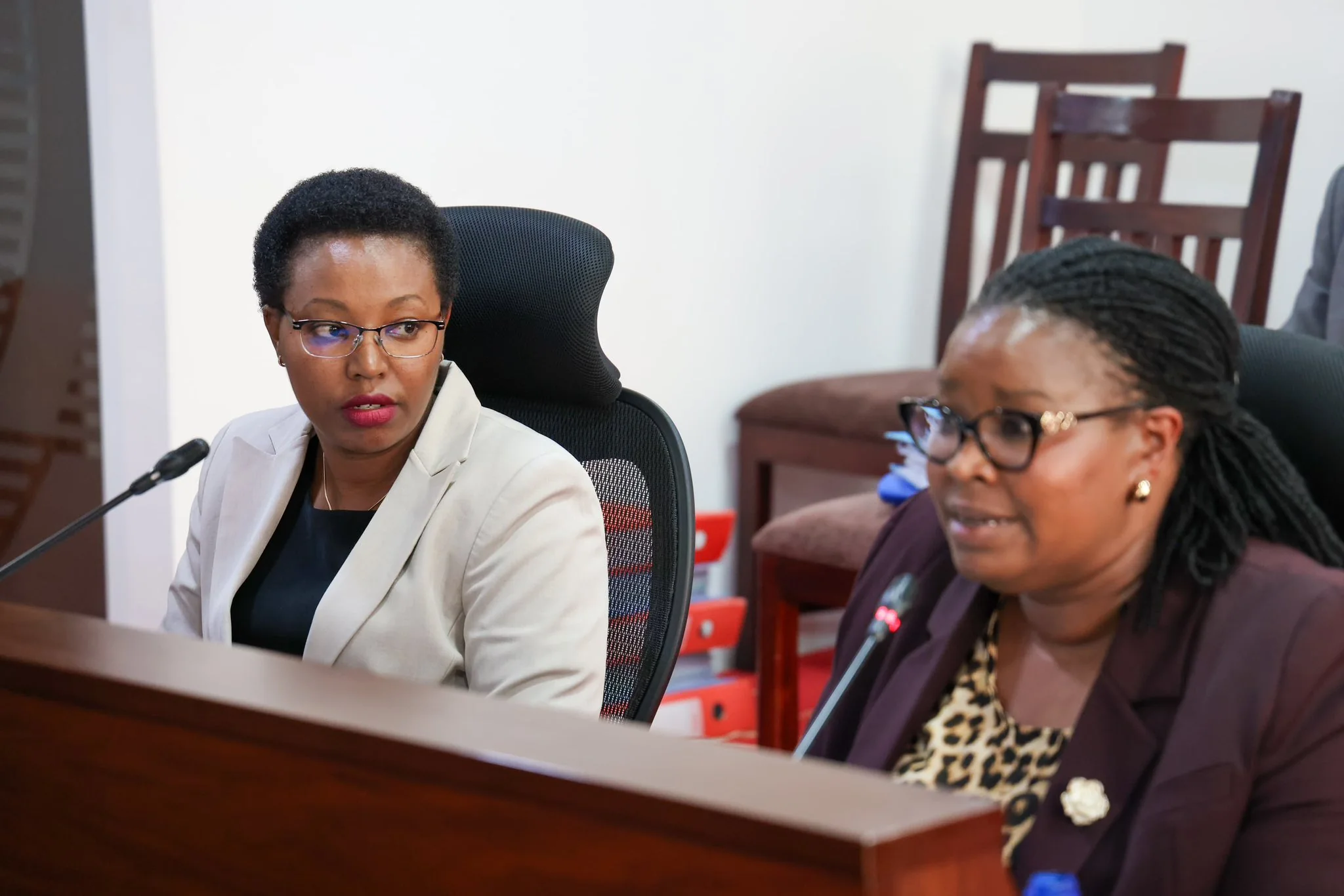
The National Assembly’s Public Investments Committee on Social Services, Agriculture and Administration (PICS-SAA) has reviewed audit queries raised by the Auditor General on the Kenya Animal Genetic Resources Centre (KAGRC) with lawmakers urging stronger systems even as both institutions defended ongoing reforms and transition challenges.
The MPs on Thursday examined the financial statements and governance structures, largely focused on institutional capacity gaps linked to the transition of the two entities from government departments into fully-fledged state corporations.
The Kenya Animal Genetic Resources Centre, which plays a critical role in livestock improvement and national food security through the conservation and distribution of animal genetic materials, came under scrutiny over land ownership documentation, procurement processes and banking arrangements.
However, the institution told the Committee that many of the issues raised stem from its historical transition process, which began when it was still a government department before becoming a parastatal in 2011.
Bernadette Misoi, the Managing Director of KAGRC, explained that efforts to regularize ownership of land assets had been ongoing but have faced bureaucratic delays beyond the institution’s control.
“KAGRC was a department before it became a parastatal in 2011. We have been following up on this matter through formal letters, stakeholder meetings, and submission of the necessary documentation to help the process of acquiring the ownership documents to no avail,” she explained.
Her explanation was echoed by members who acknowledged the complexity of legacy issues, even as they sought clarification on progress made.
“I am a farmer so I have an interest in the affairs of KAGRC. Why is the ownership of some of your properties in the name of State Departments and not the Centre? One title is actually in the name of the National Treasury,” observed Bishop Jackson Kosgei.
Othaya MP Wambugu Wainaina also sought evidence of sustained follow-up, noting the long timeline involved.
“You cannot have been pursuing land documents for over 10 years. What evidence do you have to show you’re pursuing the documents?” he asked.
Despite the tough questions, members also noted that such delays are not uncommon in institutions undergoing structural transformation, especially where assets were previously held under ministries.
The Committee further examined KAGRC’s banking arrangements, where Dr. Misoi acknowledged the existence of three accounts flagged in the audit, explaining that they were opened before the Public Finance Management Act, 2012 came into force. She added that formal requests had since been made to regularize two of the accounts through the National Treasury.
On procurement, the Centre defended its long-standing supplier relationship with IMV Technologies, noting that technical compatibility requirements have guided its decisions over several decades.
Members also raised questions about the leasing of bulls at Makitosha Bull Dam, although management provided explanations on payments and supporting documentation.
Committee Vice Chairperson Caleb Amisi observed that the institution, like many evolving state agencies, continues to strengthen its internal systems.
“Across the Financial Years we’re reviewing, you seem to show weak internal control systems right from documentation to accounting. Is the issue a lack of qualified officers? You need to fix these operational gaps by enhancing the capacity of your human resource,” Amisi noted.
In response, Misoi acknowledged ongoing modernization efforts, including plans to fully digitize operations.
“I want to disclose here that we are yet to migrate to the e-GP system, which we are hoping to procure in the next financial year. Sixty percent of our processes are still manual, but the board is working to ensure we automate our processes,” she stated.
The Committee urged the agency to accelerate reforms, particularly in digital systems, asset registration and procurement compliance, to enhance accountability and service delivery going forward.