
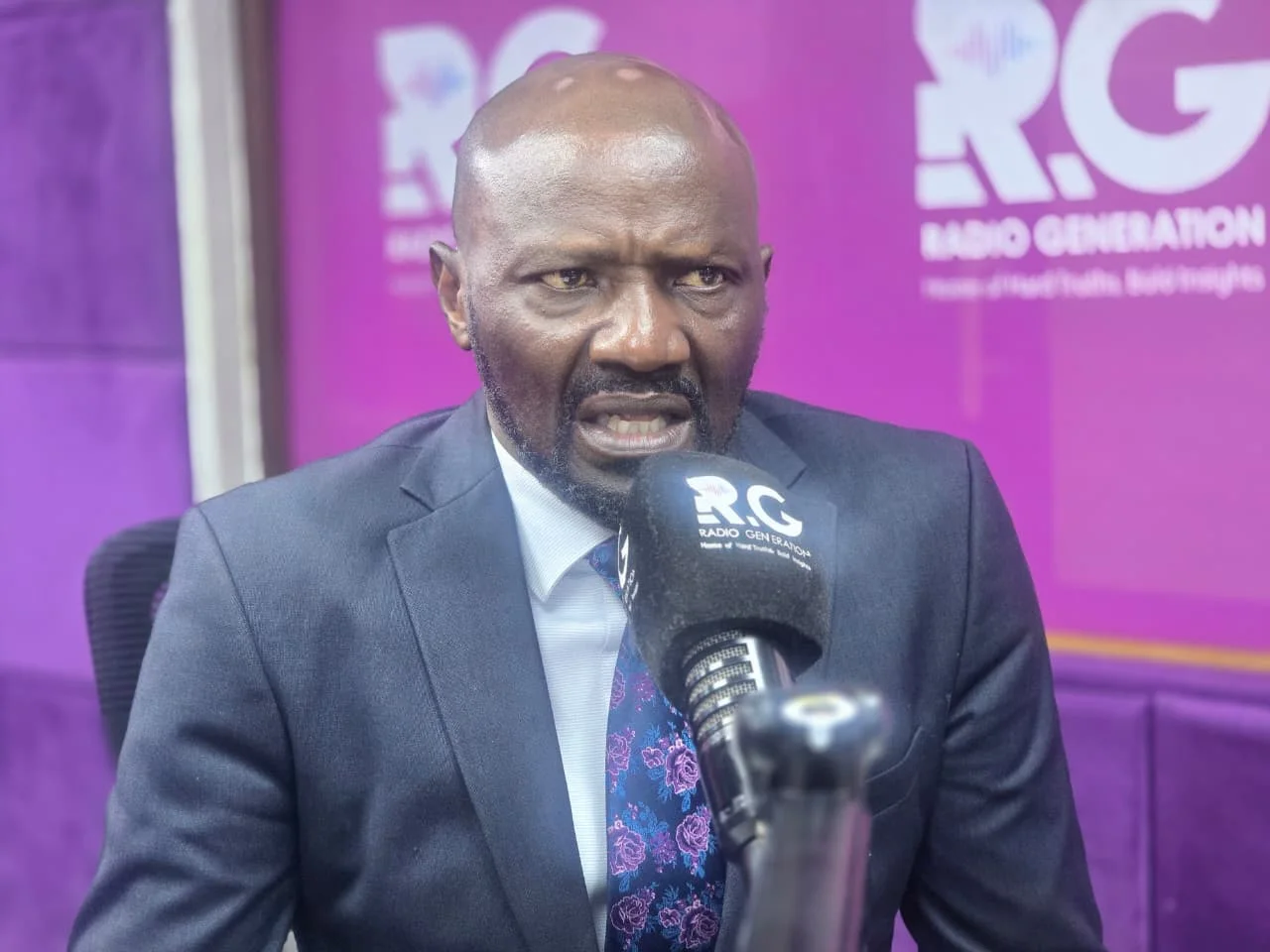
Murang’a Senator Joe Nyutu has described Mount Kenya’s decision to elect President William Ruto in the 2022 General Election as one of the region’s most costly political mistakes, arguing that voters ignored former President Uhuru Kenyatta’s warning against supporting his former deputy.
Nyutu said the region failed to understand why Uhuru opposed Ruto, allowing the then Deputy President to capitalise on divisions between the former Head of State and Mount Kenya leaders to establish a stronger political connection with voters.
Speaking on Radio Generation on Tuesday, the senator described Ruto’s election as a dangerous political decision whose consequences continue to shape the region’s political landscape.
“That’s how we fell into the trap. The most dangerous trap that the region has ever fallen into. That’s of electing President Ruto as president,” Nyutu said.
The senator attributed the region’s political shift largely to Uhuru’s strained relationship with elected leaders during his second and final term in office.
He claimed the former President failed to maintain regular engagement with Mount Kenya politicians, leaving many feeling politically isolated despite the region having played a significant role in his rise to power.
“President Uhuru Muigai Kenyatta never ever gave audience to elected leaders in Mount Kenya in his second term. And you can confirm. The entire five years,” Nyutu said.
“Any time he met them, he was insulting them,” he added.
According to Nyutu, the absence of consistent political engagement created an opportunity for Ruto, who was then serving as Deputy President, to strengthen his relationship with leaders and residents across the region.
He argued that Ruto recognised the growing disconnect between Uhuru and Mount Kenya politicians and deliberately positioned himself as an accessible alternative.
“President Ruto, then being Deputy President, realised that there was a vacuum. That the leaders from Mount Kenya were not getting audience with the President. And being the cunning as he is, he saw a vacuum. He filled it. He embraced these leaders. He was available,” the senator said.
Nyutu said Ruto's frequent visits to the region, participation in church activities and interactions with residents helped him establish a strong grassroots political network.
He suggested that these engagements gave Ruto an advantage that Uhuru struggled to overcome when he eventually returned to the region to campaign against his former deputy.
Nyutu further argued that Uhuru's decision to support former Prime Minister Raila Odinga in the 2022 presidential election was not the primary reason Mount Kenya voters turned against him.
Instead, he blamed the former President's perceived absence from the region and his failure to maintain relationships with local political leaders before attempting to influence their voting decisions.
The senator questioned why Uhuru expected residents to abandon Ruto after years of regular interactions without adequately explaining his opposition to the former Deputy President.
“This is the Uhuru now who comes towards the elections to tell people not to elect the person they have been seeing every other day. The person who has been building churches every other day,” Nyutu said.
He also recalled the political partnership between Uhuru and Ruto, which had previously been popularised through the phrase 'Kumi yangu, kumi ya Ruto'.
The Senator disclosed that the sudden breakdown of that partnership created confusion among Mount Kenya voters, particularly because the two leaders had previously campaigned and governed together.
He added that Ruto successfully presented himself as a victim of political hostility, a narrative that attracted sympathy from residents who had previously supported the Uhuru administration.
“When this guy, when Uhuru seemed to be hostile to him, this guy was like, you know, crying in a mountain and pretending to be a victim person, and we pitied him,” he said.
Nyutu's remarks come as political alignments begin taking shape ahead of the 2027 General Election, with Mount Kenya remaining an important electoral battleground.
His assessment raises questions about whether the political circumstances that contributed to Ruto's victory in the region in 2022 will influence voting patterns in the next election.
The senator's comments also point to the continuing political significance of Uhuru, whose influence among Mount Kenya voters could remain a factor in determining the region's political direction.
Nyutu's account suggests that political loyalty in the region was shaped not only by presidential endorsements but also by accessibility, personal relationships and sustained grassroots engagement.