
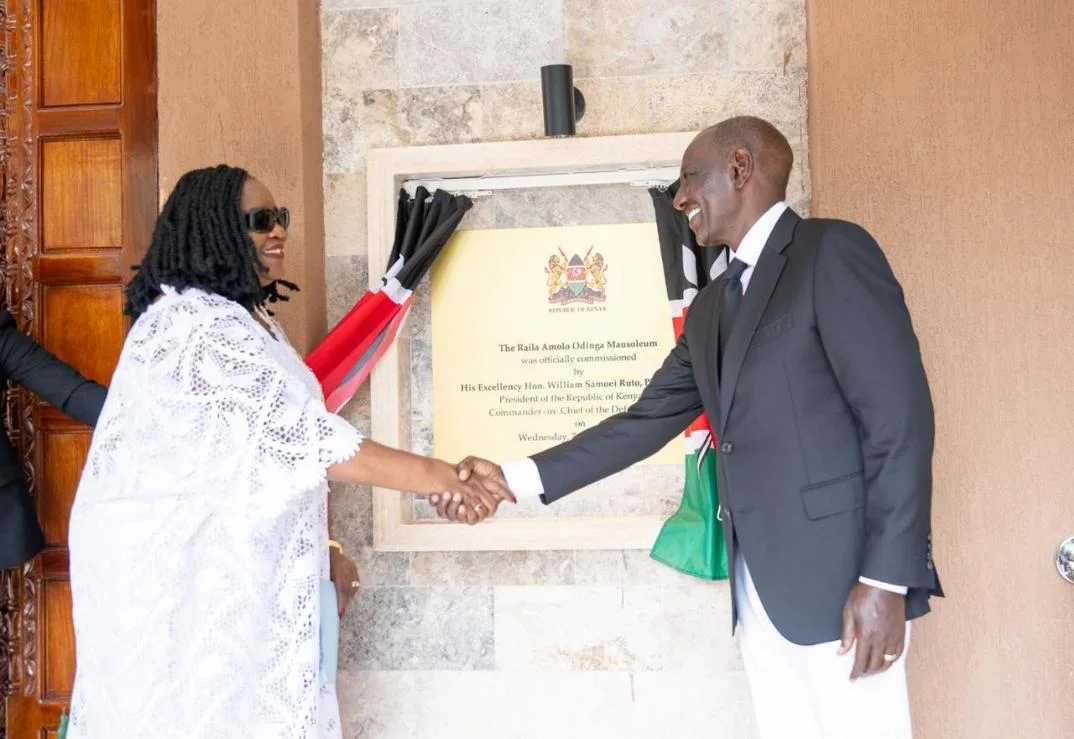
President William Ruto has announced plans to expand Raila Odinga’s burial site in Bondo into a major centre for history, research and public learning through the construction of a memorial library, museum and research centre.
Speaking on Wednesday during the dedication and handover of Raila’s mausoleum at Kang’o ka Jaramogi in Siaya County, Ruto said the planned facility would mark the second phase of development at the site and help preserve the former Prime Minister’s political journey for future generations.
“This mausoleum will not be a silent place. It will be a living classroom. What we have completed was just the first phase. In the next phase, we will build the Raila Memorial Library Museum and Research Center. Young Kenyans and visitors from across Africa will come here to learn what courage looks like,” Ruto said.
The President said the project would move the site beyond being a burial place by creating a space where Kenyans, researchers and visitors can learn about Raila’s contribution to the country and the wider struggle for democracy.
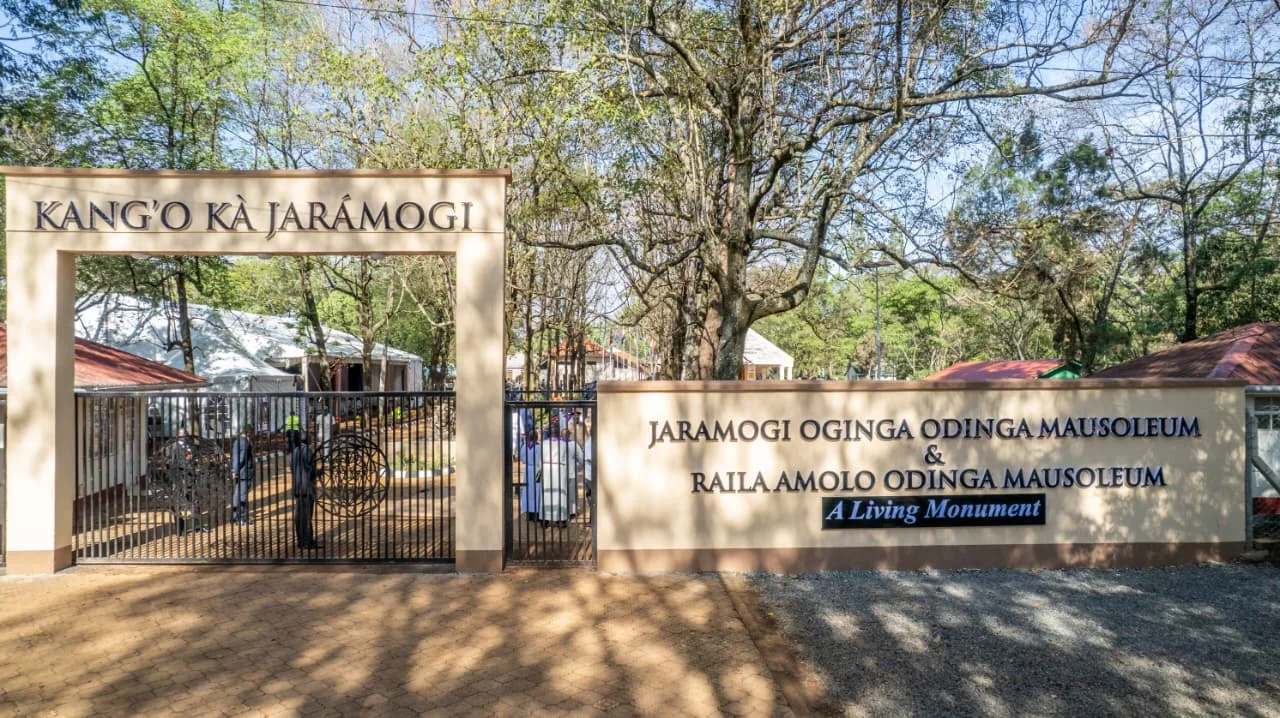
The development is part of broader government efforts to establish Kang’o ka Jaramogi as a national heritage site. The National Museums of Kenya has been involved in developing the mausoleum and other facilities at the site, including a museum dedicated to Raila.
The planned library and research centre is also expected to strengthen the historical importance of the site by documenting the political lives and contributions of both Raila and his father, Jaramogi Oginga Odinga, Kenya’s first Vice-President.
Ruto said the memorial could also become a major tourism attraction for Siaya and the wider region, drawing visitors interested in Kenya’s political history while creating opportunities for local businesses and residents.
Raila is buried at the site alongside Jaramogi, making the location an important part of the Odinga family’s political history and Kenya’s broader struggle for political and democratic change.
The Bondo project is not the only institution being developed in Raila’s memory.
The University of Nairobi is establishing the Rt. Hon. Raila Odinga Centre for Democracy, which is expected to provide a regional platform for research, scholarship and public discussions on democracy and governance in Africa.
According to the university, the centre will examine Kenya’s democratic journey and emerging governance issues while bringing together scholars, policymakers, civil society organisations and other stakeholders.
Raila’s name has also been attached to the Raila Amolo Odinga International Stadium in Nairobi, formerly known as Talanta Stadium.
The 60,000-seater facility is being developed as one of Kenya’s key sporting venues ahead of the 2027 Africa Cup of Nations. Parliament reported in October that construction of the stadium was about 94 per cent complete.
Ruto said the efforts to preserve Raila’s memory should go beyond physical structures and instead reflect the values and causes that defined his public life.
“Our duty is not merely to remember Raila. Our duty is to finish his work, to believe in Kenya as he did, and to trust that united we can overcome any challenge, whatever our differences,” he maintained.
The President linked Raila’s legacy to several areas of national development, including democracy, devolution, infrastructure, social protection, healthcare, agriculture and the push for a more equal society.
“We build in stone to remember him. We build in policy and action to honor him. Every road in every forgotten region, every home rising in Kibra and across Kenya, every elderly woman or man supported, every farmer empowered, every public office that truly serves the people—that is Raila’s true mausoleum,” Ruto stated.
The new plans come as Kenya prepares to mark the first anniversary of Raila’s death on October 15.
The anniversary programme, known as “Mwezi wa Baba”, features a series of activities across the country, including candle-lighting ceremonies, public lectures, sporting events, tree planting, music and cultural activities.
The main public commemoration will be held in Bondo on October 15.
Wednesday’s ceremony at the mausoleum was held as a restricted state event, with members of the public expected to begin visiting the site from October 8.
Ruto said opening the site to the public and developing the planned library and research centre would give future generations a chance to study Raila’s political career and understand the wider history of Kenya’s democratic struggle.
He said preserving the history of Raila and Jaramogi should also have an economic benefit for Siaya by attracting visitors and creating opportunities for people living in the area.
The President said the long-term goal was to make Kang’o ka Jaramogi a place where history, education, research and economic activity come together while keeping alive the legacy of the two prominent Kenyan leaders.