PS Njagi seeks additional Sh1.66bn for Blue Economy department
The State Department for the Blue Economy and Fisheries has asked Parliament for an extra Sh1.66 billion after National Treasury allocated Sh3.08 billion for 2026/27 development, below projected needs of Sh4.74 billion.
The State Department for the Blue Economy and Fisheries has appealed to Parliament for additional funding after the National Treasury allocated it Sh3.08 billion for development expenditure against a proposed requirement of Sh4.74 billion in the 2026/27 financial year.
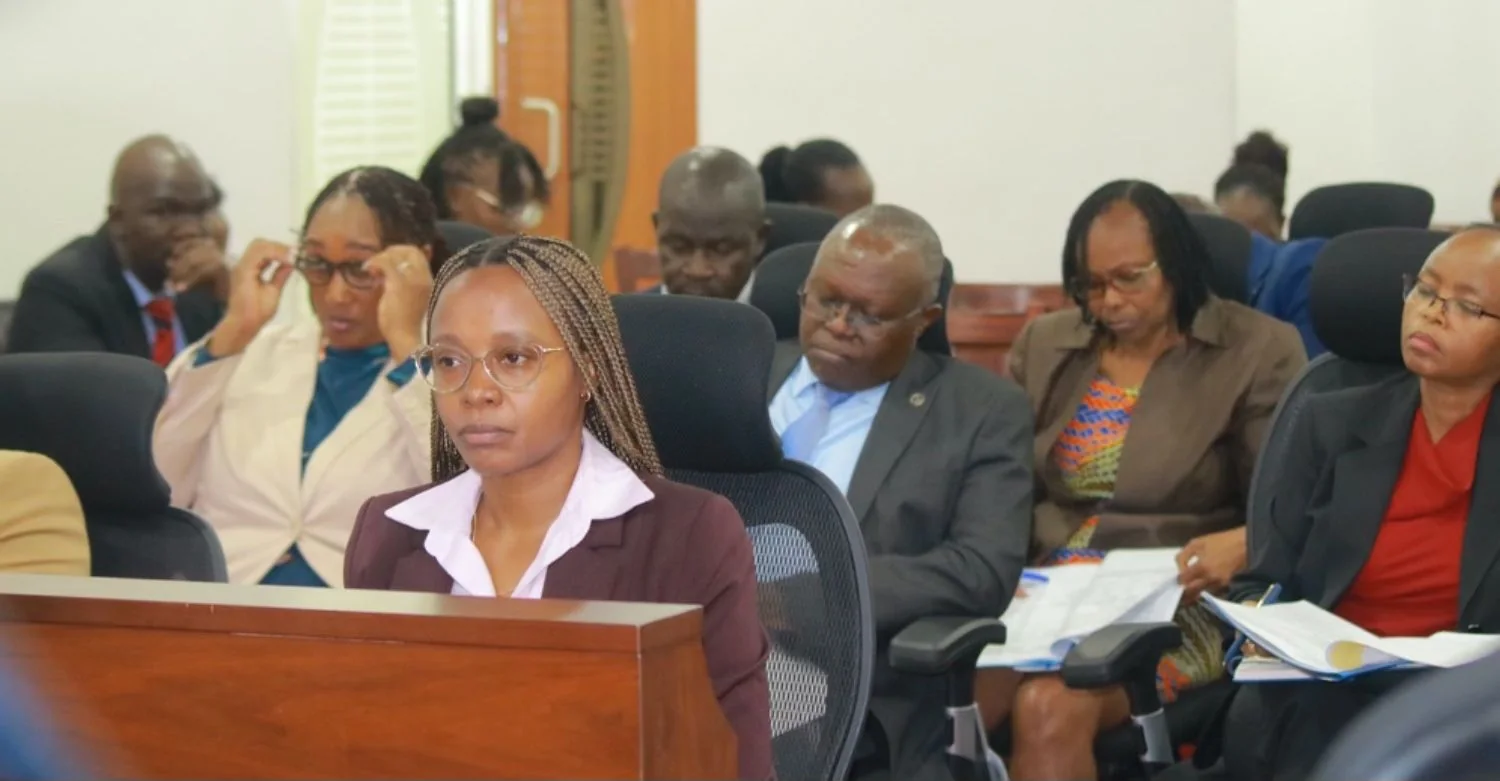
Appearing before the National Assembly Departmental Committee on Blue Economy, Water and Irrigation, Principal Secretary Betsy Muthoni Njagi said the funding gap was likely to affect implementation of key fisheries and blue economy programmes across the country.
In her presentation to MPs, the PS revealed that the State Department had been allocated Sh2.828 billion for recurrent expenditure and Sh3.080 billion for development expenditure.
“For the FY 2026/27 budget estimates proposed to allocate the State Department a total of Sh 2,828.6 million Recurrent Budget and a Budget of Sh. 3,080.1 million on Development expenditure,” Njagi told the committee.
However, she noted that the approved allocation was significantly below the department’s projected development needs.
“Out of the Sh 4,742.6 million Development Budget, only Sh3,080.1 million has been allocated to the State Department in the approved 2026 Budget Policy Statement,” she said.
The PS warned that the reduced budget ceiling had left several strategic programmes underfunded, forcing the department to seek Parliament’s intervention to bridge the financing gap.
“Due to low budget ceiling, the budget allocation for the State Department could not accommodate some key areas. We therefore appeal for the committee’s intervention to fix the funding gaps as follows,” Njagi stated.
According to the PS, the department is seeking additional allocations to support operational activities, settle pending obligations and implement critical fisheries and aquaculture programmes.
The State Department is seeking Sh100 million for operations and maintenance to cater for pending bills and support ongoing activities.
The Kenya Fisheries Service (KeFS) is seeking Sh410 million to address operational challenges facing the institution. The amount includes Sh85 million for salary shortfalls, Sh125 million for staff medical insurance and Sh200 million for refurbishment of regional offices and operationalisation of the Kenya Fishing School.
The Kenya Marine and Fisheries Research Institute (KMFRI) is also seeking Sh234 million to address collective bargaining agreement obligations and an industrial court award affecting staff remuneration.
Further, the Kenya Fish Marketing Authority (KFMA) requires Sh30 million to facilitate fish value addition initiatives and reduce post-harvest losses in the sector.
Njagi also raised concerns over the growing burden of pending bills facing the State Department, warning that the situation could slow implementation of development programmes.
“The State Department has pending bills as at 31st March,2026, amounting to Sh359.0 million,” she told MPs.
The PS further disclosed that several donor-supported projects and strategic interventions had not been adequately accommodated in the budget because of the low allocation.
“Due to the low budget ceiling, key donor-funded programmes could not be accommodated in the budget estimates, including the Fish Levy Trust Fund (FLTF) programme,” she said.
Among the programmes affected are the Aquaculture Business Development Programme (ABDP), the Kenya Marine Fisheries and Socio-Economic Development Project (KEMFSED), fisheries infrastructure development projects and construction of landing sites in various coastal and inland counties.
The State Department told MPs that the funding was critical to support implementation of the Bottom-Up Economic Transformation Agenda (BETA), particularly in boosting food security, job creation and livelihoods through fisheries and aquaculture.
Njagi said the department remained committed to enhancing sustainable exploitation of marine and inland fisheries resources despite the financial constraints.
She affirmed that the blue economy sector remains a key pillar in the country’s economic transformation strategy and requires adequate investment to unlock its full potential.




Comments
Sign in with Google to comment, reply, and like comments.
Continue with Google