
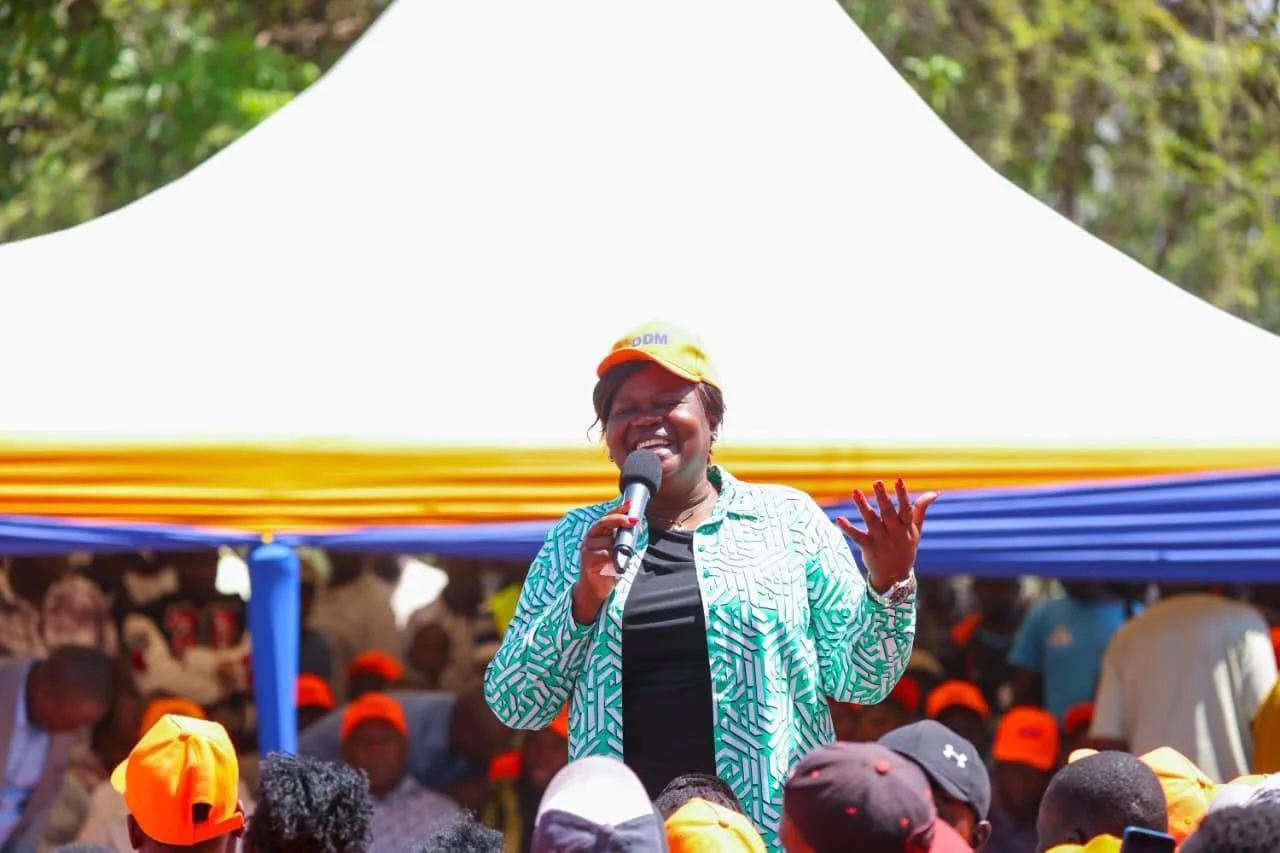
Homa Bay Governor and Orange Democratic Movement (ODM) National Chairperson Gladys Wanga has urged party members to remain within the broad-based government arrangement, warning against joining former Deputy President Rigathi Gachagua and the opposition ahead of the 2027 General Election.
Wanga maintained that the political partnership between ODM and President William Ruto’s administration was strategically positioned to contest the next election, dismissing calls for members to abandon the arrangement in anticipation of a possible return to government after the polls.
“Our people must not be swayed to leave the government in the hope of rejoining it after next year's elections. The Broad-Based Coalition will win the election next year, and so we don't have any business joining Gachagua and the opposition,” Wanga said.
Her remarks underline the continuing debate within ODM over the party’s political direction and its cooperation with the Kenya Kwanza administration as parties begin positioning themselves for the 2027 elections.
Wanga has consistently defended ODM’s decision to work with the government, arguing that the arrangement lets the party advance its agenda while retaining its organisational structures and political ambitions.
In July 2026, the governor expressed confidence in a proposed electoral partnership between ODM and Ruto’s United Democratic Alliance (UDA), citing a potential combined vote of 17 million. She urged party members to remain united behind the proposed arrangement.
The anticipated partnership has dominated discussions of ODM’s strategy for the next election, with leaders seeking to balance cooperation with the government against the party’s long-standing identity as an independent political organisation.
In May, Wanga said ODM deliberately chose to work with the government rather than pursue street protests, reinforcing the party leadership’s position that engaging with the administration offered an alternative way to advance its priorities.
However, the cooperation has also placed the party’s future political positioning under scrutiny, particularly as leaders and supporters debate how the arrangement will affect ODM’s participation in the next general election.
Wanga has maintained that working with the government does not mean ODM is abandoning its independent identity or its ambitions in elective politics. She has said the party will continue organising itself and preparing candidates for the 2027 elections.
Gachagua, who leads the Democracy for the Citizens Party (DCP), is among the opposition figures seeking to build an alternative political alliance ahead of the next election.
Wanga’s warning signals ODM’s intention to keep its members within the broad-based arrangement as political negotiations and realignments continue ahead of the polls.
Her remarks also highlight the challenge facing the party leadership in maintaining cohesion amid competing political interests and differing views on cooperation with Ruto’s administration.
The broad-based arrangement remains a key feature of the political landscape, with supporters advocating continued cooperation while opposition leaders seek to consolidate support ahead of 2027.
For ODM, the coming months are expected to test the leadership’s ability to maintain unity while preparing for electoral contests at both national and county levels.