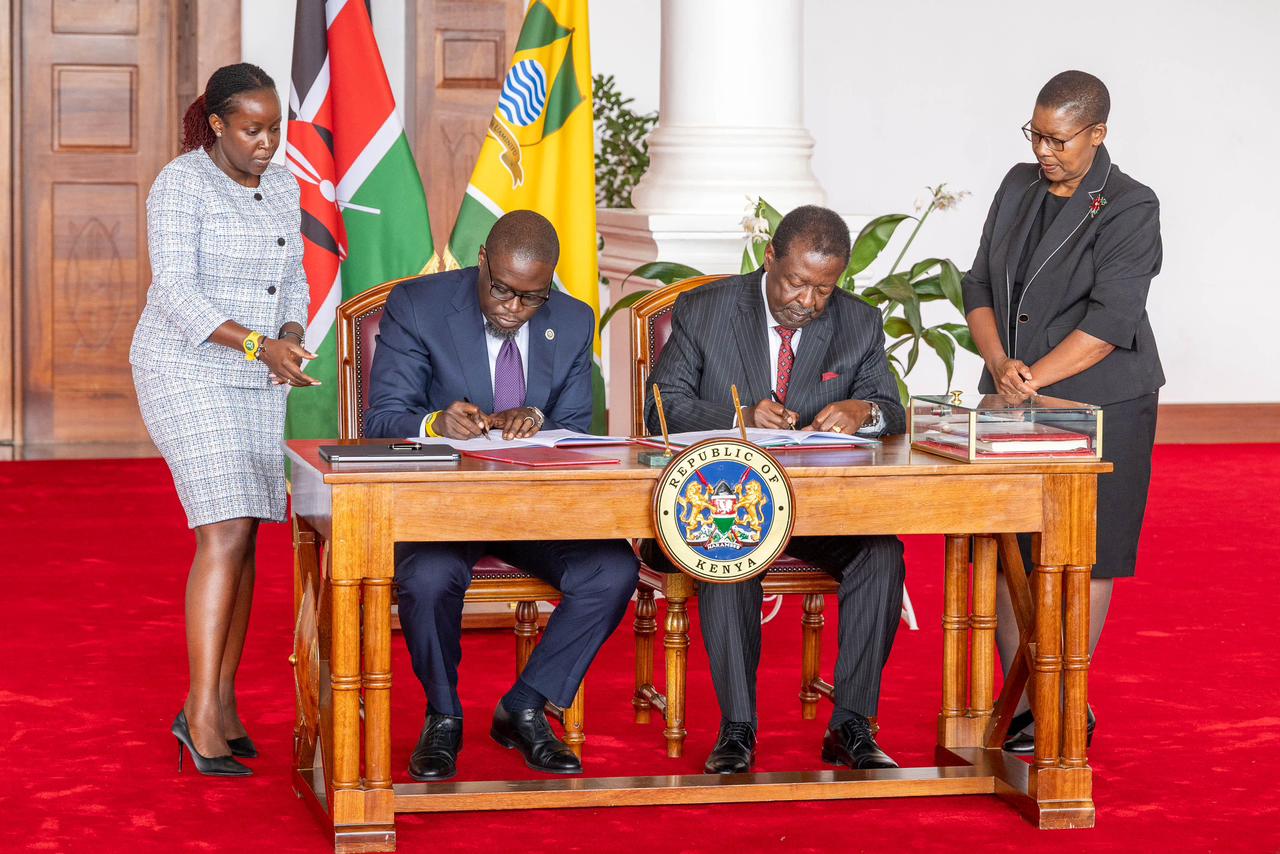
A legal dispute over the Sh80 billion partnership between the national government and Nairobi City County will now be decided through a fast-tracked court hearing, after the High Court declined to temporarily stop its rollout and instead allowed the matter to proceed to full argument.
Justice Gregory Mutai, in a ruling issued on April 20, 2026, rejected requests to suspend the cooperation deal signed on February 17, 2026, by President William Ruto and Nairobi Governor Johnson Sakaja.
The judge directed that the two constitutional petitions challenging the arrangement be handled urgently through written submissions, with a hearing date fixed for May 28, 2026, at 10:30 a.m.
Those behind the case had asked the court to issue interim protection orders that would freeze the agreement, stop the formation of implementation bodies, and block any money tied to the programme from being used until the case is concluded. The court, however, declined to grant the request, opting instead for an expedited hearing process.
Under the directions given, parties that had not submitted responses were ordered to do so within seven days. The petitioners will then have seven days to file their submissions, followed by another seven days for responses from the other side before the matter is highlighted in court.
The petitions, filed by private citizens alongside the Katiba Institute, question the legality of the agreement and its alignment with the Constitution. They argue that the framework interferes with county functions and raises concerns about how public money is being managed.
Representing Katiba Institute, lawyer Henry Paul Gichana raised concerns about the financial structure of the deal. He told the court: “The allocation in question does not appear in any approved fiscal plan, raising serious concerns about its legality and oversight,”
He further argued that the arrangement risks mixing up roles between national and county governments by assigning national funds to functions that should be handled locally, which could lead to duplication of projects and waste of public resources.
Lawyers defending the agreement maintained that the cooperation framework is lawful and intended to improve services for Nairobi residents. Counsel Austine Enock Oduor assured the court that financial safeguards had been built into the plan, stating: “Any funding under the arrangement will strictly adhere to constitutional and statutory requirements,”
Another advocate, Dan Weche, added that there was no urgent basis for stopping the agreement at this stage, noting that the Constitution already allows different levels of government to work together in service delivery.
In his ruling, Justice Mutai concluded that the threshold required for granting conservatory orders had not been met. He noted that the issues raised are weighty constitutional questions that should be addressed fully rather than through temporary intervention.
“The appropriate course is to prioritise the hearing of the petitions so that the issues raised can be conclusively determined,” the judge stated.
Even as the legal process continues, several Nairobi projects linked to the agreement are already underway. One of the key developments is the construction of the new Gikomba Market, which is expected to replace the current crowded trading space with a modern facility designed to improve order, movement, and business activity.
During the launch of the project, Governor Johnson Sakaja defended the initiative and assured traders of change.
“You elected me to protect your interests. This new market is a game changer—it is modern, organized, and will improve business operations and customer experience. In six months, the story will begin to change,”
Other projects tied to the partnership include restoration works along Kibagare River, which will eventually support the creation of a public park in the Westgate area. Similar regeneration efforts are also planned for Globe Roundabout and Kamukunji Grounds.
The wider Nairobi River improvement programme is also part of the deal, including plans for a 54-kilometre sewer line meant to strengthen drainage capacity for decades ahead.
The agreement further covers construction and upkeep of nearly 300 kilometres of roads, alongside the installation of about 100,000 floodlights across estates and major roads to enhance safety.
Despite the ongoing court case, both levels of government maintain that the cooperation framework is legally grounded and aimed at improving service delivery. With the High Court declining to halt the programme, implementation continues as the dispute moves toward full determination.































Comments
Sign in with Google to comment, reply, and like comments.
Continue with Google