
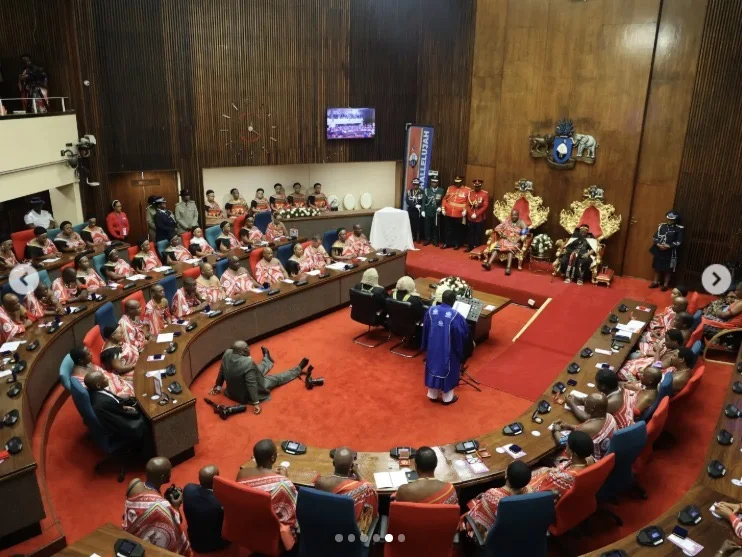
Foreign investors operating businesses in Eswatini have been put on notice, with Parliament agreeing that they should be given at least 12 months to exit the market as the government moves to give local citizens greater control of the country's retail sector.
The decision comes amid an escalating dispute over foreign ownership of small businesses, with local traders accusing foreign entrepreneurs, particularly Asian nationals, of taking over markets traditionally dominated by emaSwati, as citizens of the southern African kingdom are known.
The government is pursuing the changes through the Citizen Economic Empowerment Act, which seeks to expand local participation in business ownership and create more opportunities for citizens facing economic difficulties.
However, the implementation of the law has exposed divisions in Parliament, with lawmakers holding opposing views on whether foreign traders should be forced out immediately or allowed enough time to prepare local successors.
During parliamentary discussions on Tuesday, Mbabane East MP Welcome Dlamini disclosed that Trade Ministry officials had already started closing shops belonging to Asian nationals as part of the enforcement exercise.
Hhohho Regional MP Tanele Magagula pushed for faster action, arguing that foreign-owned enterprises in rural areas should be taken over without further delay.
"Businesses owned by foreigners in the rural areas must be seized immediately," she said.
Dlamini opposed an immediate exit, questioning whether local entrepreneurs had acquired the skills and experience needed to manage the businesses once foreign owners departed.
He proposed a longer transition period, saying foreign traders should be allowed to train emaSwati who would eventually take over their enterprises.
"Why can't we give the Asians or foreigners at least three years before 'kicking them' out so that emaSwati can learn to run the businesses?" he asked.
Magagula dismissed the proposal, arguing that extending the deadline would leave struggling local traders waiting longer for opportunities to improve their economic position.
"Why must we wait for three years while emaSwati suffer?" she asked.
Parliament eventually settled on giving foreign business owners at least one year to leave the country. However, the agreement may not immediately halt enforcement because the legislation would need to be formally amended to include the proposed timeline.
Until such changes are made, the Trade Ministry could continue applying the existing provisions of the law.
The latest action follows inspections conducted by the ministry in August to establish whether foreign-owned enterprises were complying with business regulations.
Some of the shops inspected in locations such as the capital, Mbabane, were found to be operating within the required standards. However, the exercise also brought attention to complaints about how foreign-owned businesses treat their employees.
Workers raised concerns over access to days off, annual leave and overtime arrangements, with at least one complaint still being investigated.
The government says the legislation is necessary to widen economic opportunities for emaSwati as the country grapples with high poverty levels and growing public frustration over living conditions.
About 70 per cent of the population lives below the poverty line, while many employed citizens work in neighbouring South Africa and send part of their earnings back home.
Economic hardship has also fuelled calls for political change, with pro-democracy demonstrations erupting in 2021. Activists have since criticised the royal family, led by absolute monarch King Mswati III, over its lavish expenditure at a time when many citizens continue to struggle.
The government is concerned that worsening poverty and hunger could trigger further political unrest, increasing pressure to address the economic challenges facing the population.
Eswatini's crackdown mirrors growing resistance to foreign-owned businesses elsewhere in southern Africa, particularly in South Africa, where authorities have conducted raids and arrests targeting foreign-run informal enterprises.
The country has also experienced repeated xenophobic attacks against migrants, with foreign nationals and their businesses frequently caught up in the violence.
Anti-migrant groups set June 30 as the deadline for undocumented foreigners to leave South Africa, with their campaigns often accompanied by threats and attacks on businesses owned by migrants.
Two Ghanaian nationals and two Nigerians were reported killed during the tensions.
Kenya has also stepped up enforcement against foreign traders, placing the activities and treatment of foreign business owners under renewed scrutiny across the region.