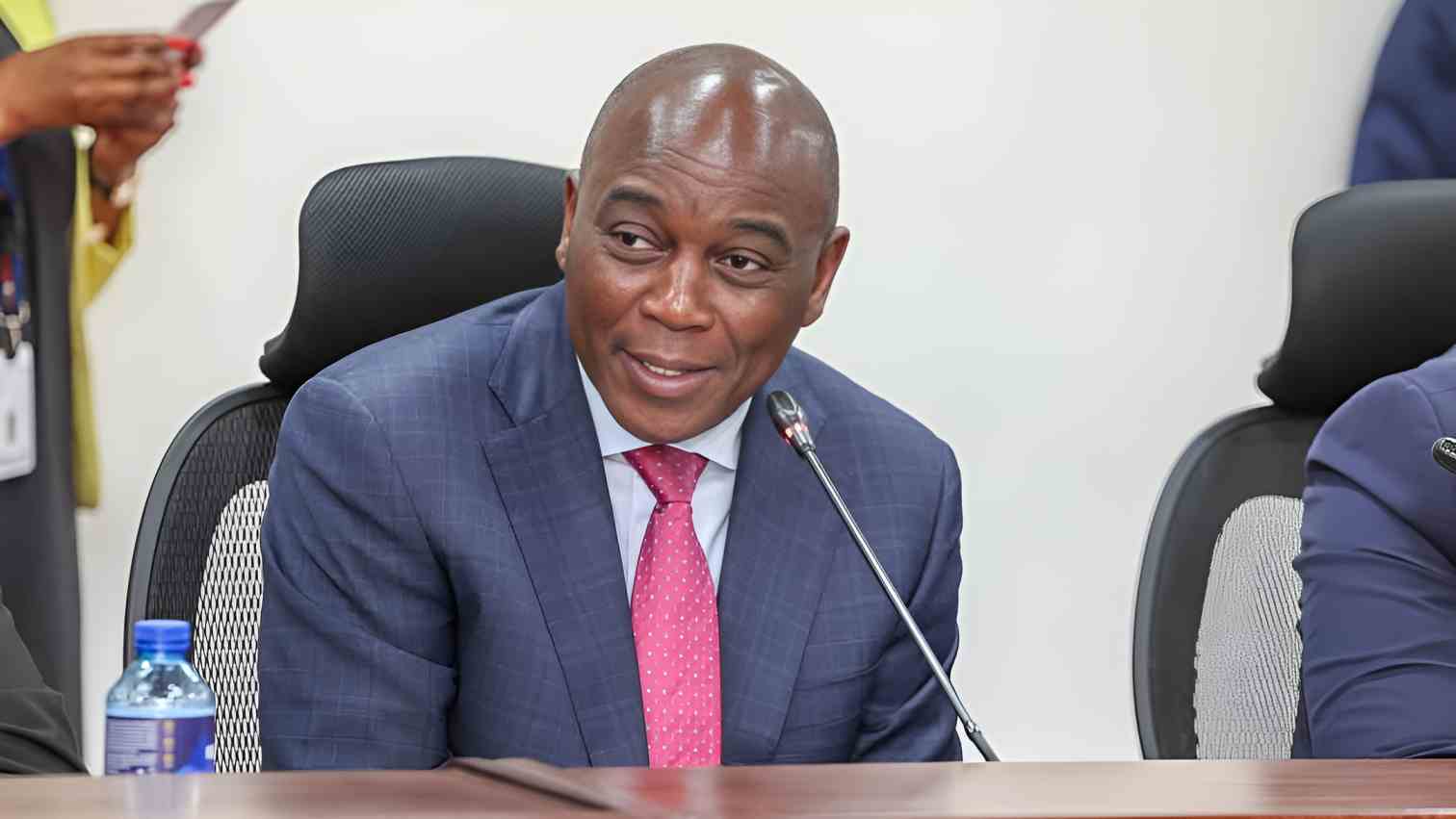
The requirement for live broadcasting of election results was at the centre of an earlier legislative dispute, with Suba South MP Caroli Omondi now claiming that some lawmakers had attempted to remove the provision through changes proposed under the NADCO process.
Omondi says the attempt happened before the recent uproar over amendments to the Elections Act, arguing that the proposals developed through the National Dialogue Committee (NADCO) could have weakened the legal requirement for the Independent Electoral and Boundaries Commission (IEBC) to livestream results announced at polling stations.
The legislator made the revelations during a Thursday night interview on Citizen TV, where he revisited the discussions that followed the bipartisan agreement between President William Ruto's United Democratic Alliance (UDA) and the late Raila Odinga's Orange Democratic Movement (ODM).
The NADCO talks produced a 10-point reform agenda, which Parliament adopted in February 2024. The proposals covered electoral reforms, governance, the cost of living and the implementation of the two-thirds gender rule, among other issues.
However, Omondi questioned the manner in which the committee's recommendations were handled, maintaining that the process had legal shortcomings.
“There was something called NADCO. If you look at my contributions in the House, I always maintained it had a lot of illegalities,” said MP Omondi during the interview.
He explained that recommendations from the committee were later used to develop proposed amendments to election laws, which were introduced in the Senate.
At the centre of his concerns was Clause 22, which he said proposed deleting Section 39 of the Elections Act in its entirety and replacing it with a different provision.
According to Omondi, the proposed replacement did not contain the requirement for the IEBC to livestream election results as declared at polling stations, raising concerns about the level of transparency in the electoral process.
He argued that the arrangement surrounding NADCO also limited the room for lawmakers to alter the proposals once they had been presented.
“The NADCO arrangement was that whatever they came up with was not to be amended. They brought Section 22 and deleted Section 39 in its entirety. The new Section 22 did not have 1G or an equivalent of the livestreaming provision,” Omondi said.
The Suba South MP said he responded by filing amendments aimed at retaining the livestreaming requirement and extending the provision to cover the constituency level.
He identified paragraphs five and six of his proposed amendments as the sections that sought to introduce livestreaming at constituency level.
However, Omondi alleged that the lawmakers who had sponsored the original proposal later withdrew Clause 22, a decision he believes was calculated to prevent his amendments from being considered.
He claimed that once the original clause was withdrawn, the amendments he had proposed would also fall, effectively stopping his efforts to restore the livestreaming provision through the proposed changes.
“What shocked me is these guys went ahead and purported to withdraw their Section 22 so that my amendments would fall. This was just a conspiracy. I'm convinced they did not want the livestreaming provision,” he said.
His account has brought renewed attention to the history of attempts to amend election laws, particularly the provisions governing how results are made available to the public.
The issue has recently returned to the spotlight following the passage of the Elections (Amendment) (No. 2) Bill, 2024, by the National Assembly.
The changes triggered widespread concern among Kenyans, who questioned whether lawmakers had removed the legal requirement for the IEBC to livestream election results ahead of the 2027 General Election.
The debate centred on whether the amendments would affect the public's ability to follow results as they are declared at polling stations, with concerns that any reduction in transparency could undermine confidence in the electoral process.
The government, however, has rejected claims that the livestreaming provision has been scrapped.
Parliamentary Affairs Principal Secretary Dr Aurelia Rono said the National Assembly had removed the clause seeking to amend Section 39 of the Elections Act, meaning the existing legal provision had been retained.
President William Ruto also dismissed the claims, accusing opposition leaders of spreading propaganda by suggesting that his administration wanted to interfere with the livestreaming of election results.
The President maintained that the allegations were misleading, as the government had no intention of interfering with the process.
The Bill has since been returned to the Senate for consideration of the changes made by the National Assembly, leaving the proposed amendments subject to further parliamentary debate.