
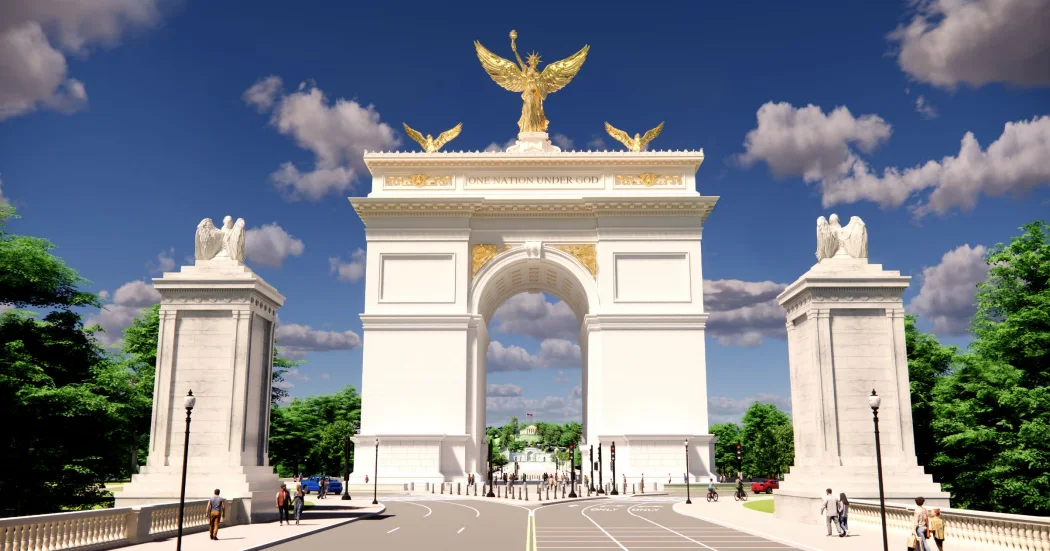
A US federal judge has dealt President Donald Trump a major setback by temporarily stopping construction of his proposed 250-foot triumphal arch in Washington, DC, barely an hour after a planning commission approved the controversial monument despite strong public opposition.
US District Judge Tanya Chutkan issued a 14-day order barring the Trump administration from undertaking any construction-related activities near the proposed site, putting the president's ambitious plan on hold as a legal battle over the project continues.
The order came shortly after the National Capital Planning Commission (NCPC), one of two federal agencies responsible for overseeing architectural and design changes in Washington, approved the final site and building plans during a virtual meeting on Thursday, November 5.
The approval followed more than eight hours of public submissions, during which over 120 people, including military veterans and historical preservationists, appealed to the commission to reject the proposal.
Despite the objections, the panel voted 8-4 in favour of the project at approximately 10:29 pm, allowing it to move closer to construction.
Less than an hour later, Chutkan intervened, ordering the administration to suspend activities linked to the development for 14 days.
In her directive, the judge barred the government from "initiating, making or otherwise effectuating" any construction-related activity around the proposed location.
She later issued a memorandum outlining aspects of her decision, including concerns about the possible financial impact of the project and the traffic disruption it could cause.
The ruling came as the Trump administration had indicated that construction could begin immediately after the commission granted its approval.
The proposed monument has attracted criticism from opponents who describe it as a personal legacy project for Trump, arguing that the president is pursuing its construction without the required approval from Congress.
The structure is planned for a site near the Potomac River, around a busy traffic circle, and forms part of Trump's wider plans to change Washington's architectural landscape before the end of his presidency in two years.
Trump has defended the project, saying the arch would mark the 250th anniversary of the United States and celebrate the American spirit, the military and what he described as American competence.
However, the president previously drew attention during a presentation of the proposed designs in October 2025 when he was asked who the monument would honour.
Pointing towards himself, Trump responded: "Me."
The proposed structure has also faced resistance from veterans and historical preservation groups, who argue that its height and location could interfere with views of important national landmarks, including the Lincoln Memorial, Arlington House and Arlington National Cemetery.
Opponents have further warned that the monument could affect the solemn atmosphere surrounding military funerals at Arlington National Cemetery.
They also contend that the project goes against the Commemorative Works Act, which requires congressional approval for new monuments in Washington.
Among those who have criticised the development is Democratic Representative Don Beyer, whose district includes Arlington National Cemetery.
Speaking during Thursday's protests, Beyer condemned the proposed structure, saying it would disrespect American service members buried at the nearby cemetery.
"This monumental abomination of one man's ego disrespects every service member who's buried there," Beyer said.
The legal challenge against the project is being led by Vietnam War veteran Michael Lemmon, who has questioned how the administration handled the review and approval process.
Addressing the planning commission, Lemmon described the process as rushed, arguing that the decision had effectively been made before members of the public were given an opportunity to raise their concerns.
He also accused the administration of sidelining Congress and ignoring professional assessments on how the development could affect surrounding historic sites.
An August assessment by the National Park Service found that the proposed arch could negatively affect up to 42 historic sites, with the greatest impact expected around six locations.
The review pointed to possible changes to the architectural character and views of landmarks surrounding the proposed construction area.
The monument would be visible from several prominent locations, including the US Capitol, Georgetown waterfront and the Pentagon.
Although the National Park Service acknowledged that other locations had been considered, it maintained that the project depended on its proposed position along the Potomac River.
The administration had also taken steps in September to end the Section 106 historical preservation consultation process, effectively abandoning attempts to reach an agreement with preservation groups.
Despite securing the planning commission's approval, the Trump administration cannot proceed with construction while Chutkan's 14-day restriction remains in force.
The latest ruling adds another legal hurdle to the president's efforts to complete the monument before leaving office, with the project's future now tied to the ongoing court challenge.