
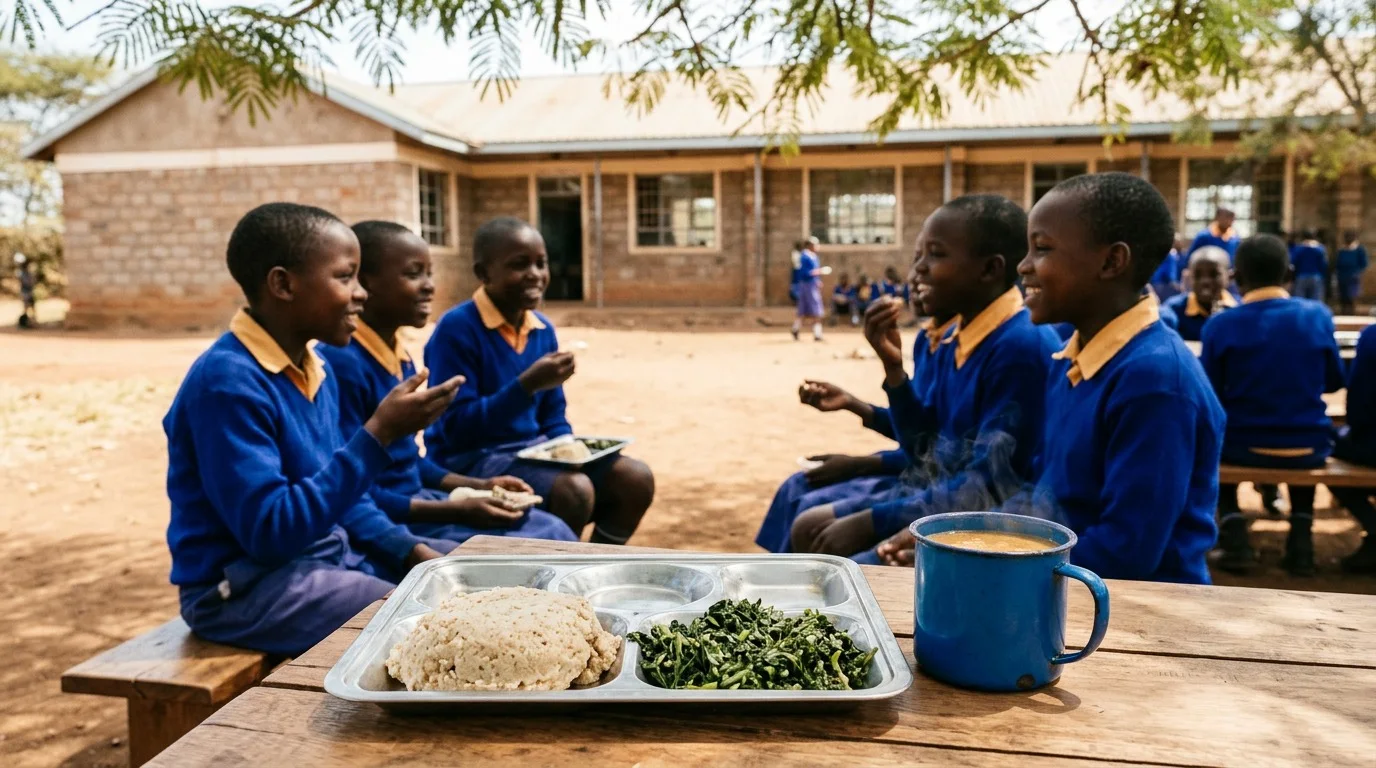
Kenya has been urged to incorporate more fortified whole grains into school feeding programmes to improve child nutrition and strengthen local agricultural production.
The Fortified Whole Grain Alliance (FWGA) says existing school feeding programmes provide an opportunity to increase children's access to nutritious meals through familiar foods such as ugali and uji.
The alliance made the appeal on Thursday, as Kenya joined other countries in marking International Whole Grain Day.
According to FWGA, approximately 600,000 learners across multiple counties already consume fortified whole-grain maize meal in school meals, either as porridge or ugali, through ongoing programmes and partnerships.
David Kamau, the alliance's managing director, said expanding the use of fortified whole grains could improve the nutritional quality of school meals without increasing government expenditure.
"Research has shown that switching to fortified whole-grain maize meal gives five times more nutrition than the refined and fortified alternative, and it doesn't have to cost more. We have an opportunity to rethink how we improve nutrition through the foods Kenyans already eat, like ugali and uji," Kamau said.
Whole-grain flour differs from refined flour because it retains the bran and germ, which contain dietary fibre, vitamins and minerals.
Combining whole grains with appropriate fortification can therefore increase the nutritional value of commonly consumed staple foods, making school feeding programmes an important channel for improving children's diets.
The proposal is highlighted in an August 2026 report authored by Boston Consulting Group (BCG), with contributions from The Rockefeller Foundation, Solid'Africa and FWGA.
The report identifies school feeding programmes as an important investment in improving dietary quality while creating reliable markets for farmers, millers and food processors.
Across Africa, school feeding programmes reach more than 85 million children, providing governments with an established platform to improve nutrition while supporting local agricultural production and food supply chains.
Rwanda is among the countries cited as demonstrating the potential of incorporating fortified whole grains into school meals.
A 2021 pilot programme involving 13,500 learners found that 97 per cent preferred fortified whole-grain maize porridge to the refined alternative.
The initiative was subsequently expanded to more than 74,000 children across 81 schools, with parental approval reaching 99 per cent.
The Rwandan government has since begun expanding fortified whole-grain maize meal in public schools, with close to 400,000 learners currently consuming Kaunga prepared from the flour.
The country's long-term target is to reach more than 4.3 million learners through a phased national rollout.
Kamau said the experiences in Kenya and Rwanda demonstrated that improving school nutrition did not necessarily require changing children's dietary habits or increasing feeding costs.
"In Rwanda and Kenya, close to a million schoolchildren today eat fortified whole-grain maize meal at no extra cost to government, and they say they enjoy the taste. By working with schools, millers, government and other partners, we can make these nutritious options available here in Kenya and help our schoolchildren thrive," he said.
The BCG report further estimates that transitioning to whole-grain maize, unpolished rice and sorghum across Rwanda's school feeding system could generate annual combined health, fiscal, economic and environmental benefits of between US$120 million and US$155 million, depending on the approach adopted.
Beyond improving nutrition, the report highlights how institutional food procurement could create predictable demand for agricultural produce, supporting farmers, millers and processors.
FWGA is now calling for stronger collaboration between governments, schools, farmers, food manufacturers, development partners and other stakeholders to expand the production and consumption of fortified whole-grain foods.
This year's International Whole Grain Day is being marked through a global relay initiated by the Danish Whole Grain Partnership and led by the ICC Whole Grain Initiative.
The campaign brings together organisations from 16 countries, including Kenya, with participating countries symbolically passing whole-grain foods to promote consumption and raise awareness of their contribution to public health