
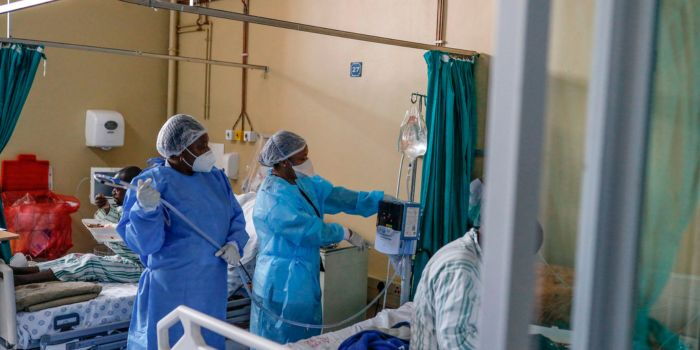
More than 500 health facilities across nine African countries, including Kenya, are set to receive medical supplies and modern equipment under a Sh17.6 billion programme aimed at addressing gaps in healthcare delivery and reducing preventable deaths among mothers and children.
The initiative, backed by the Mohamed bin Zayed Foundation for Humanity, will provide essential medicines, medical equipment and new technologies to strengthen public health services in Kenya, Ethiopia, Liberia, Malawi, Nigeria, Rwanda, Ghana, Sierra Leone and Mozambique.
The US$135 million commitment was announced on Thursday, November 26, 2026 during the International Conference on Public Health in Africa (CPHIA) in Addis Ababa, Ethiopia, where the Foundation outlined plans to work with governments to improve the availability of critical medical supplies.
The investment is also expected to attract more than US$550 million in additional resources from participating governments and development partners, bringing further support to the targeted health systems.
As part of the funding arrangement, each government involved will be required to contribute at least an amount equal to the Foundation's commitment. The approach is intended to increase available resources while ensuring countries take part in sustaining improvements to their healthcare systems.
Mohamed bin Zayed Foundation for Humanity Director General Dr Shamma Khalifa Al Mazrouei said the programme would give medical workers better access to the resources they need to handle emergencies and save lives.
"In partnership with countries, we are working towards a future where no mother, newborn, or child dies from a preventable cause. Skilled health workers are essential to this vision, but their ability to save and improve lives depends on having ready access to the medicines and equipment they need," she said.
The investment seeks to address major weaknesses affecting healthcare services across Africa, where the availability of basic medical supplies remains low.
Only 35 per cent of essential medicines are currently available in public health facilities across the continent, while fewer than a third of these facilities have the capacity to carry out basic diagnostic tests.
The shortage of medicines and limited diagnostic equipment have made it difficult for healthcare workers to identify illnesses promptly and provide patients with the treatment they need.
The Foundation said its support would help governments close these gaps by improving access to lifesaving supplies and strengthening the ability of national health systems to maintain reliable healthcare services.
Several participating countries have already had their funding commitments outlined, with Ethiopia receiving one of the largest allocations under the programme.
The Foundation has pledged US$20 million towards Ethiopia's Reproductive, Maternal, Newborn and Child Health Compact, an initiative that has helped mobilise US$342.4 million from the government and development partners.
The resources will be channelled to approximately 120 health facilities over three years. Among the equipment expected to be provided are artificial intelligence-enabled ultrasound machines to identify pregnancy complications and antibiotics for the prevention and treatment of infections such as sepsis.
Rwanda has also secured US$15 million to improve healthcare services in 170 facilities, including district and teaching hospitals. The commitment is expected to attract an additional US$40 million in funding.
The equipment will help medical teams manage childbirth complications, particularly excessive bleeding, while also improving care for premature and critically ill newborns through incubators and respiratory support systems.
In Liberia, the Foundation has set aside US$10 million to strengthen the country's national referral teaching hospital and other linked health facilities.
The funding will support the purchase of specialised equipment and technologies for handling complicated deliveries, providing emergency care to critically ill newborns and children, and conducting medical assessments at patients' bedsides.
Part of the allocation will also go towards training and professional development for healthcare workers. Doctors, nurses and midwives will benefit from clinical mentorship programmes, while biomedical engineering training will help personnel maintain and repair medical equipment.
The Foundation said the broader programme was designed to ensure that healthcare workers could access the tools and supplies required to deliver effective care without unnecessary delays.
Despite being listed among the nine beneficiary countries, Kenya's specific funding allocation has not been announced. The Foundation has also not indicated how many Kenyan health facilities will be covered or identified the counties expected to receive the equipment and medical supplies.