
President William Ruto has defended his administration's decision to make a World Bank report on Kenya's governance and corruption publicly available, arguing that Kenyans have a right to know the findings of assessments concerning the country's public finances and governance.
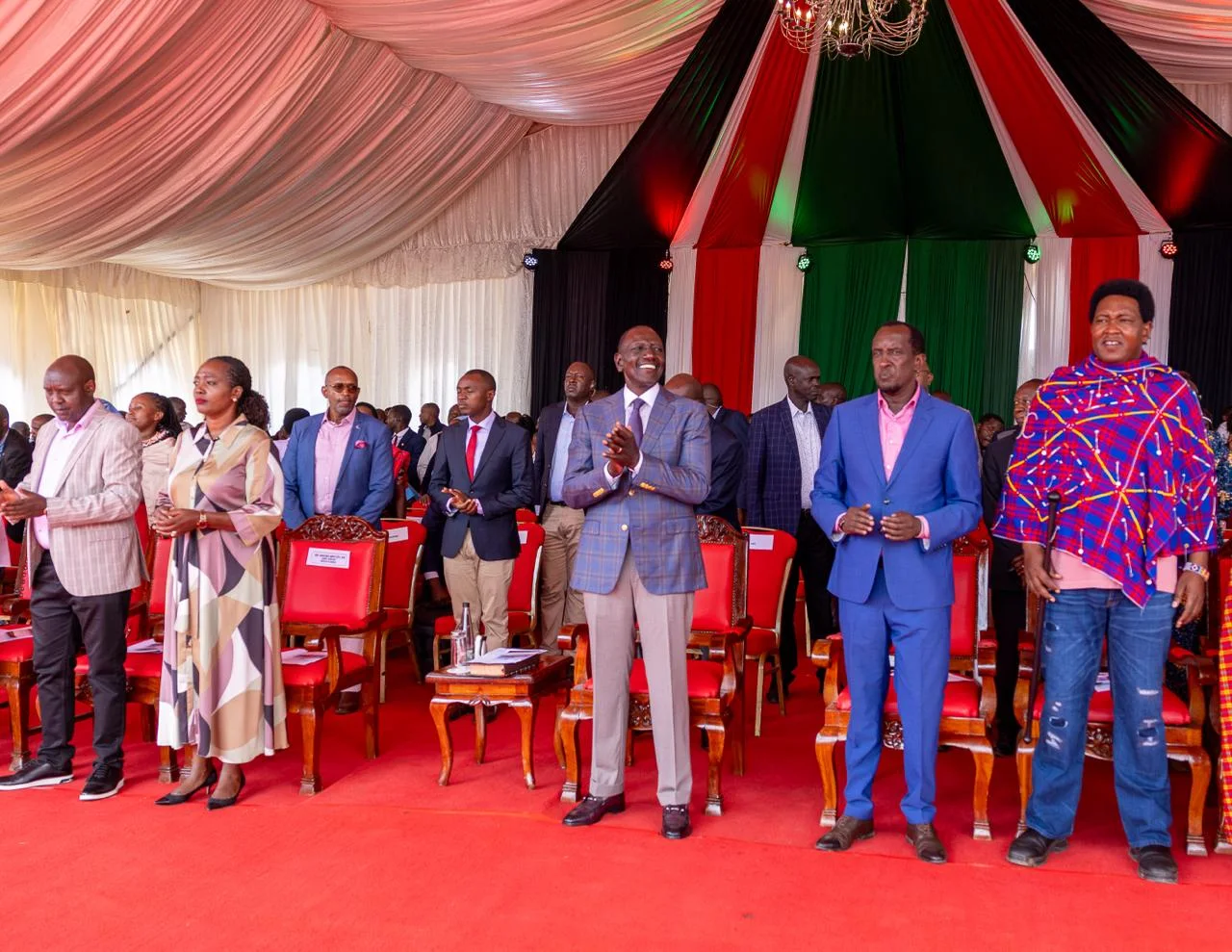
Speaking during a Sunday Mass service at St Mary's School in Narok County on November 15, 2026, Ruto said his government had deliberately pushed to release the report publicly, departing from the practice of sharing such reports exclusively with the government.
The President said his administration wanted an open report that would let citizens understand the issues raised by the World Bank, rather than relying on selective interpretations of its findings.
Ruto's remarks came amid criticism of the report, particularly its recommendations on corruption, with the President accusing some commentators of focusing on one page while ignoring the wider findings in the 52-page document.
"That report has 52 pages, but there are people who want to read one page and make conclusions based on that one page," he said.
He acknowledged the report's recommendation that Kenya intensify its fight against corruption, saying his administration agreed the it needs to strengthen anti-corruption efforts.
Ruto maintained that the report not only highlighted corruption concerns but also recognised reforms his administration says are intended to strengthen accountability and improve the management of public resources.
Among the measures he highlighted was the e-Citizen platform, which he said had helped reduce revenue leakages by moving government payments and revenue collection to a digital system.
He also pointed to the introduction of the Electronic Government Procurement (e-GP) system, which he said had ended the previous practice of conducting government procurement through less transparent processes.
The President further cited the Conflict of Interest Act, which he signed into law, saying it provides a framework to prevent public officers from using their positions of authority to conduct undisclosed private business or influence government transactions for personal benefit.
The World Bank has identified weaknesses in public procurement, revenue administration and institutional accountability as significant governance challenges in Kenya. It has also argued that corruption and collusion increase government expenditure and borrowing requirements.
Ruto addresses criticism over SGR construction
The President also responded to criticism surrounding the construction of the Standard Gauge Railway between Mombasa and Nairobi, distancing his administration from the concerns raised over the project's initial development.
He argued that the construction of the Mombasa-Nairobi railway took place under a previous administration and questioned why his government was being held responsible for issues relating to the project's implementation.
Ruto also highlighted the ongoing plans to extend the railway from Naivasha towards western Kenya, including Kisumu and eventually Malaba, saying the World Bank report acknowledged his administration's efforts to advance the project.
The World Bank's assessment raises concerns about the cost of the Mombasa-Nairobi railway, noting that Kenya's line was significantly more expensive per kilometre than comparable railway projects in Tanzania and Ethiopia.
It also identifies governance-related issues, including direct contracting and irregularities in land acquisition and compensation, among the factors contributing to the higher costs.
Ruto's defence comes as the World Bank calls for stronger governance reforms, arguing that addressing corruption would improve Kenya's economic performance, reduce pressure on public finances and create a better environment for businesses and investment.
The Bank's November 2026 Kenya Economic Update raised the country's 2026 economic growth forecast to 4.6 per cent, from an earlier projection of 4.3 per cent, but warned that governance weaknesses and corruption continue to constrain the country's economic potential.
The President maintained that public debate should consider the full report rather than isolated findings, insisting that his administration was committed to fighting corruption and implementing reforms to improve government accountability.