
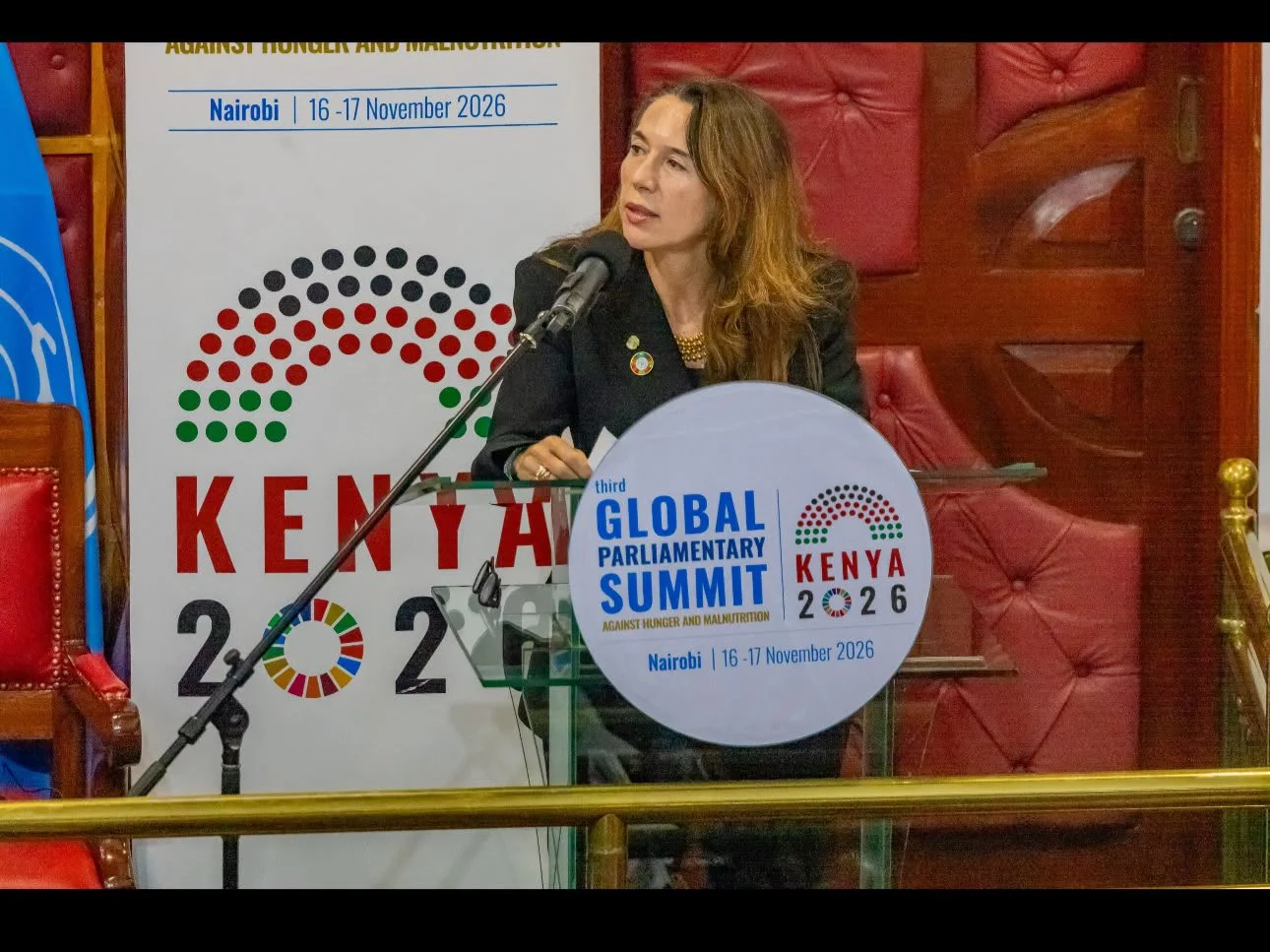
The United Nations Special Representative for Children and Armed Conflict, Vanessa Frazier, has warned that hunger is increasingly being used as a weapon of war, with children bearing the greatest burden.
Addressing legislators at the Third Global Parliamentary Summit Against Hunger and Malnutrition in Nairobi on Monday, Frazier said more than 35.5 million children under the age of five suffer from acute malnutrition globally.
She noted that conflict and violence are among the primary drivers of hunger in 12 of the 13 hunger hotspots identified by the United Nations.
“In today's conflicts, hunger is not only a side effect of war, it has also become part of warfare. Fields and crops are burned, markets destroyed, water systems hit, aid convoys blocked, supplies torched, farming land poisoned or inaccessible because of explosive remnants of war,” she said.
Frazier said the UN verifies six grave violations against children every year: recruitment, killing and maiming, rape and sexual violence, abduction, attacks on schools and hospitals, and denial of humanitarian access.
“Let me be clear what that means: a truck of food that does not arrive. A nutrition clinic that cannot open. A malnourished girl who does not receive life-saving treatment. When health facilities are attacked, water systems damaged, schools closed, and humanitarian assistance blocked, children suffer first and most,” she said.
Despite international humanitarian law prohibiting the starvation of civilians as a method of warfare, Frazier said hunger continues to be used as a weapon in conflicts.
She challenged lawmakers to break the cycle linking hunger and conflict, warning that children who experience chronic malnutrition during their first 1,000 days may never fully recover.
“Hunger makes children more vulnerable to everything. When families cannot eat, children are sent to work, girls are married early, and armed groups recruit more easily with a promise of a meal. That is the cycle we must break: hunger deepens fragility, and fragility fuels conflict,” she said.
Frazier called on parliamentarians to translate their commitments into budgets and accountability measures, and enact laws that protect access to adequate food and nutrition in conflict zones, safeguard humanitarian access and prevent the use of starvation of civilians as a method of warfare.