WHO convenes emergency meeting as Ebola deaths in DRC rise to 131
DRC Health Minister Samuel Roger Kamba said the death toll linked to the outbreak has reached an estimated 131 people from 513 suspected cases. The latest figures mark a sharp increase from the earlier reported 91 deaths out of 350 suspected infections.
The World Health Organization held an emergency committee meeting on Tuesday as the Ebola outbreak in the Democratic Republic of the Congo continues to worsen, with the number of suspected deaths climbing sharply and the virus spreading into neighbouring Uganda.
DRC Health Minister Samuel Roger Kamba said the death toll linked to the outbreak has reached an estimated 131 people from 513 suspected cases. The latest figures mark a sharp increase from the earlier reported 91 deaths out of 350 suspected infections.
The outbreak, caused by the Bundibugyo strain of Ebola, has already triggered international concern after the WHO declared it a public health emergency of international concern.
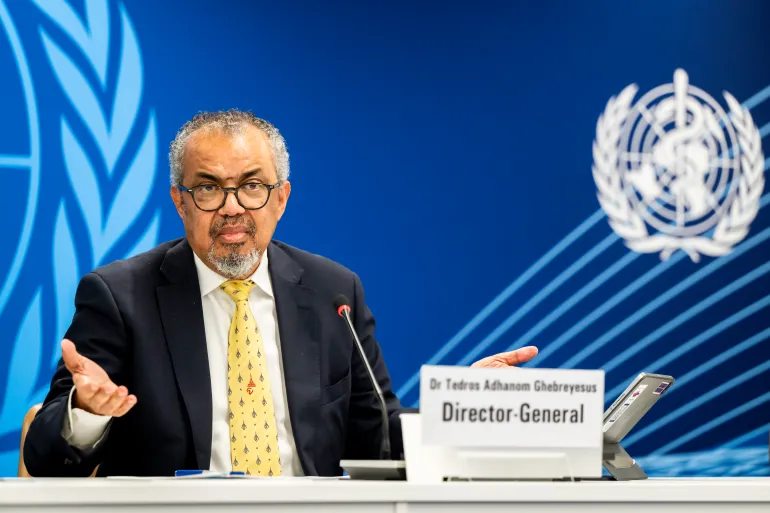
WHO Director General Tedros Adhanom Ghebreyesus said the organisation was increasingly worried about how quickly the disease was spreading across borders.
“Early on Sunday, I declared a public health emergency of international concern over an epidemic of Ebola disease in the Democratic Republic of the Congo and Uganda,” Tedros told the World Health Assembly in Geneva on Tuesday.
Tedros added that a meeting of the WHO Emergency Committee would take place later Tuesday to assess the outbreak and discuss possible response measures.
An emergency committee is made up of international experts who provide technical advice and recommendations to the WHO chief.
The outbreak’s centre is in Ituri province in northeastern DRC near the borders of Uganda and South Sudan. The region’s busy gold-mining activities have led to frequent movement of people across borders, increasing fears of wider transmission.
Health officials said the virus has already spread into nearby provinces, reaching areas up to 200 kilometres from the identified epicentre. Cases have also crossed beyond DRC’s borders.
Authorities in Bahrain on Tuesday announced a 30-day suspension on the entry of foreign travellers arriving from Uganda, the DRC and South Sudan because of the outbreak. The decision took immediate effect, according to the country’s state news agency.
No approved vaccine or treatment currently exists for the Bundibugyo strain, which has killed more than 15,000 people across Africa over the past five decades.
Kamba cautioned that the current number of deaths remained provisional as investigations were still ongoing to determine whether all the suspected fatalities were directly linked to Ebola.
The Bundibugyo strain has a fatality rate of up to 50 percent, raising fears among health officials as the outbreak continues to spread.
Experts meeting under the WHO emergency panel discussed possible vaccine options. Although the Ervebo vaccine developed by Merck is designed for the Zaire strain of Ebola, some studies in animals have shown it may offer partial protection against the Bundibugyo strain.
“When you have an outbreak with a strain that does not have countermeasures, we are going to advise on the best approach to take,” said Dr Mosoka Fallah, acting director of the science department at the Africa Centres for Disease Control and Prevention. “We will look at what evidence we have and make a decision.”
The WHO also confirmed that more emergency medical supplies were being delivered to affected areas in the DRC to support the response.
A WHO official said six additional tons of Ebola response materials were expected to arrive Tuesday, including protective gear for health workers and laboratory supplies.
“We have sent 12 tons of supply. An additional six are arriving today. These include personal protective equipment for frontline health workers (and) samples,” said Anne Ancia, WHO Representative in the Democratic Republic of the Congo’s Ituri province.
The latest developments have raised fears of a wider regional health crisis as authorities race to contain the outbreak before it spreads further across East and Central Africa.



Comments
Sign in with Google to comment, reply, and like comments.
Continue with Google