KCB Group boosts green financing to Sh48.8bn, expands climate and sustainability drive
The lender also screened Sh587.9 billion in transactions under its Environmental and Social Due Diligence framework across Kenya, Uganda, Tanzania and Rwanda, helping it surpass its target of allocating 25% of total lending to green projects, reaching 25.84% in 2025, up from 21.6% in 2024.
KCB Group Plc disbursed Sh48.8 billion in green financing to support environmentally sustainable projects including renewable energy, sustainable agriculture, green buildings, clean transport, water management and climate-smart investments. Of this, Sh9.9 billion was independently verified as climate-eligible using the Climate Assessment for Financial Institutions (CAFI) tool.
The lender also screened Sh587.9 billion in transactions under its Environmental and Social Due Diligence framework across Kenya, Uganda, Tanzania and Rwanda, helping it surpass its target of allocating 25% of total lending to green projects, reaching 25.84% in 2025, up from 21.6% in 2024.
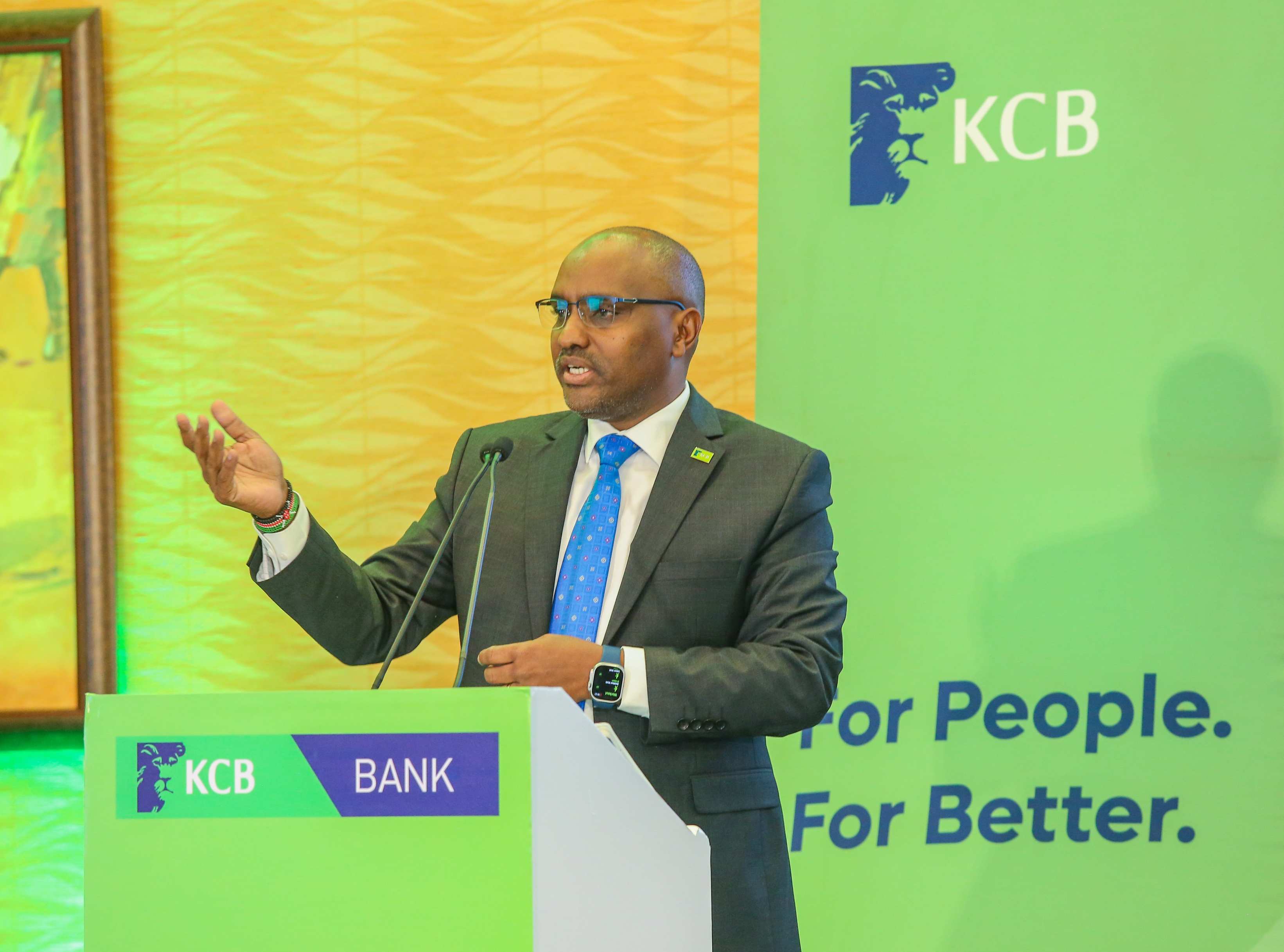
KCB Group CEO Paul Russo said the bank is aligning its strategy with climate goals.
“KCB seeks to be a bigger player in shaping a robust and sustainable financial ecosystem throughout East Africa,” he said, adding that the focus is on green financing solutions and partnerships to mobilise climate capital.
The group also expanded its environmental efforts, planting over 3.5 million trees in 2025—above its 1.5 million target—through more than 200 tree-planting events with schools and partners.
It supported 266 schools in adopting cleaner cooking systems worth KSh782.5 million and installed solar systems in 16 branches, with plans to expand to 30 more.
KCB reported a 2% reduction in fuel and electricity use and a 13% drop in emissions, alongside broader social impact programmes supporting jobs, youth enterprises, women-led businesses, and refugee inclusion.
In the education sector, it supported 266 schools in adopting cleaner cooking systems, backed by Sh782.5 million in financing through the Learning Institutions Customer Value Proposition (CVP).
It scaled its solarisation agenda with installations now operational in 16 branches across the Group.
Resultantly, KCB registered a two per cent reduction in resource use for fuel and electricity, contributing to an overall 13 per cent reduction in emissions across its networks.
Through the KCB Foundation programmes, over 265,300 jobs were supported, while 16,549 youth benefited from workforce readiness and skills development initiatives designed to enhance employability and enterprise growth.
Further, 38,635 youth-led businesses received structured business development support under the 2Jiajiri Young Africa Works programme, helping young entrepreneurs build sustainable enterprises and livelihoods.
It has supported a total of 67,090 businesses, as part of its broader vision of driving inclusive economic transformation, empowering communities, and expanding opportunity for individuals and enterprises across all segments of society.




Comments
Sign in with Google to comment, reply, and like comments.
Continue with Google