Three red cards, one verdict: referees set tone early in World Cup opener
The last time a World Cup match produced three red cards was two decades ago, during the 2006 finals, a tournament still remembered for its disciplinary flashpoints, including the notorious Portugal versus Netherlands encounter that holds the record for the most dismissals in a single game.
A fiery start to the 2026 World Cup has put match officials under the spotlight after three players were sent off in the opening game in Mexico City, reviving debate on whether referees are becoming more unforgiving or simply enforcing the rules more tightly.
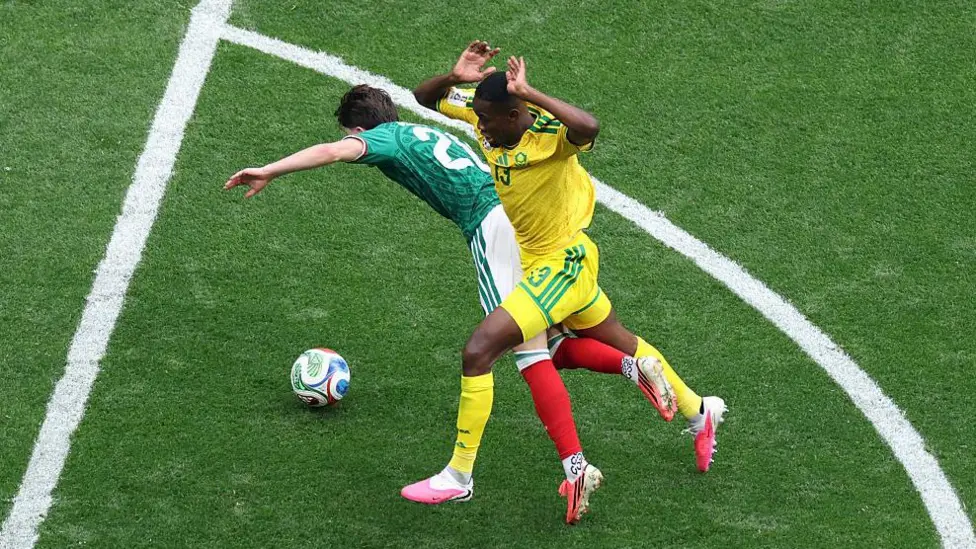
Mexico’s 2-0 win over South Africa was overshadowed by a wave of dismissals that saw South Africa’s Yaya Sithole and Themba Zwane both shown red cards, before Mexico’s Cesar Montes was also expelled late in stoppage time. The rare occurrence of three send-offs in a single match immediately drew attention, especially coming so early in the tournament.
The figures stand out when set against recent editions. Both the 2018 and 2022 World Cups recorded only four red cards across the entire competition, yet this tournament has already neared that mark after just one fixture.
The last time a World Cup match produced three red cards was two decades ago, during the 2006 finals, a tournament still remembered for its disciplinary flashpoints, including the notorious Portugal versus Netherlands encounter that holds the record for the most dismissals in a single game.
Questions are now being asked over whether the opening match signals a tougher refereeing era or is simply an isolated case in a long tournament schedule.
Mixed calls and VAR involvement
The first sending-off came when Sithole pulled down Brian Gutierrez as the Mexico attacker broke through on goal. Referee Wilton Sampaio ruled it a clear case of denying a scoring chance and issued a straight red card without hesitation.
The second incident proved more divisive. Zwane was involved in an off-the-ball clash with Roberto Alvarado, who fell to the ground holding his head. After VAR review led by Nicolas Gallo, Sampaio was asked to check the pitchside monitor and later showed Zwane a red card for violent conduct.
The decision sparked debate, with replays offering limited clarity on whether there was deliberate contact or a natural coming together. Officials reviewing such incidents are instructed to look for signs of aggression, including a clenched fist, although that is not always required for a dismissal.
Zwane appeared to make contact with an open hand rather than a closed one, adding further uncertainty to the interpretation of the incident and whether it met the threshold for VAR intervention.
Late red and game management debate
The third dismissal arrived in stoppage time when Mexico’s Cesar Montes brought down Khuliso Mudau as South Africa pushed forward. The referee ruled that the challenge prevented a clear goalscoring opportunity, leading to another straight red.
Mudau was moving into a wide attacking position, which initially suggested a yellow card might be sufficient. However, on closer review, it appeared he could have advanced into the penalty area with little defensive pressure remaining.
Similar situations in other top leagues have often triggered debate about consistency in decision-making, especially when determining whether a player has a genuine scoring chance or not.
Refereeing philosophy under Collina
Since Pierluigi Collina took over leadership of Fifa’s refereeing department in 2017, the emphasis has been on fairness and protecting the flow of the game, rather than increasing the number of dismissals.
His approach has generally reduced red card frequency in major tournaments, with both the 2018 and 2022 World Cups producing only a handful across the entire competition.
Before the tournament began, Collina highlighted concerns around time-wasting and player conduct, rather than signalling any new strict enforcement campaign that would increase sending-offs.
Too early for conclusions
“Refereeing at the start of a tournament often seems to set the tone. Should we be drawing any conclusions from this match?”
That question now lingers after the opening fixture, although many observers argue it is too soon to read a wider pattern into the decisions.
While the Zwane incident remains heavily debated, the other two red cards are largely viewed as consistent with the laws of the game. With more than 100 matches still to come, the opening game may ultimately be remembered as an early outlier rather than a defining trend.




Comments
Sign in with Google to comment, reply, and like comments.
Continue with Google