Government sets Sh64bn aside for farming push in new budget plan
A major share has gone to input support measures, with Sh18 billion allocated to the fertiliser subsidy programme to ease costs for farmers and improve harvests. Another Sh2 billion has been set aside for seed subsidies, while Sh1 billion will fund efforts to revive coffee farming through the coffee seedlings programme.
The government has placed agriculture at the centre of its spending priorities for the coming financial year, setting aside Sh64 billion in a bid to boost farm production, reduce food shortages and support rural livelihoods across the country.
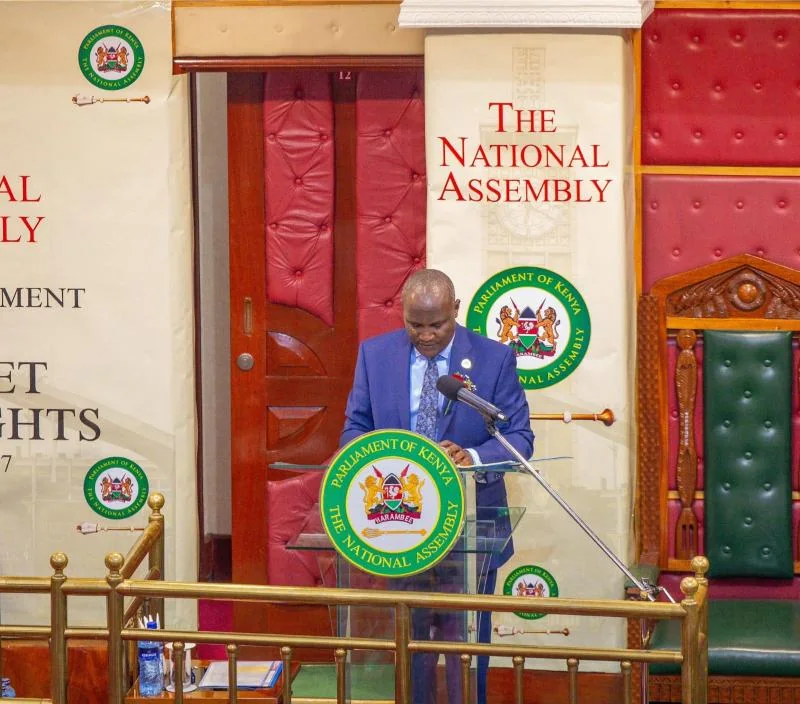
National Treasury Cabinet Secretary John Mbadi announced the allocation on Thursday during the presentation of the 2026/2027 national budget in Parliament, outlining a plan that targets productivity in farming, livestock and food systems.
He said agriculture remains a key driver of household incomes and national growth, noting its wide reach across the country.
“The agriculture sector remains central to Kenya’s long-term prosperity. It supports more than two-thirds of Kenyan households and generates a strong employment multiplier effect, especially among groups excluded from modern economic opportunities,” Mbadi said.
He further told lawmakers that improving the sector is critical for food supply, climate preparedness and balanced growth.
“Strengthening agriculture is therefore essential for food and nutrition security, enhancing resilience and supporting shared prosperity,” he told lawmakers.
The Sh64 billion package will be directed to programmes aimed at reducing production costs, improving access to farm inputs and strengthening value chains across key subsectors.
A major share has gone to input support measures, with Sh18 billion allocated to the fertiliser subsidy programme to ease costs for farmers and improve harvests. Another Sh2 billion has been set aside for seed subsidies, while Sh1 billion will fund efforts to revive coffee farming through the coffee seedlings programme.
Further allocations include Sh4.9 billion for the National Agricultural Value Chain Development Project, Sh5.4 billion for the Food Systems Resilience Project and Sh1.6 billion for the Resilience for Food and Nutrition Security Programme.
Mbadi said the programmes are designed to help farmers cope with changing weather conditions while also opening up income opportunities.
“These investments will enhance adaptive livelihoods, diversify income sources and reduce vulnerabilities to climate shocks,” Mbadi said.
Pastoral communities are also included in the spending plan, with Sh3.3 billion proposed for the De-risking, Inclusion and Value Enhancement of the Pastoralist Economy Programme. The Treasury has also allocated Sh1.3 billion for the Kenya Livestock Commercialisation Programme and Sh400 million for livestock value chain support.
According to the government, the interventions are expected to improve livestock production, expand market access and strengthen animal health services in pastoral regions.
Mbadi said the wider plan is to turn agriculture into a stronger economic pillar that can create jobs and support industrial growth.
“Agriculture is not only about food production; it is a driver of employment, incomes and economic transformation. By investing strategically in productivity and resilience, we are laying the foundation for sustainable growth and shared prosperity,” he said.
The proposed funding comes as the sector continues to face pressure from unpredictable weather patterns, high input prices and ongoing concerns about food availability.
If approved, the allocations will support the government’s broader efforts to strengthen economic stability while protecting households from climate and market shocks.



Comments
Sign in with Google to comment, reply, and like comments.
Continue with Google