PS Millah flags risks to maritime growth over Sh19.8bn funding gap
The PS noted that the department had originally required a higher allocation but was still working within a Budget Policy Statement ceiling of Sh 6.383 billion, leaving several key programmes underfunded.
The Shipping and Maritime Affairs department has warned that Kenya’s blue economy ambitions could stall if Parliament does not bridge persistent funding gaps affecting major infrastructure, training, and maritime planning programmes set for the 2026/27 financial year.
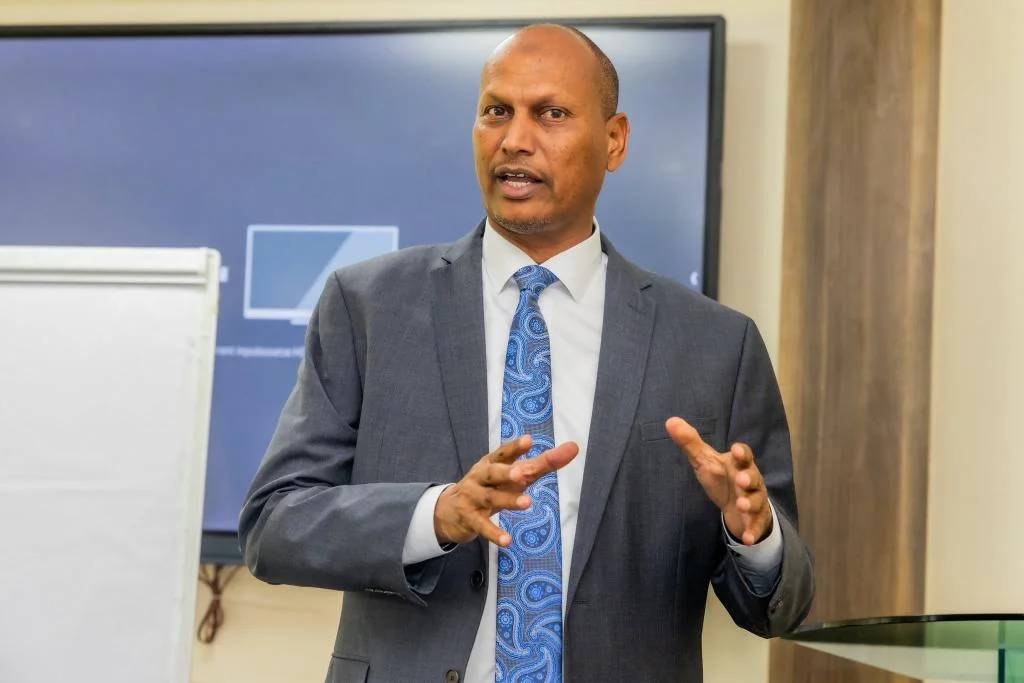
Principal Secretary, State Department for Shipping and Maritime Affairs Aden Millah told the National Assembly Departmental Committee on Transport and Infrastructure on Thursday that although the proposed allocation for the sector stands at Sh 6.847 billion, it still falls short of what is needed to fully deliver planned projects.
He noted that the department had originally required a higher allocation but was still working within a Budget Policy Statement ceiling of Sh 6.383 billion, leaving several key programmes underfunded.
A major pressure point is the Bandari Maritime Academy Masterplan, which requires Sh 19.8 billion to expand training capacity and strengthen maritime skills development.
Other funding needs include Sh 900 million for Project Mashariki, Sh 525 million for the Maritime Sector Data Project, Sh 500 million for Maritime Spatial Planning, Sh 500 million for the Lake Turkana Maritime Transport and Investment Project, and Sh 880 million annually for seafarer training, recruitment, and certification partnerships.
The department is also pushing for Sh 1.199 billion to complete the Survival Training and Certification Centre at Bandari Maritime Academy, Sh 300 million for simulators, Sh 500 million for student housing, and Sh 30 million to transport a donated training yacht from South Korea.
Millah cautioned that continued budget pressure is already affecting implementation timelines and could weaken Kenya’s competitiveness in global maritime trade.
“The maritime sector is a strategic driver of Kenya’s economic growth that has the potential for job creation,” he said.
He added that funding gaps have created delays and limited the country’s ability to fully benefit from emerging maritime opportunities.
“Without adequate and sustained budgetary allocations, these initiatives risk prolonged implementation timelines, cost overruns, and missed opportunities for employment, industrial growth, and global competitiveness,” Millah told the committee.
On planning and resource management, he pointed to the National Maritime Spatial Plan as a key tool for organizing Kenya’s use of marine and inland water resources.
“The National Maritime Spatial Plan provides an integrated framework for the coordinated and sustainable use of Kenya's maritime resources across both ocean and inland waters,” he stated.
He warned that failure to properly finance the programme could lead to uncoordinated development and missed economic opportunities in the blue economy.
“Without adequate funding, Kenya risks uncoordinated development, resource use conflicts, and failure to identify and harness its water-based resources delaying the sector's significant socio-economic benefits,” he said.
The PS further raised concern over the slow progress of the Survival Training and Certification Centre in Mombasa, noting that budget cuts have disrupted its delivery schedule.
“Implementation has been severely hampered by persistent budgetary cuts, causing delays in planned works, missed key milestones, and difficulty meeting contractual obligations,” Millah said.
He added that at the current funding level of Sh. 166 million, completion could take more than a decade.
“At the current allocation of Sh. 166 million, the project risks taking over a decade to complete, leading to significant cost overruns and delayed benefits.”
Millah also revealed that the department has faced continuous funding shortfalls over the last three financial years, limiting its operational capacity.
“Over the three years from FY 2023/24 to FY 2025/26, the State Department has experienced persistent underfunding,” the PS stated.
He said the department received Sh 8.9 billion against a requirement of Sh 12.7 billion during that period, leaving several programmes partially implemented.
The PS told lawmakers that the funding gaps have also affected Kenya’s participation in international maritime engagements and slowed efforts to place Kenyan seafarers in overseas jobs.
He urged Parliament to prioritise increased investment in the sector, saying it remains key to job creation, industrial growth, and Kenya’s long-term positioning as a regional maritime hub.



Comments
Sign in with Google to comment, reply, and like comments.
Continue with Google