Civil society faults plea bargain in Okoth Obado graft case
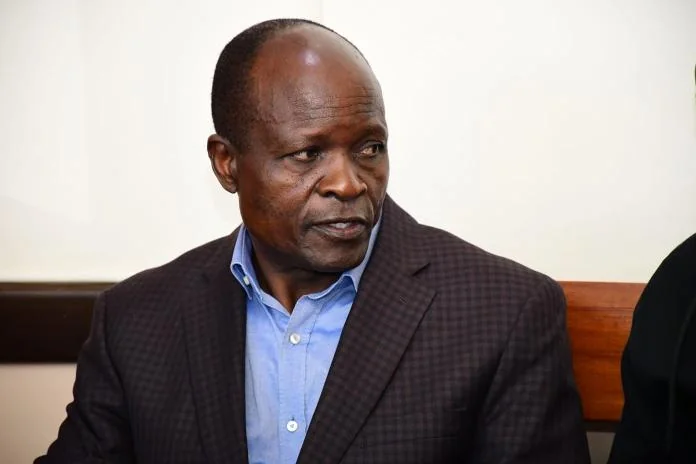
The National Integrity Alliance (NIA) expressed “deep concern and disappointment” over the ruling by the Milimani Anti-Corruption Court delivered on May 15, 2026, which upheld the agreement between the Office of the Director of Public Prosecutions (ODPP) and the accused persons.
A coalition of anti-corruption and human rights organisations has criticised the decision to uphold a plea bargain agreement involving former Migori Governor Okoth Obado and his co-accused in a Sh73.4 million corruption case, warning that the move risks undermining public confidence in Kenya’s fight against graft.
In a statement issued on Friday, the National Integrity Alliance (NIA) expressed “deep concern and disappointment” over the ruling by the Milimani Anti-Corruption Court delivered on May 15, 2026, which upheld the agreement between the Office of the Director of Public Prosecutions (ODPP) and the accused persons.
The coalition argued that while plea bargaining is provided for under Kenya’s legal and constitutional framework, its application in major corruption cases involving public funds raises serious questions about accountability and justice.
“We strongly question the precedent being set where individuals accused of plundering public resources are effectively allowed to negotiate their way out of full criminal accountability,” the statement said.
The alliance maintained that corruption should not be treated as a victimless crime, noting that the loss of public funds directly affects ordinary citizens through poor service delivery and stalled development.
“The money stolen from public coffers belongs to ordinary Kenyans; the child studying in a dilapidated classroom, the patient denied medicine in a public hospital, the youth without employment opportunities, and communities deprived of roads, water, and essential services,” the coalition stated.
According to the group, negotiated settlements in corruption cases risk creating the perception that economic crimes are low-risk, high-reward ventures for politically connected individuals.
“The public must ask: if a person accused of stealing hundreds of millions of shillings can walk free after surrendering part of their assets, what message does this send to future public officers entrusted with public funds?” the statement posed.
NIA further questioned why corruption-related offences appear to attract more lenient outcomes compared to other serious crimes.
“Serious offences such as murder do not ordinarily attract such lenient negotiated outcomes that could only impact the nature of sentencing while in corruption cases the accused persons simply surrender property and have charges withdrawn,” the coalition said.
The organisation warned that increased reliance on plea bargains in high-profile graft cases could weaken deterrence against corruption and entrench impunity in public office.
Among the concerns raised were the possibility of diminished public trust in the justice system, unequal standards of justice between ordinary citizens and powerful political figures, and the perception that theft of public resources can later be negotiated through settlements.
“We maintain that true justice in corruption cases must go beyond negotiated settlements and partial restitution,” the statement read.
“Public funds stolen from Kenyans must be fully recovered, and all individuals found culpable must face the full force of the law, including custodial sentences where appropriate.”
The coalition stressed that restitution alone should not replace criminal responsibility, arguing that surrendering assets after benefiting from them for years should not automatically shield suspects from prosecution or punishment.
“Corruption destroys lives, weakens institutions, and robs citizens of essential services. It cannot be treated as a negotiable commercial dispute where those accused of looting public resources simply surrender assets and walk free,” NIA said.
The group also called for reforms aimed at tightening the use of plea bargaining in major economic crimes.
It urged Parliament and the National Council on the Administration of Justice to review the scope and limits of plea bargaining in corruption-related offences.
The Judiciary and the ODPP were also asked to ensure that public interest and victims’ rights remain central in negotiated agreements.
Additionally, the coalition called on the Ethics and Anti-Corruption Commission to strengthen safeguards against abuse of negotiated settlements and pressed the government to improve transparency and monitoring of surrendered assets.
The National Integrity Alliance is made up of several civil society organisations including Transparency International Kenya, Kenya Human Rights Commission, Inuka Kenya Ni Sisi, and The Institute of Social Accountability (TISA).
The coalition said Kenyans deserve a justice system that does not create the impression that corruption can simply be settled as a commercial transaction.




Comments
Sign in with Google to comment, reply, and like comments.
Continue with Google